Movie
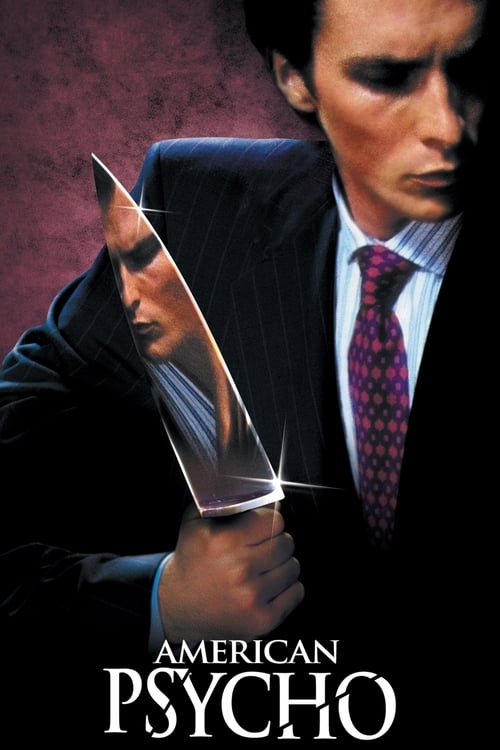
American Psycho
Cultural messages
You Are What You Buy
highPossessions are the primary language of identity throughout: Bateman and his colleagues compete obsessively over business cards, designer suits, restaurant reservations, and brand recognition. A 'superior' business card is so identity-threatening that it triggers a murder. The Huey Lewis monologue functions as cultural-capital performance. Bateman's entire social persona is constructed through what he owns and consumes. Luxury goods and recognizable brands are treated as aspirational within the characters' world even as the film satirizes them — all three detect-when conditions are met, with signals matching on: possessions-as-character-traits, recognizable aspirational brands, identity inseparable from ownership, and status marked by competitive acquisition.
About this message: Characters are defined by possessions. Material goods signal identity, status, and personality. The lifestyle of consumption is glamorized.
Movies that share these tropes


Full plot (spoilers)
Set in Manhattan in 1987, American Psycho follows Patrick Bateman, a handsome and hyper-successful investment banker at Pierce & Pierce who is consumed by status, materialism, and a hidden psychopathic inner life. On the surface, Bateman blends seamlessly with his equally shallow, brand-obsessed colleagues, competing over business cards, restaurant reservations, and designer suits. Beneath this veneer he is a sadistic killer with escalating violent fantasies. After a chance encounter with a homeless man, he beats him savagely and gouges out his eyes. When colleague Paul Allen produces a business card that Bateman considers superior to his own, the slight triggers an obsessive rage. Bateman lures Allen back to his apartment under the pretense of dinner, plays Huey Lewis and the News, delivers a monologue on the band's artistic merit, and hacks Allen to death with an axe while wearing a clear raincoat. He then begins impersonating Allen and using his apartment. Private investigator Donald Kimball arrives to question Bateman about Allen's disappearance; Bateman is evasive but composed, and Kimball suspects nothing conclusive. Bateman continues his double life — polished professional by day, predator by night — hiring prostitutes whom he abuses and killing a colleague named David Price. A near-murder of another colleague in a restaurant bathroom goes unnoticed when witnesses misread the situation. After a particularly brutal encounter with two women in his apartment, during which he murders them, Bateman suffers a mounting psychological breakdown. In a late-night spiral he kills a dog, shoots a police officer, blows up a police car, and engages a squad of police in a running gun battle. He calls his lawyer's voicemail in a panic and leaves a detailed, rambling confession of his murders — including Allen's. The next day, Bateman arrives at Allen's apartment to find it cleaned and staged for sale. The realtor, who knows who Bateman is, firmly instructs him to leave and never return, suggesting she is covering something up or that Bateman simply was never there. When Bateman meets his lawyer to confront him about the confession, the lawyer laughs it off as an absurd joke — and casually mentions that he had dinner with Paul Allen in London just ten days prior. Bateman is left in a state of profound existential confusion: he cannot determine whether his murders are real or elaborate fantasies. The film ends on his hollow interior monologue, in which he reflects that his confession is meaningless, that there is no catharsis, no punishment, and no escape from his own emptiness. The ambiguity is deliberate and total — the film refuses to confirm or deny that any killing actually took place.
Sources: Wikipedia