Movie
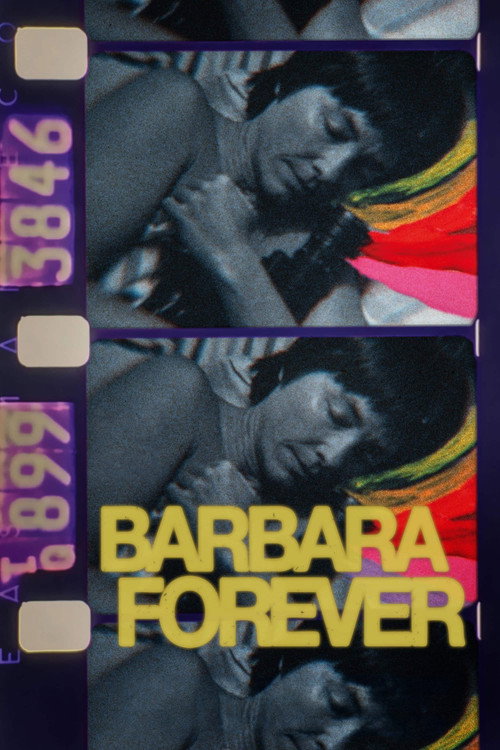
Barbara Forever
Cultural messages
Be Yourself
highHammer suppressed her lesbian identity inside a heterosexual marriage before coming out in the early 1970s (signal 1: hides true nature). Her prior conforming life is framed as the period before she truly lived (signal 2: conformity depicted as stifling). Coming out and taking up filmmaking simultaneously function as the transformation moment of self-acceptance (signal 3). Her own voiceover states her life did not begin until she made films and came out, directly linking authenticity to creative power and personal fulfillment (signal 5: strength flows from being authentic). The entire documentary arc — from closeted wife to pioneering queer filmmaker — maps onto the core pattern of suppression → external pressure → embrace of true identity → flourishing.
About this message: A character hides or suppresses their true identity to conform, then finds strength and happiness by embracing who they really are. Authenticity is the real superpower.
Movies that share these tropes




Full plot (spoilers)
Barbara Forever is an archive-driven documentary directed by Brydie O'Connor (her feature debut, executive produced by Christine Vachon) that explores the life, work, and legacy of Barbara Hammer, widely regarded as a pioneering lesbian experimental filmmaker. Rather than relying on new talking-head interviews, the film constructs a kinetic tapestry of archival footage guided entirely by Hammer's own recorded voice. In voiceover, Hammer reflects that her life did not truly begin until she started making films and came out as a lesbian in the early 1970s: she separated from her husband, took filmmaking classes at San Francisco State University, participated in feminist consciousness-raising groups, and immersed herself in Berkeley's queer and experimental filmmaking communities. The film traces her artistic evolution, including her creation of Dyketactics (1974), one of the first lesbian experimental films, and her sustained refusal to be categorized as either a 'lesbian filmmaker' or an 'avant-garde artist'—insisting on both. It also examines her feature Nitrate Kisses (1992), which documented LGBTQ+ culture through intimate depictions of couples and situated her within the 1990s New Queer Cinema movement. On a personal level, the documentary depicts Hammer meeting her life partner Florrie at age 48 and her diagnosis with ovarian cancer in 2007. Throughout, the film foregrounds Hammer's deliberate and persistent effort to record her own history—donating film stock to emerging artists such as trans filmmaker Joey Carducchi—framing her archive-building as both an artistic act and a political one, ensuring queer history would not be erased. The documentary positions Hammer's body of work as a blueprint and inheritance for future generations of queer artists.
Sources: Wikipedia, Ms. Magazine, IMDb (search metadata), Web search aggregate