Movie
James McNeill Whistler and the Case for Beauty
No tropes matched for this movie.
Full plot (spoilers)
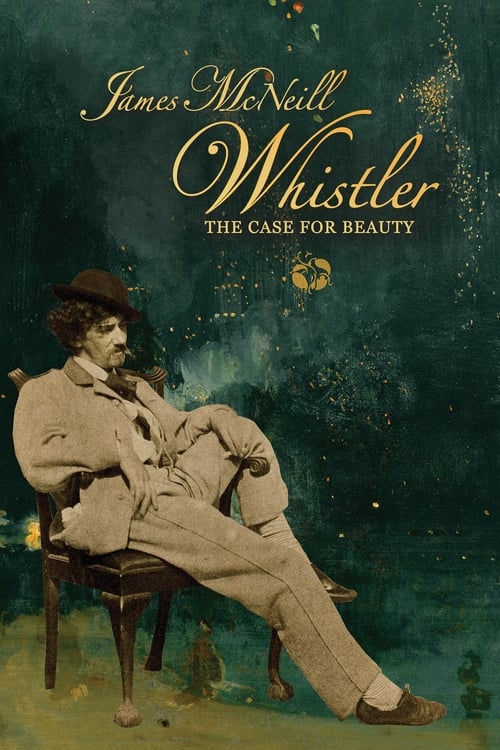
James McNeill Whistler and the Case for Beauty is a one-hour PBS documentary (2014) directed by Karen Thomas that profiles the life, personality, and artistic legacy of American painter James Abbott McNeill Whistler (1834–1903). Narrated by Anjelica Huston, with Kevin Kline voicing Whistler himself, the film traces the artist's biography from his American birth through formative years in Russia, a bohemian period in Paris, and his eventual settlement in London's Chelsea neighborhood. The documentary portrays Whistler as the original 'art star' — a figure whose caustic wit, patent-leather shoes, monocle, and theatrical public persona made him a celebrity as much as an artist. Beneath the showmanship, however, lay a pioneering aesthetic philosophy: Whistler championed 'art for art's sake,' arguing that beauty itself is art's fundamental value, independent of moral or narrative purpose. This radical stance moved painting toward abstraction and laid groundwork for modernism. The film surveys his most celebrated works — including the iconic Arrangement in Grey and Black No. 1 (known as 'Whistler's Mother'), The White Girl, The Balcony, and the elaborate Peacock Room — illustrating how each advanced his breakaway style. Leading art historians from the Smithsonian, Yale University, and the Victoria and Albert Museum provide expert commentary throughout. The documentary employs nearly 200 etchings, paintings, and historical photographs alongside elaborate re-creations, 3-D animations, and layered visualizations of his masterworks. By the time of his death, Whistler had become one of the most recognized artists in Europe; the film concludes by placing him in the first rank of modern painters, his work compared to Velázquez and Rembrandt.
Sources: Film Odyssey (odysseymedia.org), WMHT PBS blog, Web search aggregated details (IMDb listing, Rocky Mountain PBS, Yale Art Gallery)