Movie
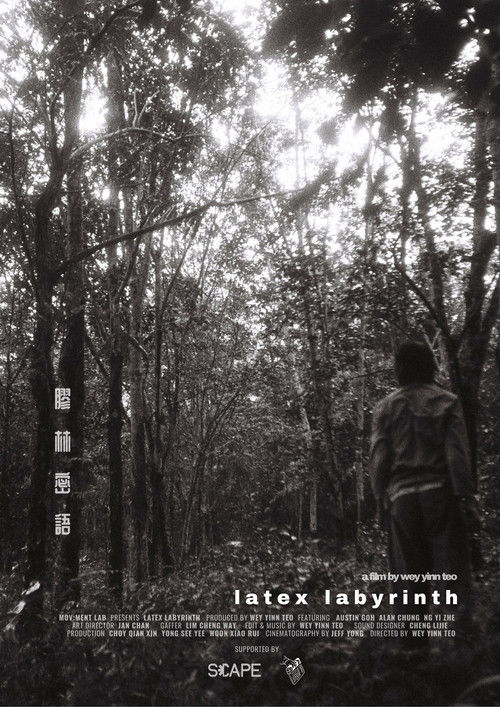
Latex Labyrinth
Narrative tropes
A Parent's Shadow
mediumThe son is explicitly shown inheriting his mother's cadence and gait through movement — the film's stated central metaphor — satisfying the 'character defined in relation to a predecessor' requirement. Inherited colonial trauma and hardship drive the entire thematic conflict ('a wound that passes silently across generations'), satisfying the 'inherited secrets or sins' signal. The framing device of the elderly man dancing amid deforested landscapes represents a descendant carrying and embodying ancestral legacy into the present, satisfying the 'arc centered on accepting the legacy' requirement. The film withholds resolution or escape, presenting generational inheritance as somatic and inescapable rather than a conscious choice.
About this trope: A character must grapple with the legacy of their parents or predecessors — living up to high standards, running from expectations, atoning for inherited sins, or forging their own path.
Movies that share these tropes





Full plot (spoilers)
Latex Labyrinth is a 13-minute dialogue-free poetic documentary directed by Wey Yinn Teo that weaves together a present-day image and a historical re-enactment to explore the colonial rubber plantation legacy in Malaysia and Singapore. In the framing present, an elderly man awakens amid deforested landscapes and begins to dance, accompanied by folk songs, his body carrying the residue of generational memory despite the stripped horizons around him. The film then moves into its primary narrative strand, set during the tail end of the 1940s Malayan Emergency — the period after World War II when the filmmaker's grandparents worked on rubber plantations, caught between British colonial authority and the Malayan Communist Party. A rubber tapper family — father, mother, and son — threads along disparate paths that never converge, suggesting both physical separation and emotional disconnection under colonial subjugation. The father performs the repetitive, mechanical gestures of rubber tapping with ritualistic precision. The mother cuts into rubber bark, her incisions rendered as wounds both literal and interior. In a pivotal moment, she and a group of soldiers exchange a charged glance before parting without further contact, encapsulating the political precarity faced by plantation workers of the era. The son is shown inheriting his mother's cadence and gait through movement — the film's central metaphor: the body as vessel for ancestral hardship and transnational collective memory. There is no voiceover or dialogue; folk music and physical movement carry the entire narrative weight. The film intentionally preserves ambiguity around its historical events, positioning this under-documented period as a wound that passes silently across generations.
Sources: TMDb overview, Singapore Film Society review, dafilms.com synopsis and director statement