Movie
On a String
Cultural messages
Be Yourself
mediumIsabel suppresses her authentic relationship with music—playing for joy—in pursuit of external legitimacy (the Philharmonic chair), driven by absorbed expectations from her ex, family, and the classical world (core requirement 1 & 2). The film traces burnout and anxiety as the cost of that suppression ("conformity is shown as painful or stifling"). Her decision to step back from the Philharmonic audition is the explicit turning point of self-acceptance, resolving the story by prioritizing personal well-being over external achievement (core requirement 3, "transformation marks self-acceptance"). The film frames this as strength rather than failure, and the expectations of others become irrelevant to her resolution ("acceptance from others becomes irrelevant to self-acceptance").
About this message: A character hides or suppresses their true identity to conform, then finds strength and happiness by embracing who they really are. Authenticity is the real superpower.
Movies that share these tropes






Full plot (spoilers)
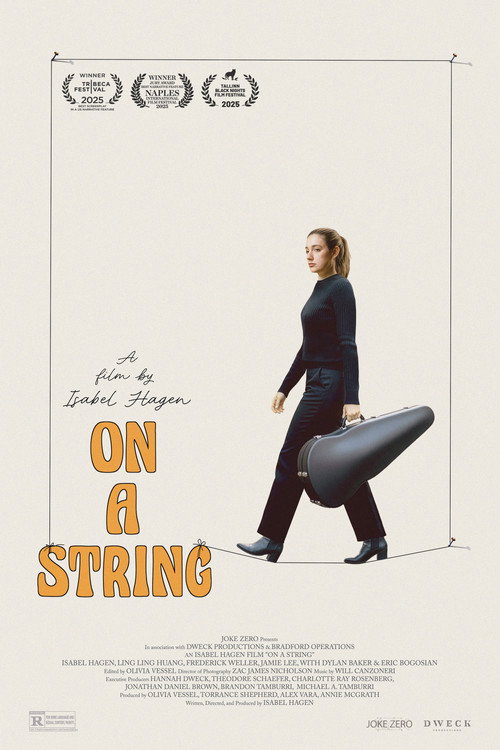
On a String follows Isabel, a young Juilliard-trained violist who, despite her prestigious training, is still living at home with her unconventional family in New York City. She scrapes together a living playing private gigs — weddings, funerals, and parties — alongside her string quartet, a group of musicians equally accustomed to being flies on the wall in strangers' homes. When her toxic ex-boyfriend, the New York Philharmonic's newest star cellist, re-enters her life, he informs her of an open viola chair in the orchestra. Seizing on the opportunity as a path to professional legitimacy, Isabel decides to audition. Her preparation quickly unravels: she contends with tendonitis from the physical grind of constant gigging, strained friendships within the quartet, an ill-advised romantic entanglement, and mounting anxiety fueled by relentless self-comparison to more accomplished peers. The film traces her slow reckoning with burnout and the gap between her ambitions and her actual desire to play music. Ultimately, Isabel steps back from the Philharmonic pursuit and the expectations she has absorbed from family, her ex, and the classical world, choosing instead to prioritize her personal well-being over external achievement. The film is semi-autobiographical, written and directed by Isabel Hagen, who also stars in the lead role.
Sources: Moviefone, New York Comedy Film Festival, Film Threat, Rotten Tomatoes, IMDb (search metadata)