Movie
Remake
No tropes matched for this movie.
Full plot (spoilers)
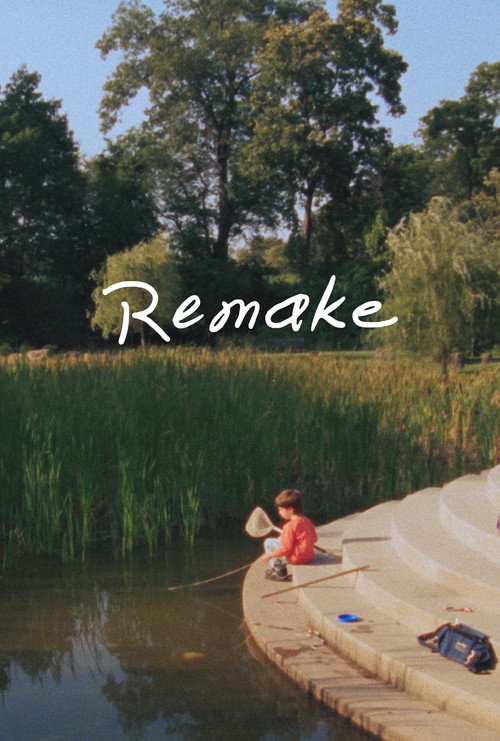
Ross McElwee's documentary 'Remake' is structured around the filmmaker's grief following the fentanyl overdose death of his son Adrian on December 24, 2016, at age 27. Confronting the loss, McElwee turns to his vast archive of home movies to trace the arc of their relationship across decades. Early footage captures a warm, playful bond—fishing trips and childhood games—that gradually gives way to teenage friction and arguments. As Adrian grows into adulthood, he emerges as an ambitious, charismatic young man with his own creative aspirations, including becoming a filmmaker himself; he shoots travel footage, Colorado landscapes, and festival scenes in a more kinetic style than his father's. A parallel narrative runs throughout: a Hollywood producer and director, Steve Carr, acquires the rights to adapt McElwee's landmark 1986 autobiographical documentary 'Sherman's March' into a fictional work. A then-twenty-year-old Adrian encourages the project, seeing it as a chance for his father to reach a wider audience. The adaptation pitch degrades in ambition over time—moving from prestige narrative feature to limited TV series to half-hour sitcom—before collapsing entirely, its absurdity serving as an ironic counterpoint to the film's emotional weight. Father and son debate commercialism versus artistic integrity throughout this thread. Meanwhile, McElwee contends with other personal upheavals: the dissolution of his marriage and a cancer scare. Adrian, increasingly drawn into drug use, undertakes multiple rehabilitation attempts and even makes his own short documentary exploring opioid experiences within his friend group. In a late and poignant passage, Adrian is seen emerging from rehab with apparent clarity and optimism—what proves to be his final recovery attempt before his death. The film closes on McElwee's meditation on whether his camera shaped Adrian's sense of self, whether the act of documenting a life distorts or preserves it, and how recorded images define a relationship now that one person is gone. 'Remake' functions simultaneously as a father's elegy, a self-interrogation about the ethics of autobiographical filmmaking, and a wry examination of Hollywood's appetite for cannibalizing personal art.
Sources: AV Club, The Film Stage, WebSearch (aggregated from RogerEbert.com, Deadline, IndieWire, GoldDerby, Slant Magazine, Documentary.org, FirstShowing)