Movie
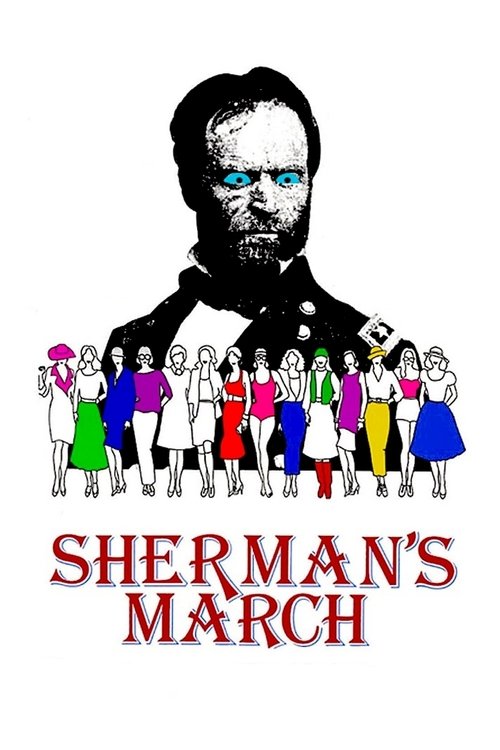
Sherman's March
No tropes matched for this movie.
Full plot (spoilers)
Ross McElwee, a Harvard-trained filmmaker, receives a prestigious grant to make a documentary about the lingering effects of General William Tecumseh Sherman's Civil War campaign through Georgia and the Carolinas. However, before he can begin filming, his girlfriend ends their relationship. Heartbroken, McElwee heads south to his family home in North Carolina. There, rather than engaging with his Sherman project, relatives press him to find a wife. This derailment sets the film's actual direction: McElwee loosely retraces Sherman's route through the South, camera perpetually in hand, but his focus shifts almost entirely to the women he encounters along the way and his recurring, fruitless pursuit of romantic connection. He meets Pat, an aspiring actress who demonstrates acting exercises and discusses her career ambitions; a linguist living in a tree house on the Georgia coast who engages him in conversations about existential philosophy; Joyous Parent, a rock musician whose performances he films; and various childhood friends, former dates, and new acquaintances. A pattern repeats throughout: McElwee becomes enchanted by each woman, nurtures hopes of a relationship, and is inevitably rejected or disappointed. After each failure he retreats to a seedy motel, sets up his camera, and films his own despair before resuming the journey. Woven through the romantic misadventures are McElwee's anxieties about nuclear war during the Cold War era and occasional, wry meditations on Sherman's own complicated legacy — the general serves as a loose spiritual double, a figure of destructive forward momentum. Burt Reynolds surfaces as a running motif, partly because one of the women is pursuing him, lending the film a comic absurdist thread. McElwee narrates the entire film himself in a confessional, self-deprecating voice-over, blurring the line between documentary and personal essay. The film was shot over an extended period, accumulating roughly 25 hours of footage edited down to 155 minutes. It concludes with McElwee still searching but reflective, having produced an intimate self-portrait rather than the historical film he set out to make.
Sources: Wikipedia, International Documentary Association, 1001 A Film Odyssey (blog review), Web search metadata