Movie
The Other Gods: A Tale of the Dream Cycle
No tropes matched for this movie.
Full plot (spoilers)
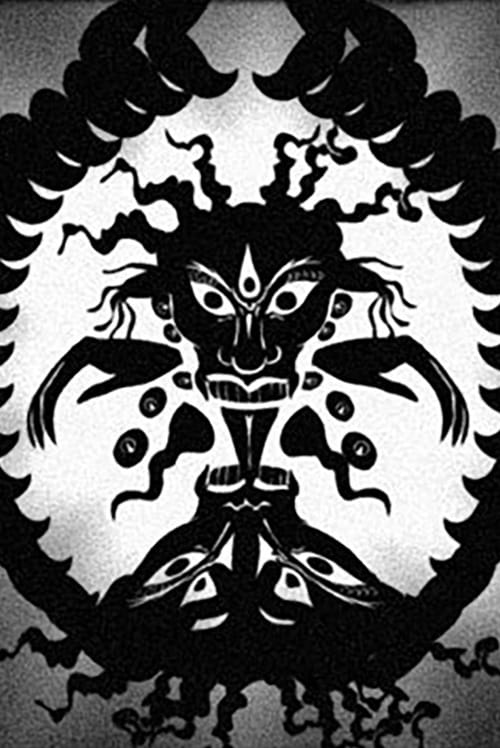
The film is a short silhouette-animated work (~5 minutes) presented through a mockumentary framing device: it purports to be a newly rediscovered 1920s silent film made by fictional filmmaker Peter Rhodes, who moved in New York's occult and literary circles alongside Aleister Crowley and H.P. Lovecraft. The in-frame narrative adapts Lovecraft's short story 'The Other Gods.' Barzai the Wise, a prophet and alchemist dwelling in the dream-city of Ulthar beyond the Skai River, is consumed by a lifelong yearning to behold the Elder Gods, who are said to dance atop the cloud-shrouded peak of Mount Hatheg-Kla by moonlight. His disciple Atal warns him against the ascent, but Barzai dismisses the caution and sets out for the mountain. Atal follows but stops partway up, too terrified to continue. Barzai presses on alone and reaches the summit, fulfilling his dream of witnessing the divine dance. At that moment a lunar eclipse occurs, swallowing the peak in darkness. The eclipse acts as a portal, and far older, far more terrible entities — the Other Gods, cosmic horrors from beyond the universe including Yog-Sothoth, Nyarlathotep, and Shub-Niggurath — surge through. Barzai is seized by these beings and carried off into the void forever. Atal descends alone and lives on to tell the tale. The film's visual language — multi-headed kaleidoscopic deities rendered in silhouette, negative-image inversions during the eclipse — conveys the surreal, indescribable nature of Lovecraft's Dreamlands cosmology rather than depicting the gods literally.
Sources: IMDb plot summary (search result excerpt), Wild Realm Reviews (weirdwildrealm.com), Letterboxd synopsis and reviews, TMDb overview