Movie
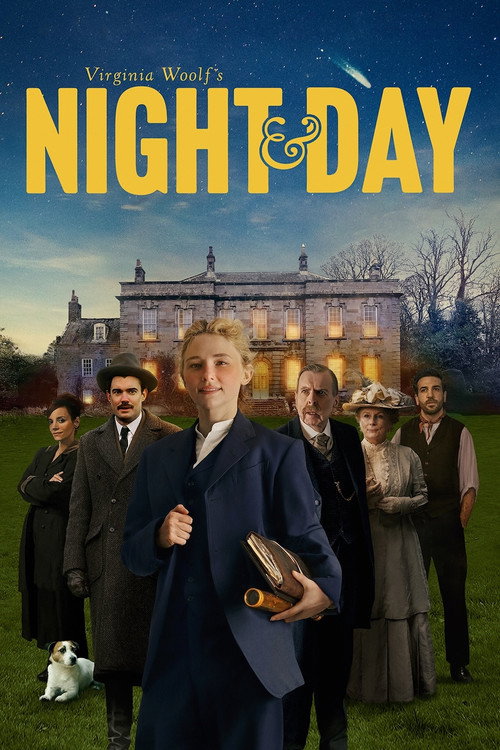
Virginia Woolf's Night & Day
Narrative tropes
A Parent's Shadow
mediumKatharine's conflict is directly structured by her father's expectations and his engineering of an unwanted engagement (inherited expectations as the central conflict); her arc requires choosing between continuing the prescribed Hilbery domestic legacy and forging her own intellectual path; the resolution is explicitly about defining herself on her own terms rather than those of her family.
About this trope: A character must grapple with the legacy of their parents or predecessors — living up to high standards, running from expectations, atoning for inherited sins, or forging their own path.
Cultural messages
Be Yourself
highKatharine outwardly complies with the unwanted engagement while inwardly resisting (suppressed true self); Edwardian convention and her father's pressure make conformity visibly stifling; the film's arc tracks her turning point toward self-authorship; the resolution explicitly places her on 'her own terms rather than those prescribed by tradition,' framing authenticity as the source of fulfillment.
About this message: A character hides or suppresses their true identity to conform, then finds strength and happiness by embracing who they really are. Authenticity is the real superpower.
Movies that share these tropes






Full plot (spoilers)
Set in London in 1910, Virginia Woolf's Night & Day follows Katharine Hilbery, a brilliant and fiercely independent young woman who harbors a passionate ambition to pursue astronomy rather than the domestic life her family expects of her. Her father, Mr. Hilbery, exerts considerable pressure on her to conform to Edwardian convention, ultimately engineering an unwanted engagement between Katharine and William, a family friend. Katharine outwardly complies but inwardly resists, doing everything she can to avoid surrendering her intellectual freedom and romantic agency. Her world expands meaningfully when she forms a close friendship with Mary Datchet, a spirited and politically active suffragette who embodies the defiant spirit of the era's women's movement. Katharine also crosses paths with Ralph Denham, a thoughtful working-class editor who is assisting her mother with a biographical writing project. Through these two relationships she is forced to interrogate the limits society, her family, and even her own caution place on her life. The film, billed as an 'unromantic comedy,' leans into wit and ensemble humor rather than conventional romance, depicting Katharine's gradual and hard-won movement toward a life genuinely her own—one that holds space for both her love of the stars and her evolving understanding of connection. The ending, consistent with Woolf's novel, suggests Katharine finds a path that reconciles intellectual ambition with authentic feeling, though on her own terms rather than those prescribed by tradition. Detailed act-by-act plot information beyond the above is not yet widely available in public sources, as the film's wide release is September 2026.
Sources: Wikipedia, TMDb overview, SXSW London programme, Web search aggregation (HeyUGuys, British Comedy Guide, Letterboxd, Filmaffinity)