Movie
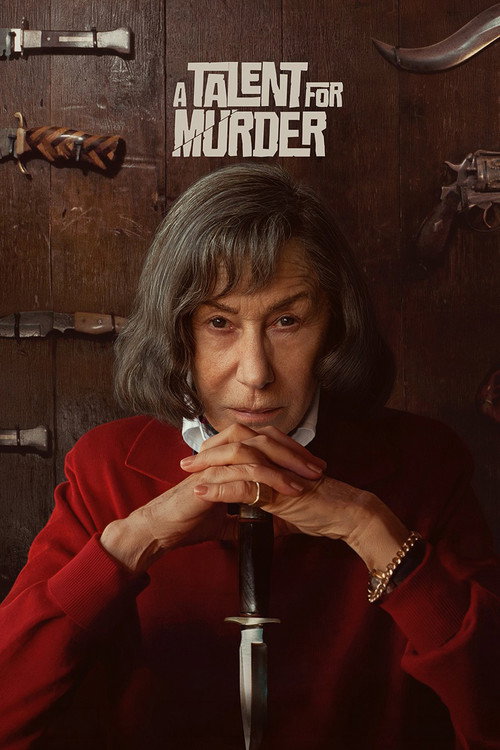
A Talent for Murder
Narrative tropes
You Can't Trust Anyone
mediumAll three core requirements are met: (1) the ostensibly legitimate collaboration with Highsmith conceals implied danger — a previous envoy disappeared without explanation; (2) Highsmith's true intentions appear to be engineering Ridgeway's psychological transformation rather than simply writing a novel, constituting a deception within a trusted relationship; (3) the accumulation of eerie real-world incidents (poisoned meal, unexplained wound, the prior envoy's fate) forces Ridgeway — and the audience — to question whether he is being manipulated. Signals present: protagonist must question everyone around him; paranoia is validated by concrete incidents; the most dangerous figure (Highsmith) was hiding in plain sight as a collaborator.
About this trope: Trusted allies, institutions, or authority figures are secretly working against the protagonist. Paranoia is justified because betrayal is real and pervasive.
Movies that share these tropes



Full plot (spoilers)
Set in 1995, the year Patricia Highsmith died, the film follows Edward Ridgeway (Alden Ehrenreich), a publishing consultant sent from New York to Highsmith's remote home in Switzerland. His mission: persuade the reclusive, misanthropic author (Helen Mirren) to write a sixth and final Tom Ripley novel. He is warned that the previous envoy sent by the publisher disappeared without explanation. On the train journey through the Swiss mountains, Ridgeway meets Clementine Balfour (Olivia Cooke), a young woman fighting to wrest control of her trust fund from her wealthy great-aunt; the two share a flirtatious connection before parting. Highsmith initially rebuffs Ridgeway but eventually agrees to collaborate, on the condition that he proves he possesses the mind of a killer. Together they begin devising a new Ripley plot in which Ripley seduces a young heiress and plots to murder her great-aunt for the inheritance — a scenario that mirrors Clementine's real circumstances with uncomfortable precision. The film employs a story-within-a-story structure: as the pair develop the fictional narrative, it is dramatized on screen with Ridgeway inhabiting the role of Ripley, while Clementine — whom he encounters again in the local town — becomes simultaneously a real acquaintance and fictional prey. Eerie real-world incidents accumulate alongside the fiction: a potentially poisoned meal, a mysterious wound appearing on Ridgeway's neck in the night, and the unresolved disappearance of the earlier publisher's envoy. As the collaboration deepens, the boundary between Highsmith's invented world and lived reality dissolves; Ridgeway begins adopting Ripley's morally unmoored persona, and his sinister turn grows harder to distinguish from method research or genuine intent. The film's conclusion is deliberately ambiguous, confronting both Highsmith's lifelong, obsessive relationship with her most famous creation and the question of whether Ridgeway's transformation was fictional performance or something more irreversible, leaving audiences to determine where the story ended and reality began.
Sources: Wikipedia (2026 film article — premise only, no full plot section), Film Threat review, Search result aggregation (Variety, Screen Rant, RogerEbert.com, Deadline headlines and snippets)