Movie
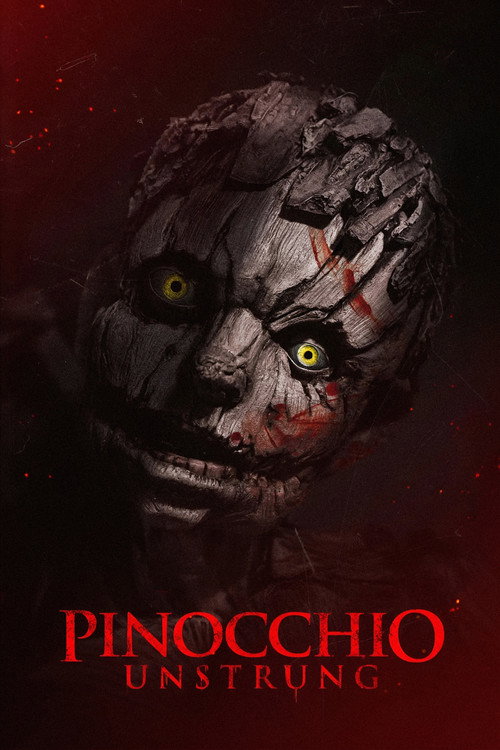
Pinocchio: Unstrung
Narrative tropes
Good Intentions, Terrible Results
highPinocchio's motivations are entirely sympathetic — he loves James and wants to protect him. His killing spree flows directly from those good intentions, warped by the Cricket's deliberate disinformation. The film explicitly frames this as an interrogation of 'what happens when goodhearted but naive loyalty is weaponised,' meaning the story treats Pinocchio's internal logic as coherent-but-horrifying. All three detect_when conditions are met: sympathetic motivations, monstrous outcomes from a well-meaning plan, and a narrative that presents misplaced certainty as the danger.
About this trope: A villain — or sometimes a hero — genuinely believes they are doing the right thing, but their well-meaning plan leads to monstrous outcomes. The scariest antagonists think they're saving the world.
Man-Made Monsters
mediumGeppetto (an identifiable craftsman-creator) builds Pinocchio by imbuing wood with sentient life — an act that crosses the natural boundary between inanimate craft and living being. The creation ultimately causes mass destruction (the killing spree) that Geppetto cannot control. All three detect_when conditions are met: a specific creator, a boundary-crossing act of creation, and the creation causing destruction. Signals present include an identifiable creator, autonomy beyond the creator's control, and an implied 'playing God' in fashioning sentient life.
About this trope: A creator uses science to overstep natural boundaries — creating life, resurrecting the dead, engineering organisms, or fundamentally altering nature — and the creation turns destructive.
Cultural messages
What Makes Us Human?
highPinocchio is a non-human (sentient wooden puppet) explicitly and desperately seeking humanity — his entire arc centers on the question of what makes someone a 'real boy.' His grotesque plan to literally harvest human parts from victims is a dark literalization of that quest. The story uses this to interrogate the line between programmed loyalty and genuine feeling, and between innocence and humanity. All three detect_when conditions are met: non-human entity with human-like qualities (love, loyalty, longing), an explicit question about personhood, and the narrative using that question to reflect on humanity itself.
About this message: As the line between humans and non-humans blurs — AI, clones, aliens, robots — the story forces a reckoning with what truly defines humanity: biology, consciousness, memory, emotion, or moral choice.
Movies that share these tropes



Full plot (spoilers)
James is a young boy living with his grandfather Geppetto after losing both parents in a tragic accident. His grief deepens when his best friend at school dies of cancer. To lift the boy's spirits, the elderly craftsman Geppetto builds Pinocchio, a sentient wooden puppet who walks and talks. James is initially unsettled by the puppet, though Pinocchio desperately wants his companionship and takes his role as James's protector with fierce earnestness. In Geppetto's basement workshop, Pinocchio encounters the Wood Mother and her sinister companion, the Cricket — a malevolent figure who manipulates the naive puppet into believing that true loyalty to James means eliminating anyone who poses a threat to him. Acting on incomplete and deliberately warped information fed to him by the Cricket, Pinocchio embarks on a violent killing spree targeting perceived enemies — including, at one point, a dentist who once hurt James. Driven by a twisted longing to become a real boy like his brother James, Pinocchio pursues a grotesque plan to literally carve humanity out of his victims, taking human pieces for himself one at a time. The film frames his crusade as a dark parable of vigilante justice and corrupted innocence, interrogating what happens when goodhearted but naive loyalty is weaponised by a manipulative outside force. Coverage is based on pre-release promotional materials and early festival reviews; the film has not yet received wide theatrical release.
Sources: Wikipedia, JustWatch, Film Threat, Web search (multiple)