Movie
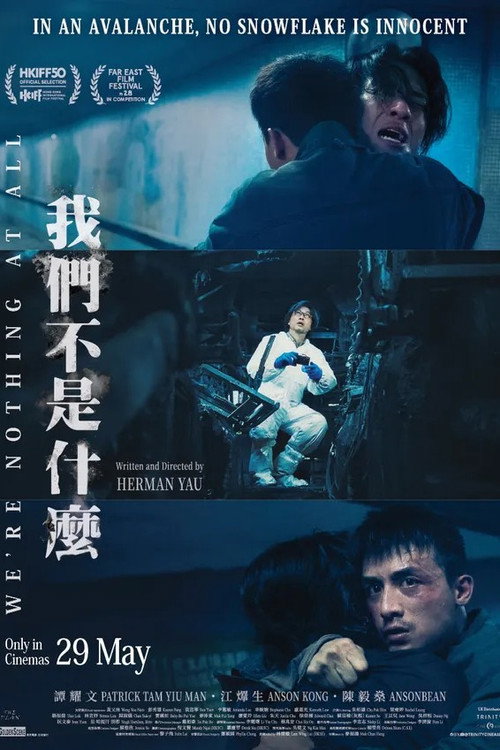
We're Nothing at All
Cultural messages
The Rich Are the Problem
highThe film centers on systemic economic inequality as the root cause of the tragedy. Fai is repeatedly cheated of wages by unscrupulous employers and ground down by a harsh restaurant owner—wealthy figures exploiting workers with impunity. The city's relentless GDP messaging creates an explicit luxury-versus-invisible-poverty contrast. The narrative frames Fai and Ike as morally sympathetic victims, and the plot explicitly names 'predatory labor practices' as structural, not incidental—signaling a system designed to benefit those with capital at the expense of the marginal. The suicide pact-as-protest and the film's framing as 'an angry social fable' function as exposure of that system, satisfying the resolution signal in spirit if not in conventional form.
About this message: Wealthy elites are portrayed as exploitative, callous, or predatory, and extreme inequality is the central injustice driving the story.
Movies that share these tropes
Full plot (spoilers)
On Valentine's Day in Kowloon, Hong Kong, a double-decker bus explodes in a fiery blast, killing seventeen passengers and leaving behind little but charred remains. Retired forensic expert Lung Sir (Patrick Tam) is brought back to investigate, tasked with identifying the victims and determining whether the explosion was accidental or deliberate. As Lung and his assistant sift through the wreckage, the investigation unfolds across a dual timeline, crosscutting between the present-day forensic inquiry and extended flashbacks into the lives of the two men responsible.
Fai (Anson Kong) is a young construction worker living on the economic margins, repeatedly cheated out of wages by unscrupulous employers and unable to make rent. He eventually takes a service job under a harsh restaurant owner, struggling to stay afloat. Ike (Ansonbean) is a street artist who sells his drawings to passersby for meager income. The two men fall in love and build a fragile life together in the city's cracks. When Ike comes out to his family, his father assaults and then expels him from the home; Fai takes Ike in, and their bond deepens under the weight of shared hardship.
Both men face compounding injustices: systemic poverty rooted in predatory labor practices, homophobia from family and society, displacement, drug abuse, and trauma. The city's relentless economic messaging about GDP and prosperity makes their own exclusion feel all the more invisible and deliberate. The investigation reveals that the bus explosion was not a random act of violence but a deliberate suicide pact—Fai and Ike chose to end their lives as an act of protest against a world that had no place for them, leaving behind the message: 'On a beautiful day, we end our unbeautiful lives.' The parallel structure implicitly implicates Lung himself, whose investigation surfaces the same prejudices and indifferences he once shared with the society that drove the couple to despair. Directed by Herman Yau, the film is loosely inspired by a real 1998 tragedy in Wuhan and functions as an angry social fable about what happens when people are pushed past the limits of endurance by poverty, homophobia, and systemic neglect.
Sources: Zolima City Mag, Far East Films, HKIFF, Letterboxd / web search metadata