Movie
Wicker
Cultural messages
Be Yourself
highThe fisherwoman suppresses her own sense of worth after a lifetime of village ridicule, fulfilling condition (1). The rigidly patriarchal village — where women are collared and mocked for nonconformity — provides relentless external pressure to conform, fulfilling condition (2). The film explicitly frames her arc as self-acceptance and agency, with her building happiness on her own terms rather than awaiting rescue, fulfilling condition (3). Four signals fire: conformity is shown as painful and stifling (women collared, protagonist ostracised); the journey culminates in a self-acceptance turning point; others' validation becomes irrelevant to her happiness; and happiness flows directly from living authentically.
About this message: A character hides or suppresses their true identity to conform, then finds strength and happiness by embracing who they really are. Authenticity is the real superpower.
What Makes Us Human?
mediumThe wicker creation is a non-human entity crafted from basket-weaving material yet described as patient, devoted, and possessing 'a soulful quality that genuinely moves' the fisherwoman, fulfilling condition (1). The fisherwoman's core anxiety — whether something so perfect could truly be 'real or lasting' — is an implicit question about the wicker husband's personhood and authentic feeling, fulfilling condition (2). The village's turmoil, sparked by women comparing their human husbands unfavorably to a wicker construct, uses this contrast to interrogate what constitutes genuine human connection, fulfilling condition (3). Three signals are present: the non-human character demonstrates more empathy and devotion than any human husband; the story blurs the line between crafted behaviour and genuine feeling ('soulful quality'); and human characters are shown as less tender and present than the non-human creation.
About this message: As the line between humans and non-humans blurs — AI, clones, aliens, robots — the story forces a reckoning with what truly defines humanity: biology, consciousness, memory, emotion, or moral choice.
Movies that share these tropes






Full plot (spoilers)
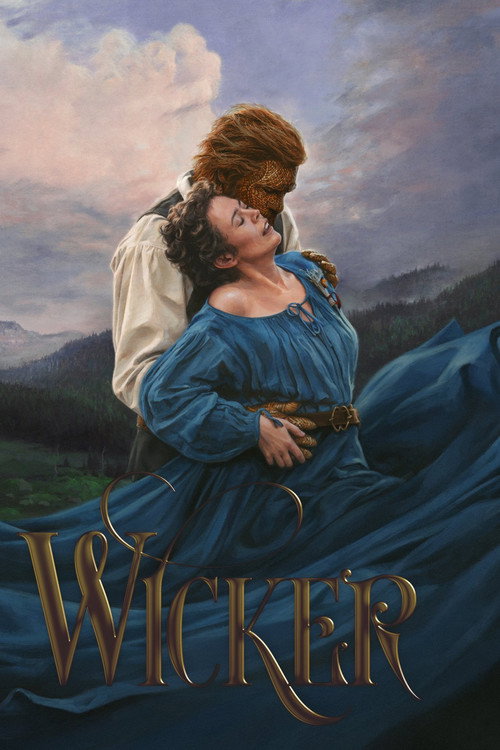
Set in a small, rigidly patriarchal medieval seaside village where women are collared upon marriage and expected to be wholly subservient to their husbands, the story follows a fisherwoman (Olivia Colman) who lives on the outskirts of the community, perpetually mocked for her persistent fish smell and unmarried status. The village observes an unusual ritual in which the local basket weaver (Peter Dinklage) crafts handwoven eggs that release colored dust to select who will marry next; the fisherwoman unexpectedly 'wins' this ceremony. Fed up with the relentless ridicule, she sarcastically commissions the basket weaver to craft her the perfect husband from wicker. A month later, the wicker creation (Alexander Skarsgård) arrives — and proves far more remarkable than anyone anticipated: patient, helpful, devoted entirely to her wellbeing and pleasure rather than his own wants, and possessed of a soulful quality that genuinely moves her. As the fisherwoman begins to fall for her unconventional husband, the rest of the village is thrown into turmoil: other women grow acutely aware of their own husbands' inadequacies, stoking jealousy, outrage, and social chaos among the conservative townspeople. The fisherwoman must also contend with her own deep-seated insecurity — shaped by a lifetime of rejection — about whether something so perfect could truly be real or lasting. The film frames her journey as one of self-acceptance and agency, with her ultimately building happiness on her own terms rather than waiting to be rescued, while the village's entrenched values are upended around her.
Sources: Wikipedia, Flickering Myth, Señora Era, Web search (general)