Movie
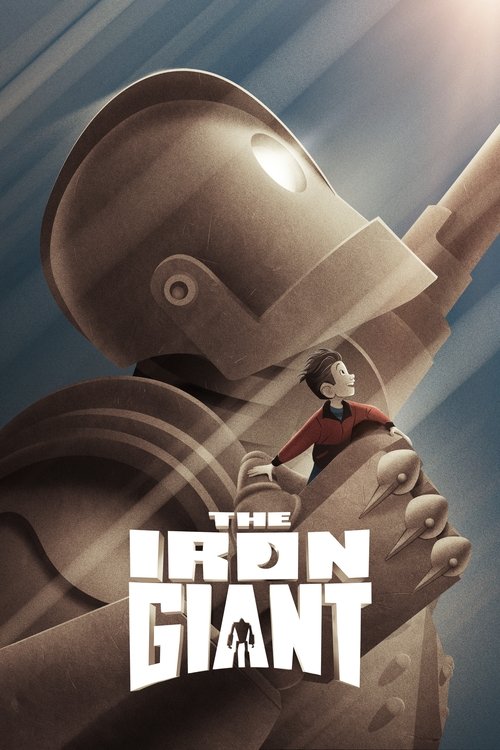
The Iron Giant
Narrative tropes
Kids See the Truth
highHogarth immediately perceives the Giant as gentle where every adult sees a threat. He connects with an alien being that Mansley and the military fear. His simple moral clarity — reminding the Giant he can choose who he is — directly halts the Giant's weapons mode and resolves the climax. Adults (Mansley: paranoid and self-serving; the military: locked into Cold War threat logic) are too jaded or political to see the truth. Hogarth's innocence is explicitly the narrative advantage that saves Rockwell.
About this trope: Children possess intuitive wisdom, moral clarity, or a connection to truth that cynical adults have lost. Kids see through lies, sense danger, and understand what really matters.
One Hero Changes Everything
highA nuclear missile is inbound on Rockwell and General Rogard explicitly cannot abort the launch — the entire US military apparatus is helpless. The Giant alone can intercept it. His individual moral virtue (the choice to be Superman rather than a weapon) is the decisive factor. Without the Giant, the town is annihilated; collective/institutional action not only fails but causes the crisis in the first place (Mansley's order).
About this trope: One exceptional individual matters more than institutions or collective action. Problems affecting millions are solved by a single remarkable person. Everyone else is passive.
Cultural messages
What Makes Us Human?
highThe Giant is an alien robot who develops wonder, grief, and moral reasoning. Mansley treats him as a weapon while Hogarth/Dean treat him as a person with feelings — an implicit debate about personhood. The film's central thesis ('you are what you choose to be') explicitly inverts programmed identity with genuine feeling. Mansley's selfish nuclear launch contrasts with the Giant's selfless sacrifice, showing the non-human character as more 'human' than the humans. The sacrifice itself ('Superman') is the payoff that proves the Giant's humanity beyond any programming.
About this message: As the line between humans and non-humans blurs — AI, clones, aliens, robots — the story forces a reckoning with what truly defines humanity: biology, consciousness, memory, emotion, or moral choice.
Power Means Duty
highThe Giant has extraordinary power (50-foot weapons platform) and Hogarth explicitly models moral obligation through Superman comics: power should be used to help, not harm. The Giant moves from hiding (resisting responsibility) to full self-sacrifice for the town (accepting duty). His final word — 'Superman' — frames his identity as defined by duty rather than destructive capability. Personal survival is sacrificed for the greater good.
About this message: Those gifted with extraordinary abilities, wealth, or status have a moral obligation to use them for others — and the weight of that duty can be crushing. Privilege creates obligation.
Be Yourself
mediumThe Giant physically hides his nature in Dean's junkyard while the military and Mansley pressure him to be what his programming says he is — a weapon. The climactic reveal ('you are what you choose to be') is the moment of self-acceptance, and the Giant's heroic sacrifice flows directly from embracing his chosen identity over his programmed one. The transformation scene (rising to intercept the missile as 'Superman') marks the moment authenticity becomes action.
About this message: A character hides or suppresses their true identity to conform, then finds strength and happiness by embracing who they really are. Authenticity is the real superpower.
Movies that share these tropes
Full plot (spoilers)
Set in October 1957 during the height of Cold War paranoia in the small town of Rockwell, Maine, The Iron Giant follows nine-year-old Hogarth Hughes, a curious and imaginative boy being raised by his single mother Annie. One stormy night, a massive fifty-foot extraterrestrial robot crashes off the Maine coast and begins feeding on electrical infrastructure. Hogarth investigates the strange power outages and encounters the Giant in the woods, initially terrified but quickly realizing the robot is gentle and childlike rather than threatening. The two form an unlikely friendship.
Hogarth hides the Giant, bringing him food and educating him using comic books — particularly stories featuring Superman — teaching him concepts of heroism, identity, and the difference between weapons and choice. The Giant proves to be deeply impressionable and eager to learn, mimicking Hogarth's mannerisms and developing a sense of wonder about the world. However, the Giant also has a latent defensive weapons system that activates involuntarily in response to perceived threats, a capability that frightens Hogarth.
The arrival of Kent Mansley, a paranoid and ambitious government agent from the Bureau of Unexplained Phenomena, complicates things. Mansley has been sent to investigate the strange incidents and becomes increasingly convinced a dangerous enemy entity is at large. He insinuates himself into the Hughes household by renting a room from Annie, placing Hogarth under covert surveillance and pressuring him for information.
To keep the Giant safe, Hogarth arranges for him to hide at a junkyard on the outskirts of town owned by Dean McCoppin, a laid-back beatnik artist who welds scrap metal sculptures. Dean is initially alarmed to find a giant robot in his yard but gradually warms to both Hogarth and the Giant. A pivotal emotional moment occurs when Hogarth witnesses hunters shoot a deer; he explains death to the Giant, who is deeply distressed by the concept of mortality and non-existence.
Mansley eventually obtains photographic evidence linking Hogarth to the Giant and calls in the United States Army, led by General Rogard. Military forces converge on Rockwell. During a chaotic confrontation in the town center, the Giant's weapons systems activate after soldiers fire on him, triggering a standoff. The Giant also heroically saves two boys from falling off a building, briefly winning public sympathy — but the military presses its attack. When Hogarth is knocked unconscious during the battle and the Giant believes him to be dead, his combat programming fully activates and he transforms into an overwhelming weapons platform, targeting the soldiers.
Hogarth regains consciousness and rushes to the Giant, reminding him of what they discussed: that he can choose who he is, that he is not a gun. The Giant stands down. However, the panicked and self-serving Mansley, desperate to cover himself, orders a nuclear missile launch from the submarine USS Nautilus directly at Rockwell — not realizing he and the town are within the blast radius. General Rogard cannot abort the launch.
The Giant, understanding what must be done, makes a deliberate choice: he flies at supersonic speed into the upper atmosphere and intercepts the missile, repeating the word 'Superman' before impact. The nuclear warhead detonates harmlessly in the exosphere, killing the Giant but saving the town.
In the aftermath, the Giant is mourned and a memorial statue is erected in Rockwell's town park. Months later, Hogarth receives a package containing one of the Giant's jaw components, which begins to move on its own — a sign of life. In the film's final scene, somewhere on an Icelandic glacier, the Giant's scattered, self-repairing parts are shown slowly converging and reassembling, suggesting the Giant will live again.
Sources: Wikipedia