Movie
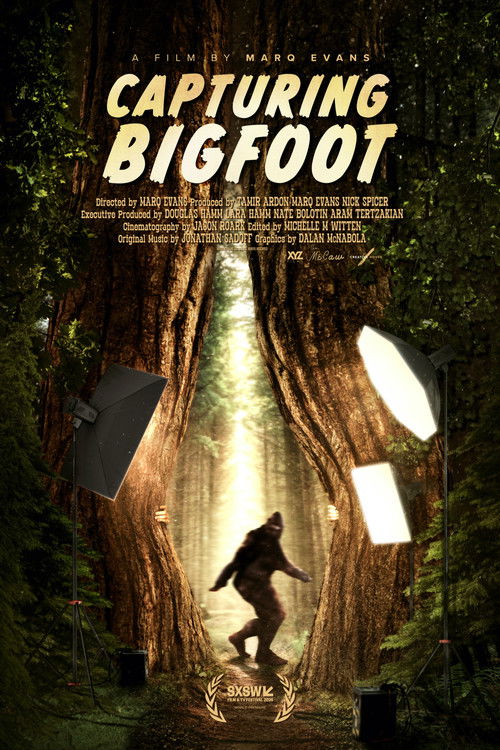
Capturing Bigfoot
Narrative tropes
A Parent's Shadow
highClint Patterson's entire narrative arc is defined by his father Roger's fabricated Bigfoot legacy. All five signals fire: Clint is explicitly compared to his father throughout; the hoax and the income it generated are the inherited secret driving the conflict; Clint faces a direct choice between perpetuating the legacy and going public; Roger's iconic reputation determines how family members treat Clint (disownment when he considered speaking out); and Clint ultimately defines himself on his own terms by participating in the documentary.
About this trope: A character must grapple with the legacy of their parents or predecessors — living up to high standards, running from expectations, atoning for inherited sins, or forging their own path.
You Can't Trust Anyone
highThe film's central revelation is that the most trusted figure in cryptozoology (Roger Patterson) was secretly a fraudster, and that his inner circle maintained the deception for decades to protect income. Four signals are present: a trusted authority is exposed as deceptive; the institution built around him (the Bigfoot research community) is revealed as built on a hoax; skeptics' paranoia is fully validated by the second reel and Clint's family admission; and the true source of the fraud was hiding in plain sight as the original eyewitness and filmmaker.
About this trope: Trusted allies, institutions, or authority figures are secretly working against the protagonist. Paranoia is justified because betrayal is real and pervasive.
Movies that share these tropes





Full plot (spoilers)
Capturing Bigfoot is a 2026 documentary directed by Marq Evans that reexamines the legendary Patterson-Gimlin film — the 59-60 seconds of 16mm footage shot on October 20, 1967, in the Northern California woods by Roger Patterson and Bob Gimlin, purportedly showing a large bipedal creature (nicknamed 'Patty') walking through the wilderness. The footage became the most analyzed and debated piece of cryptid evidence in history. The film's central revelation comes from the discovery of a second reel of 16mm film found in a locked safe belonging to Norm Johnson, an Olympic College film instructor whose father worked at a Boeing film lab with ties to Patterson and Gimlin. This newly surfaced 40-second clip, filmed in 1966 — one year before the famous footage — shows what appears to be a dress rehearsal featuring a slimmer, man-sized figure moving through a wooded area, raising serious questions about the authenticity of the iconic 1967 film. The documentary's emotional core lies with Clint Patterson, Roger Patterson's son, who reveals that his mother disclosed to him that the Bigfoot sighting was fabricated. Clint also describes being disowned by family members when he contemplated going public, due to the income the Bigfoot legend had generated. Also interviewed are Bob Gimlin (co-shooter of the original footage), Bob Heironimus (who claims he wore the Bigfoot costume), anthropologist Jeffrey Meldrum, and visual effects specialist Bill Munns. The film explores themes of family legacy, generational burden, financial exploitation, confirmation bias within believer communities, and how misinformation persists across decades. It premiered at SXSW on March 12, 2026, and received a US theatrical release on October 20, 2026 — the 59th anniversary of the original filming.
Sources: Wikipedia, Letterboxd, Yahoo Entertainment, Rotten Tomatoes, SXSW review (The Cinema Nook)