Movie
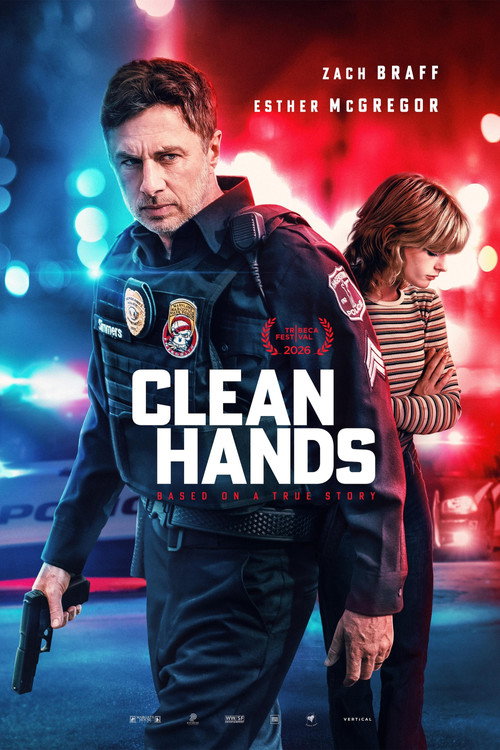
Clean Hands
Narrative tropes
Good Intentions, Terrible Results
highKevin's drug enforcement career is driven by genuinely sympathetic goals (cleaning up a trafficking corridor) with an internally consistent ideology — arrest dealers, reduce supply, protect communities. The film shows this well-intentioned plan producing monstrous outcomes: addicts are criminalized instead of treated, and Kevin's certainty in punishment-centered doctrine blinds him to his own daughter's need for compassion and care. The ends-justify-means debate (punishment vs. treatment) is the film's explicit central argument. Kevin's ideology is not corrupt but rather terribly wrong, and his certainty is framed as the danger — all core G1 signals.
About this trope: A villain — or sometimes a hero — genuinely believes they are doing the right thing, but their well-meaning plan leads to monstrous outcomes. The scariest antagonists think they're saving the world.
Cultural messages
The System Is Rigged
mediumThe drug enforcement apparatus (law enforcement, the war on drugs framework) is depicted as actively harmful rather than protective — it criminalizes addiction instead of treating it. Kevin's entire career of raids and convictions fails to prevent the opioid crisis or save his daughter, satisfying 'working within the system makes things worse.' Kevin ultimately must step outside institutional channels — founding Brooke's House, a private residential treatment center — to achieve meaningful justice for addicts, satisfying 'true justice only comes from outside institutional rules.' Kevin himself, as the authority figure, embodies willful negligence toward the treatment paradigm.
About this message: Institutions meant to protect people — governments, corporations, law enforcement, the justice system — are depicted as corrupt, incompetent, or actively harmful. Heroes must work outside official channels.
Movies that share these tropes


Full plot (spoilers)
Clean Hands is a biographical drama based on the true story of Kevin Simmers, a narcotics sergeant in Hagerstown, Maryland — a major trafficking corridor on the so-called 'Heroin Highway' — who led an aggressive drug enforcement taskforce dedicated to arresting dealers and cleaning up the streets. Kevin is regarded as a hero cop within law enforcement circles, operating firmly within the 'thin blue line' culture that prizes punitive, conviction-focused approaches to drug crime. At home, however, Kevin faces a devastating personal crisis: his 19-year-old daughter Brooke has developed an opioid dependency that began with prescription pain medication (Percocet) and escalated into full-blown heroin addiction. The film alternates between Kevin's professional world of raids and enforcement and the increasingly desperate reality of Brooke's addiction, forcing Kevin to confront the contradiction between his public crusade against drugs and his private failure to reach his own daughter. As Brooke's condition worsens, Kevin must reckon with the gap between the punishment-centered drug war ideology he has enforced throughout his career and the empathy, treatment, and compassion that addiction actually demands. Brooke ultimately dies from a heroin overdose in 2015. Devastated, Kevin undergoes a profound transformation — from hero drug cop to recovery advocate — and founds Brooke's House, a residential treatment center for women in recovery in Hagerstown, channeling his grief into systemic change. The film presents the opioid crisis through the dual lens of father and daughter, cop and addict, interrogating America's war on drugs from the inside.
Sources: Wikipedia, Tribeca Film Festival, Yahoo Entertainment, eyecravemovies.com, ComingSoon.net (search result)