Movie
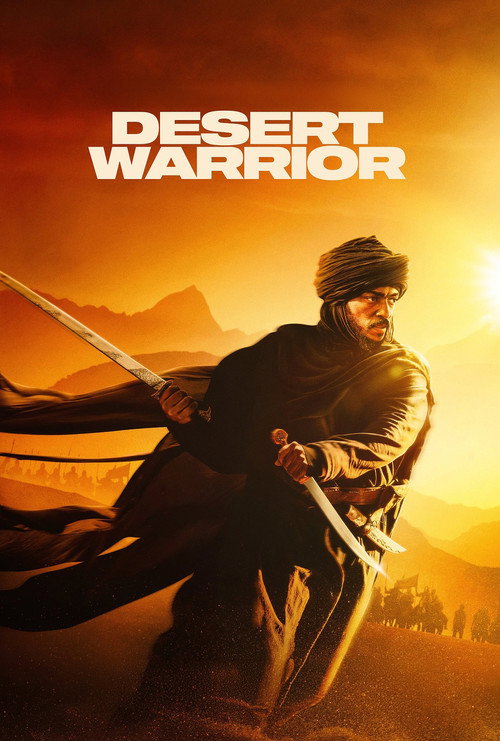
Desert Warrior
Narrative tropes
Rebels vs. The Empire
highThe Sasanian Empire is a vast oppressive regime demanding submission and concubines; Arab tribes are the outmatched resistance framed as morally righteous throughout. The regime is shown as cruel (demanding daughters, executing Al-Numan by elephant). A confederacy of tribes faces a numerically and militarily superior imperial army and prevails at Dhu Qar, explicitly framed as a historic turning point.
About this trope: A small outmatched group rises up against a massive oppressive regime or institutional power. The rebellion is framed as morally righteous.
Violence Gets Results
highEvery non-violent approach fails: Al-Numan's flight and the Shaybani sanctuary only delay imperial pursuit; his peaceful return and submission ends in execution. The central conflict with the Sassanid Empire is resolved exclusively at the Battle of Dhu Qar through tactically sophisticated combat including flanking maneuvers and poisoning. The Arab victory is the story's triumphant payoff with no narrative questioning of the violent path.
About this trope: The central conflict is ultimately resolved through physical force rather than negotiation, diplomacy, or systemic change. Talking fails; fighting works.
Cultural messages
Humanity Must Unite
highThe tribes are explicitly described as 'warring, distrustful' before Hind's campaign. She travels the peninsula delivering a unity speech to each leader. Victory at Dhu Qar is impossible without the coalition — no single tribe could face the Sassanid army alone. Former rivals fight side by side in the climax, and the shared imperial threat is framed as larger than any inter-tribal dispute.
About this message: A shared external threat forces divided groups to set aside differences and cooperate. Unity across lines of division is both necessary for survival and morally uplifting.
Movies that share these tropes






Full plot (spoilers)
Set in seventh-century pre-Islamic Arabia, Emperor Kisra II (Ben Kingsley) of the Sasanian Empire demands that all Arabian tribal kings pledge submission by surrendering their daughters as concubines. King Al-Numan refuses this decree and flees into the desert with his daughter, Princess Hind (Aiysha Hart), as Sassanid forces and mercenary bandits led by a commander named Jalabzeen give chase. Desperate for a guide, the fugitive royals strike a deal with a mysterious black-clad bandit named Hanzala (Anthony Mackie), who agrees to lead them to the nearby Shaybani territory in exchange for gold. The Shaybani leader shelters them and refuses to hand them over despite imperial pressure. Al-Numan ultimately chooses to return and face the emperor rather than live as a fugitive; he is condemned and executed by being crushed beneath an elephant. Grief-stricken but galvanized by her father's death, Hind resolves not to hide but to fight. She travels across the Arabian peninsula, meeting the leaders of warring, distrustful tribes one by one and making the case for a unified Arab resistance against Persian imperial rule. Gradually the clans agree to set aside their feuds. Hanzala, initially motivated purely by payment, is drawn into the cause and becomes a committed ally. The film culminates in the Battle of Dhu Qar, a historically attested engagement in which a confederation of Arab tribes faced the numerically and militarily superior Sassanid army. Hind commands the allied forces with authority, and the battle is depicted as tactically sophisticated, involving flanking maneuvers and calculated use of poisoning tactics against the imperial forces. The Arab tribes prevail, and the victory at Dhu Qar is framed as a turning point that reverberates through history.
Sources: Wikipedia (Premise section only), Flickering Myth review, In Review Online review, Plugged In review