Movie
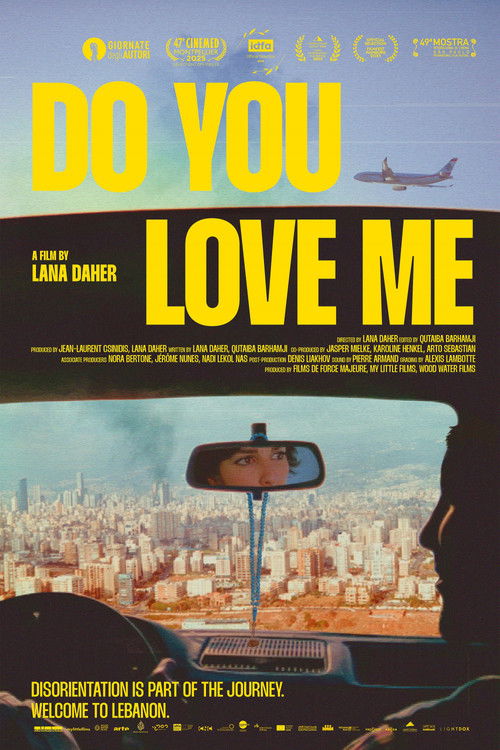
Do You Love Me
Narrative tropes
Humans Never Give Up
highLebanon and its citizens face decades of recurring war, destruction, and social upheaval — objectively hopeless circumstances. Despite this, ordinary people, artists, and filmmakers keep creating, self-documenting, and persisting. The film explicitly frames this creative vitality as a form of resistance, celebrating the Lebanese people's refusal to surrender their collective memory. The emotional payoff is not a final victory but the ongoing act of persistence itself — joy and intimacy alternating with destruction in a rhythm that emphasizes endurance over resolution. Four signals present: (1) artists/citizens refuse to quit amid repeated conflict; (2) survival through recurring cycles of destruction is the central subject; (3) hope and creative exuberance persist when logic says they shouldn't; (4) the climax is the decision to keep going and self-document, not a definitive triumph.
About this trope: Facing impossible odds, humans endure, adapt, and find reasons to keep going. Resilience and refusal to surrender is humanity's defining and most admirable trait.
Movies that share these tropes





Full plot (spoilers)
Do You Love Me is an essay-film documentary by Lebanese multidisciplinary artist Lana Daher, built entirely from archival footage spanning roughly seven decades (1950s to the present). Rather than using traditional documentary devices such as voiceover narration or present-day interviews, the film orchestrates more than 20,000 hours of found material — newsreels, fiction films, home movies, television clips, still photographs, art installations, and pop songs — into a flowing montage that maps Lebanon's collective audiovisual memory. The film moves associatively through the Lebanese psyche, alternating between moments of intimacy, playfulness, and everyday joy and images of destruction, war, and social upheaval, reflecting the country's recurring cycles of conflict and resilience. By weaving together the perspectives of ordinary citizens, filmmakers, and artists, it reconstructs a fragmented national history in the absence of any formal national archive. The title frames the entire project as a love letter addressed to Beirut: an act of emotional reckoning with a city and a people defined by both creative vitality and repeated trauma. The film celebrates artistic expression as a form of resistance and a means of preserving collective memory, suggesting that self-documentation by Lebanese citizens and artists has functioned as an unofficial archive in the state's place. The result maintains, according to critical commentary, a rhythm that moves fluidly between calm, exuberance, and disorder. The film premiered as a Venice Days special event and won the Political Film Award at the Hamburg Film Festival.
Sources: TMDb overview (provided), Icarus Films distributor page, Web search aggregation (Film at Lincoln Center, LightDox, Doha Film Institute listings)