Movie
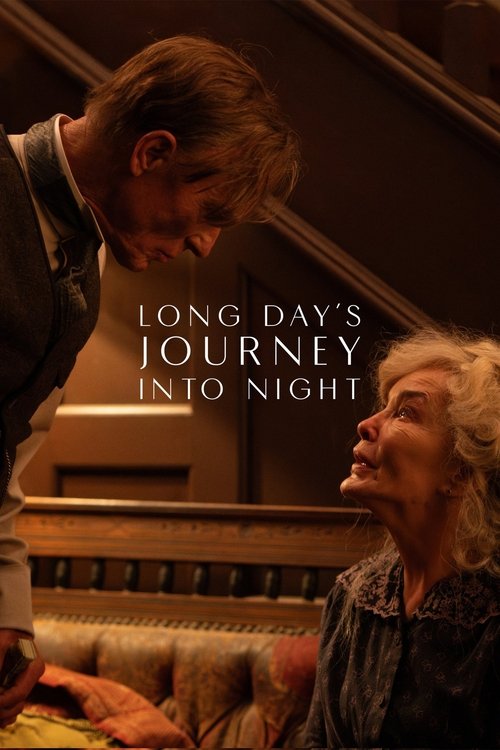
Long Day's Journey into Night
Narrative tropes
A Parent's Shadow
highThe entire drama turns on how James Tyrone's emotional coldness, miserliness, and past choices have shaped — and damaged — both sons. Jamie explicitly blames his father's penny-pinching for his wasted potential as an actor; Edmund's medical fate hinges on James's recurring cheapness. Both sons are defined against their father (Jamie as the failed mirror image, also an actor), James's fame and reputation govern how the family sees itself, and the inherited burden of Mary's addiction (tied directly to James's decisions about her treatment) is the wound that drives every confrontation. The film's core arc is Jamie's and Edmund's struggle with whether they can define themselves outside their father's shadow — a struggle that ends unresolved but fully foregrounded. The one signal absent is a clean resolution where a character redefines themselves on their own terms; the story ends in exhausted recognition rather than liberation.
About this trope: A character must grapple with the legacy of their parents or predecessors — living up to high standards, running from expectations, atoning for inherited sins, or forging their own path.
Movies that share these tropes




Full plot (spoilers)
Set over the course of a single day in August 1912 at the Tyrone family's Connecticut seaside home, the film follows four family members trapped in cycles of recrimination and mutual dependence. James Tyrone, a celebrated but miserly stage actor, and his wife Mary anchor the household. Mary has recently returned from a sanatorium where she was treated for a morphine addiction, but her recovery is fragile; over the day she relapses and retreats deeper into narcotic haze and nostalgic fantasy. Their elder son Jamie is a dissolute, failing actor who drinks heavily and blames his father's penny-pinching and emotional coldness for his own wasted potential. Younger son Edmund, who has just returned from time at sea, is gravely ill; the family learns he likely has consumption (tuberculosis), and James must decide whether to send him to an expensive sanitarium or a cheap state facility. As the hours pass, the four circle each other in a series of emotionally volatile confrontations: the brothers clash repeatedly over how to help their mother and what their father's choices have cost them; James and Jamie trade bitter accusations; Edmund and his father share a rare moment of tentative honesty. Mary's worsening condition—she disappears upstairs and returns visibly drugged—forces each man to oscillate between tenderness and rage. By nightfall the family has exhausted itself in mutual confession and blame, arriving at no resolution, only an anguished recognition of how deeply they are bound together by love, resentment, and shared ruin. The film is a direct adaptation of Eugene O'Neill's semi-autobiographical 1956 play, with a screenplay by David Lindsay-Abaire and direction by Jonathan Kent. The film has not yet been released as of its research date; this plot reflects promotional descriptions and the source play.
Sources: British Council UK Films Database, Wikipedia (Long Day's Journey into Night 2025 film), Web search aggregated synopsis