Movie
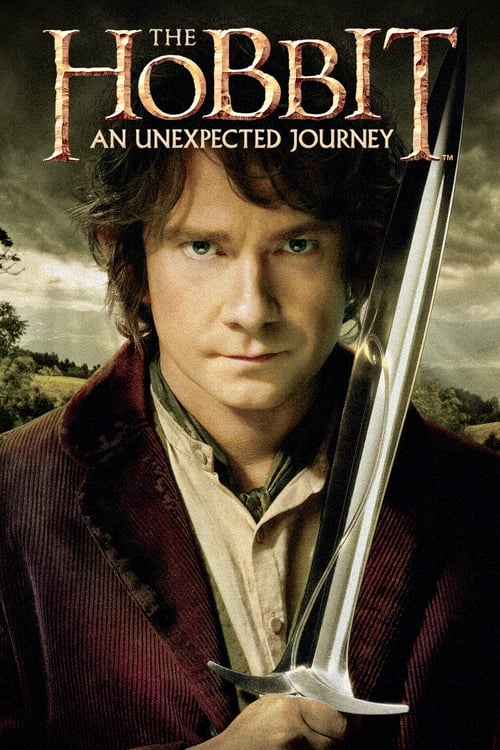
The Hobbit: An Unexpected Journey
Narrative tropes
Violence Gets Results
highEvery major threat in the film is resolved through violence: Gandalf uses sunlight to destroy the trolls, kills the Great Goblin, and the Eagles disperse the warg-riders. The climax is Bilbo and Thorin fighting Azog's orcs directly. Diplomatic alternatives fail (Thranduil refuses aid, Saruman forbids the quest) and the story never questions whether combat was the right approach.
About this trope: The central conflict is ultimately resolved through physical force rather than negotiation, diplomacy, or systemic change. Talking fails; fighting works.
A Parent's Shadow
highThorin's entire arc is defined by his grandfather Thrór: the opening flashback establishes Thrór's golden kingdom and its fall, Thorin's resentment of Thranduil stems from Thrór's rejection, and the quest to reclaim Erebor is framed as fulfilling an ancestral obligation. Thrór's reputation shapes how others treat Thorin (Thranduil's refusal references his ancestors' arrogance), and Thorin must navigate between honoring that legacy and forging his own identity—culminating in his embrace of Bilbo as proof he's grown beyond his grandfather's insularity.
About this trope: A character must grapple with the legacy of their parents or predecessors — living up to high standards, running from expectations, atoning for inherited sins, or forging their own path.
Cultural messages
Family Is Everything
mediumThe entire quest is motivated by the loss of the dwarves' ancestral home and the need to reclaim it ('there's no place like home' drives the plot). Found-family bonds are the emotional mechanism: Bilbo's decisive act is saving Thorin from Azog, which earns him Thorin's embrace and acceptance into the company as kin. Bilbo chooses to remain with the company despite danger, prioritizing belonging over comfort.
About this message: Family bonds — biological or found — are ultimately what saves the day, provides meaning, and matters most. Characters who stray from family suffer; those who return are rewarded.
The System Is Rigged
mediumThe White Council is presented as the authoritative institution governing the response to darkness in Middle-earth, yet Saruman dismisses the Necromancer threat and explicitly forbids the quest. Working within the system fails completely, so Gandalf secretly sends the dwarves ahead while deceiving the Council. Progress happens only by operating outside the sanctioned institutional channel.
About this message: Institutions meant to protect people — governments, corporations, law enforcement, the justice system — are depicted as corrupt, incompetent, or actively harmful. Heroes must work outside official channels.
Movies that share these tropes


Full plot (spoilers)
The story opens with elderly Bilbo Baggins writing his memoirs for his nephew Frodo on the eve of his 111th birthday. In flashback, King Thrór's prosperous dwarven kingdom under the Lonely Mountain is destroyed when the dragon Smaug attacks, razing the nearby city of Dale and seizing the dwarves' vast treasure hoard. Thrór's grandson Thorin Oakenshield seeks aid from Elf-king Thranduil, who refuses, sowing lasting resentment. In the Shire, fifty-one-year-old Bilbo Baggins is manipulated by the wizard Gandalf the Grey into hosting a dinner for Thorin and twelve dwarves—Balin, Dwalin, Fíli, Kíli, Dori, Nori, Ori, Óin, Glóin, Bifur, Bofur, and Bombur. Gandalf proposes Bilbo serve as the company's burglar on a quest to reclaim the Lonely Mountain and its treasure. Bilbo initially refuses, but has a change of heart and rushes to catch the departing company the next morning. On the road, the group is captured by three trolls. Bilbo stalls them with conversation until Gandalf exposes the trolls to sunlight at dawn, turning them to stone. The company raids the trolls' cave and recovers Elven weapons: Thorin takes the blade Orcrist, Gandalf takes Glamdring, and Bilbo is given a small Elven dagger. The wizard Radagast the Brown arrives and warns Gandalf of a dark sorcerer called the Necromancer who is corrupting Greenwood the Great from the fortress of Dol Guldur. Pursued by orc warg-riders, Gandalf leads the company through hidden paths to Rivendell. There, Lord Elrond reveals that the dwarves' map contains a secret door visible only by moonlight on Durin's Day. Gandalf convenes with the White Council—Elrond, Galadriel, and Saruman—and presents a Morgul blade recovered from Dol Guldur, suggesting the Necromancer may be Sauron reincarnate. Saruman dismisses the threat and forbids the quest, but Gandalf has already secretly sent the dwarves ahead. Continuing into the Misty Mountains, the company shelters in a cave and is ambushed by goblins who drag them before the Great Goblin. Bilbo is separated from the group, tumbling into a deep crevice where he encounters the creature Gollum. Gollum accidentally drops a golden ring, which Bilbo pockets. The two engage in a riddle contest: Gollum wagers safe passage against Bilbo's life. Bilbo wins with the riddle 'What have I got in my pocket?' and flees, discovering the ring grants invisibility. He briefly considers killing the sleeping Gollum but spares him out of pity. Meanwhile, Gandalf rescues the dwarves, killing the Great Goblin. Bilbo rejoins the company, concealing the ring. The group is then set upon by Azog, a pale orc warchief who previously slew Thrór and lost his forearm to Thorin during the Battle of Azanulbizar. The company is cornered in trees at a cliff edge. Thorin charges Azog alone but is badly wounded; Bilbo leaps to his defense and fights Azog's orc. Eagles summoned by Gandalf arrive and carry the entire company to safety. At Carrock, Gandalf heals Thorin's wounds; Thorin, humbled by Bilbo's courage, abandons his contempt for the hobbit and embraces him. The company gazes upon the distant Lonely Mountain. Inside it, a thrush's knock against a snail echoes through the caverns and rouses the sleeping dragon Smaug.
Sources: Wikipedia