Movie
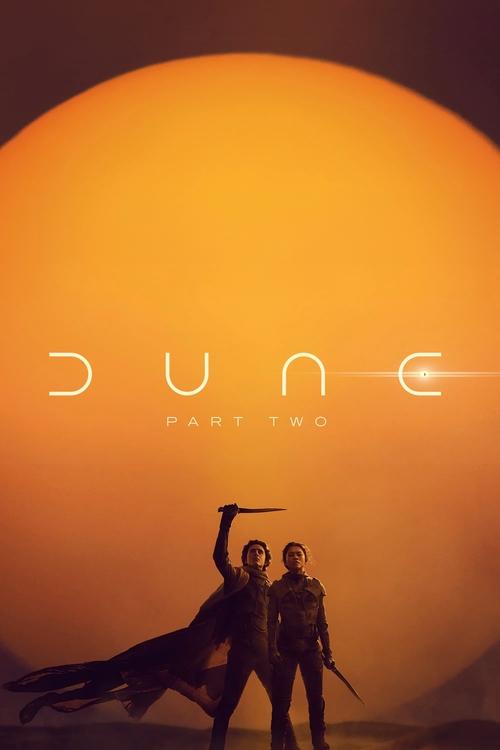
Dune: Part Two
Narrative tropes
Rebels vs. The Empire
highPaul and the Fremen are a small outmatched resistance against the Emperor's Sardaukar, the Harkonnen military machine, and the full Imperium. The Fremen are framed as morally righteous throughout; the regime is shown as cruel (Feyd-Rautha's massacre of Sietch Tabr, Rabban's pacification campaign). The story ends with Paul's forces capturing the imperial court, the Baron executed, and the Emperor forced to submit — the regime is decisively overthrown.
About this trope: A small outmatched group rises up against a massive oppressive regime or institutional power. The rebellion is framed as morally righteous.
One Hero Changes Everything
highPaul's individual abilities — prescience, Kwisatz Haderach status, combat skill — are the decisive factor at every turn: uniting the Fremen tribes, drinking the Water of Life and surviving, defeating Feyd-Rautha in personal combat, executing the Baron, and bending the Emperor's will through the spice threat. The Fremen are a capable force, but their entire uprising is catalyzed and led by Paul; without him Sietch Tabr falls and the rebellion fails.
About this trope: One exceptional individual matters more than institutions or collective action. Problems affecting millions are solved by a single remarkable person. Everyone else is passive.
Violence Gets Results
highThe central conflict — House Atreides' defeat and the Harkonnen/imperial occupation of Arrakis — is resolved entirely through violence: guerrilla raids, atomic detonation of the Shield Wall, sandworm cavalry charges, and Paul killing Feyd-Rautha in single combat. Negotiation occurs only after military victory forces it. Paul's combat ability and willingness to destroy the spice are the levers that bend the Imperium; no non-violent avenue is attempted or succeeds.
About this trope: The central conflict is ultimately resolved through physical force rather than negotiation, diplomacy, or systemic change. Talking fails; fighting works.
Born Special
highPaul's specialness is entirely innate: he is the product of a Bene Gesserit centuries-long genetic breeding program designed to produce the Kwisatz Haderach. The Lisan al Gaib prophecy names him as the chosen individual. His parentage (Jessica as Baron Harkonnen's illegitimate daughter, the culmination of the breeding line) is the explicit source of his powers. No amount of training produces what he can do — Chani, equally trained, cannot drink the Water of Life and survive.
About this trope: Certain characters are inherently special by birth, blood, genetics, or prophecy — not through effort or choice. Greatness is innate, not earned.
Man-Made Monsters
mediumThe Bene Gesserit is the identifiable creator: their centuries-long genetic breeding program engineered Paul as the Kwisatz Haderach — a superbeing who exceeds their design and control. Chani explicitly frames the messianic prophecy as a Bene Gesserit manipulation, warning that Paul will be used to ignite someone else's war. The creation ends exactly as she feared: Paul launches a galaxy-wide jihad the Bene Gesserit did not intend and cannot stop, with the final shot emphasizing the catastrophic scale of their overreach.
About this trope: A creator uses science to overstep natural boundaries — creating life, resurrecting the dead, engineering organisms, or fundamentally altering nature — and the creation turns destructive.
You Can't Trust Anyone
highPaul discovers that Emperor Shaddam IV secretly orchestrated the Harkonnen attack that destroyed House Atreides — the most powerful institution in the Imperium was the hidden enemy. Additionally, Paul learns his own mother Jessica is Baron Harkonnen's illegitimate daughter, exposing a Bene Gesserit conspiracy hidden across generations. Chani's suspicion that the Lisan al Gaib prophecy was manufactured manipulation proves correct. Every trusted authority in the story is revealed as complicit in deception.
About this trope: Trusted allies, institutions, or authority figures are secretly working against the protagonist. Paranoia is justified because betrayal is real and pervasive.
A Parent's Shadow
highPaul's entire arc is defined by his father Leto's legacy (avenging House Atreides) and his mother Jessica's secret lineage (Baron Harkonnen's daughter, the culmination of the breeding program). Inherited secrets — Jessica's parentage, the Bene Gesserit's manipulation — drive the central conflict. Paul must choose between forging his own path (Chani's hope) and fulfilling a hereditary destiny not of his choosing; the film ends with him accepting the inherited role at the cost of everything personal.
About this trope: A character must grapple with the legacy of their parents or predecessors — living up to high standards, running from expectations, atoning for inherited sins, or forging their own path.
Cultural messages
Power Always Corrupts
highPaul begins the film actively resisting the messianic role, then gradually embraces it after drinking the Water of Life. His arc ends with him declaring himself Lisan al Gaib, forcing a political marriage on Princess Irulan, threatening to destroy the galaxy's most vital resource, and launching a jihad — Chani notices and warns throughout, ultimately departing in heartbreak. The story frames his acquisition of power as transformative and ominous, not triumphant.
About this message: Gaining power — political, magical, technological, or financial — inevitably warps even the noblest people. Power is an inherently corrupting force.
The System Is Rigged
highThe Emperor — the highest institutional authority — secretly orchestrated House Atreides' destruction. The conspiracy is exposed by Paul, who discovers the betrayal via prescient visions. Trusting the imperial system got House Atreides killed; justice only comes through Fremen insurgency operating entirely outside imperial law. Paul defeats the system from without, forcing the Emperor to submit at swordpoint.
About this message: Institutions meant to protect people — governments, corporations, law enforcement, the justice system — are depicted as corrupt, incompetent, or actively harmful. Heroes must work outside official channels.
Power Means Duty
highPaul's extraordinary prescient abilities and Kwisatz Haderach status create an explicit moral burden: he long resists declaring himself messiah precisely because he foresees the jihad his acceptance will ignite. His personal happiness (his relationship with Chani) is ultimately sacrificed to the duty of uniting the Fremen. The story frames his arc as the crushing weight of obligation accepted — at ruinous personal cost.
About this message: Those gifted with extraordinary abilities, wealth, or status have a moral obligation to use them for others — and the weight of that duty can be crushing. Privilege creates obligation.
The Outsider Knows Best
highPaul is a Caladan-born noble outsider who enters Fremen society, earns his place through ritual combat (killing Jamis), adopts desert names (Usul, Muad'Dib), and rapidly becomes the community's supreme leader and military savior. His emotional arc dominates the film; the Fremen's story exists largely to validate his journey. The Fremen were enduring oppression before Paul arrived — his leadership transforms them into a force that defeats the entire Imperium.
About this message: A privileged outsider enters a community, masters its ways, and becomes its greatest champion or leader. The community apparently couldn't save itself without the outsider's help.
Movies that share these tropes





Full plot (spoilers)
Following House Atreides' devastating defeat by House Harkonnen — secretly orchestrated by Emperor Shaddam IV — Princess Irulan records her father's betrayal in her private journal. On Arrakis, a Fremen tribe led by the devout Stilgar gives refuge to Paul Atreides and his pregnant mother Lady Jessica. Paul earns his place among the Fremen by killing Jamis in ritual combat. Jessica undergoes a perilous rite, drinking the Water of Life to become the new Reverend Mother; the experience also awakens the consciousness of her unborn daughter Alia. Paul immerses himself in Fremen life, taking the desert names Usul and Muad'Dib, and leads guerrilla raids on spice-harvesting operations. He and Chani grow close, though Chani remains skeptical, viewing the messianic Lisan al Gaib prophecy as a Bene Gesserit fabrication designed to manipulate the Fremen into fighting someone else's war. Meanwhile, Baron Vladimir Harkonnen, dissatisfied with his nephew Rabban's failures, replaces him with the brutal and cunning Feyd-Rautha to pacify Arrakis. When Feyd-Rautha launches a savage attack on Sietch Tabr, Paul travels south to the deep desert and drinks the Water of Life himself, falling into a death-like coma. Chani refuses to abandon him and ultimately revives him. Through powerful prescient visions, Paul perceives multiple possible futures and uncovers that his mother Jessica is the Baron's illegitimate daughter — a revelation that exposes the Bene Gesserit's centuries-long genetic breeding program to create a superbeing called the Kwisatz Haderach. Embracing the role he had long resisted, Paul declares himself the messianic Lisan al Gaib, uniting the Fremen behind him. Emperor Shaddam IV personally travels to Arrakis with elite Sardaukar troops to crush the uprising. The Fremen respond with a cataclysmic assault, deploying atomic weapons to shatter the Shield Wall and riding giant sandworms into battle. Paul's forces capture the imperial court, and Paul executes Baron Harkonnen. Paul confronts Emperor Shaddam, demands to wed his daughter Princess Irulan as the price of sparing the Emperor's life, and threatens to destroy the spice entirely — a threat that bends the entire Imperium to his will. He then defeats Feyd-Rautha in personal combat. Irulan accepts the political marriage to save her father. Chani, heartbroken and refusing to submit to the holy war she always feared Paul would ignite, departs alone on a sandworm into the deep desert. As the great houses of the Imperium reject Paul's terms and prepare to fight, Paul's jihad begins.
Sources: Wikipedia