Movie
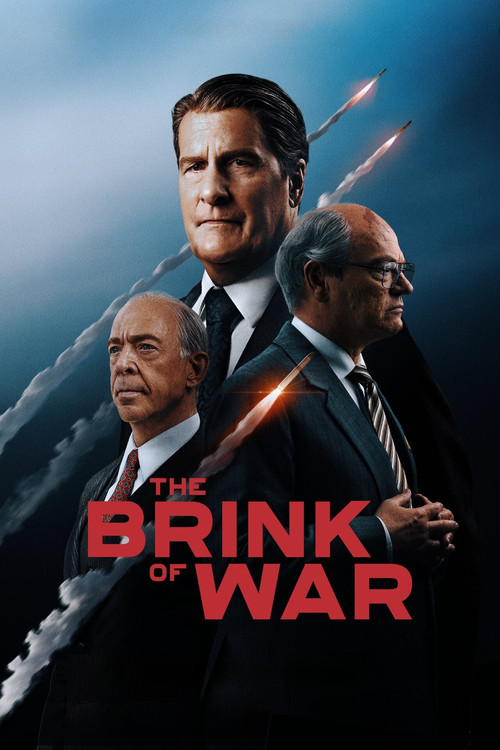
The Brink of War
Cultural messages
Humanity Must Unite
highThe US and USSR — the archetypal Cold War rivals — convene to address mutual nuclear annihilation, a shared existential threat neither superpower can escape unilaterally. All three detect_when criteria are met: (1) the two nations are deeply divided ideologically and militarily, (2) the shared threat (nuclear destruction) is framed as larger than any Cold War rivalry, and (3) bilateral cooperation — the dialogue itself — is the mechanism that catalyzes the eventual INF Treaty. Four signals fire clearly: rival factions set aside conflict (summit convened despite Cold War tensions), victory is impossible without both parties (disarmament requires mutual agreement), the shared threat is explicitly larger than any internal dispute (the film frames nuclear abolition as superseding ideological differences), and the two former adversaries negotiate side-by-side in the climax. A fifth signal — a speech about unity — is present in spirit through the 10.5 hours of direct dialogue and Gorbachev's 'Shakespearean passions' framing.
About this message: A shared external threat forces divided groups to set aside differences and cooperate. Unity across lines of division is both necessary for survival and morally uplifting.
Movies that share these tropes





Full plot (spoilers)
The Brink of War dramatizes the October 1986 Reykjavik Summit, a pivotal Cold War encounter in which U.S. President Ronald Reagan (Jeff Daniels) and Soviet General Secretary Mikhail Gorbachev (Jared Harris) convene for a tense 48-hour negotiating session at Hofdi House—a reputedly haunted building on the windswept Icelandic coast. Secretary of State George Shultz (J.K. Simmons) is also present as a key American negotiator. The two leaders engage in approximately ten and a half hours of direct, one-on-one discussions about nuclear arms reductions, at moments coming closer to a sweeping disarmament agreement than any prior summit. The central obstacle is Reagan's Strategic Defense Initiative (SDI, colloquially 'Star Wars'), a proposed missile-defense shield that Gorbachev fears would leave the Soviet Union strategically vulnerable; he insists SDI be confined to the laboratory for ten years as a precondition for deep cuts in offensive nuclear arsenals. Reagan refuses to surrender the program he regards as both a defensive safeguard and a potential bargaining chip. The film frames the negotiation as a high-wire diplomatic drama—Gorbachev later described 'Shakespearean passions' running beneath the surface of polite exchanges—with each exchange bringing the world either closer to historic peace or catastrophic breakdown. The summit ultimately ends without a signed agreement, the deal collapsing on the SDI question in its final hours. Yet the film contextualizes this apparent failure as a catalytic moment: the frankness of the dialogue and the near-miss of total nuclear abolition shock both sides and lay the groundwork for the 1987 Intermediate-Range Nuclear Forces (INF) Treaty, which eliminated thousands of missiles and opened decades of superpower cooperation. The narrative emphasizes that the courage to engage in dialogue—even without resolution—was itself a choice that pulled the world back from the brink.
Sources: Wikipedia, Washington Examiner (review/preview), Carnegie Endowment for International Peace event page, Angel.com official site