Movie
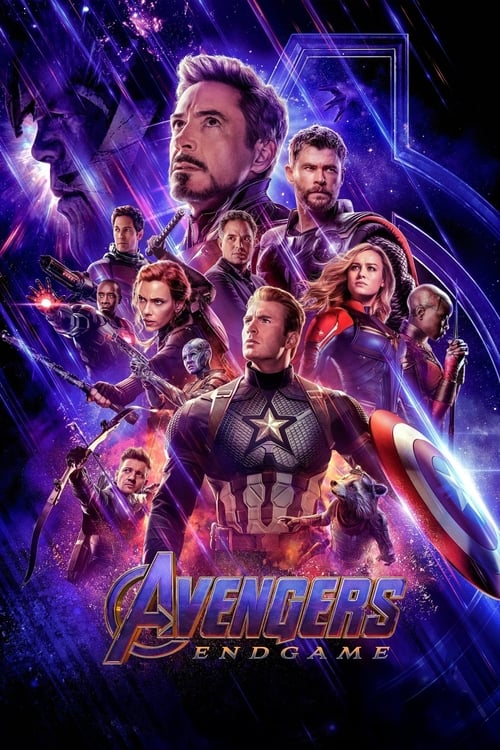
Avengers: Endgame
Narrative tropes
Violence Gets Results
highThe climax is an all-out battle; the first peaceful attempt (using the existing Stones to reverse the snap) fails because Thanos destroyed them; there is no negotiation with 2014-Thanos; the heroes' primary problem-solving tool throughout is combat; victory comes when Tony physically wrestles the Stones away and snaps Thanos's entire army into dust; the story frames Tony's death as a sacrifice but does not question whether mass destruction was the right path.
About this trope: The central conflict is ultimately resolved through physical force rather than negotiation, diplomacy, or systemic change. Talking fails; fighting works.
Good Intentions, Terrible Results
highThanos has a coherent, internally consistent rationale — halving all life to prevent resource exhaustion — and treats it as an act of mercy; his plan requires mass genocide justified as a necessary sacrifice; heroes must fight someone who sincerely believes he is saving the universe; the film presents his certainty as itself the horror rather than his cruelty.
About this trope: A villain — or sometimes a hero — genuinely believes they are doing the right thing, but their well-meaning plan leads to monstrous outcomes. The scariest antagonists think they're saving the world.
Humans Never Give Up
highFive years after catastrophic, irreversible-seeming loss, the surviving heroes refuse to accept defeat; Scott's quantum realm idea is a long-shot hope pursued against all rational odds; the emotional weight of the film rests on the decision to try — not the victory itself; the Avengers' stubborn refusal to accept the snap as permanent is implicitly contrasted with the rest of the world having moved on.
About this trope: Facing impossible odds, humans endure, adapt, and find reasons to keep going. Resilience and refusal to surrender is humanity's defining and most admirable trait.
Cultural messages
Humanity Must Unite
highPreviously separate factions — Avengers, sorcerers, Wakandans, Asgardians, Guardians of the Galaxy — unite against a single threat none could face alone; Doctor Strange's portal arrival is the visual embodiment of all groups converging; former rivals and one-time antagonists (e.g., Nebula) fight side by side; victory is explicitly impossible without all restored forces arriving together.
About this message: A shared external threat forces divided groups to set aside differences and cooperate. Unity across lines of division is both necessary for survival and morally uplifting.
Power Means Duty
mediumTony Stark explicitly retreats into domestic happiness before being pulled back by the weight of his unique ability to solve the time-travel problem; he sacrifices his settled family life and ultimately his life for the greater good; the film's emotional arc frames his identity as inseparable from the duty his power creates, culminating in 'I am Iron Man' as the final act of accepting that obligation.
About this message: Those gifted with extraordinary abilities, wealth, or status have a moral obligation to use them for others — and the weight of that duty can be crushing. Privilege creates obligation.
Movies that share these tropes



Full plot (spoilers)
Avengers: Endgame opens 23 days after Thanos used the assembled Infinity Stones to disintegrate half of all life in the universe. Carol Danvers rescues Tony Stark and Nebula from space, and the surviving Avengers — Banner, Rogers, Thor, Romanoff, Rhodes, and Rocket — locate Thanos on a remote planet, intending to use the Stones to undo the snap. They discover he has destroyed the Stones; enraged, Thor kills him. Five years pass. The world has not recovered. Scott Lang, having been trapped in the Quantum Realm during the snap, re-emerges having experienced only five hours. He proposes using the Quantum Realm for time travel to retrieve the Stones from the past. Stark, Banner, and Rocket build a time machine, and the team splits into groups for a 'time heist.' In 2012 New York, Banner retrieves the Time Stone from the Ancient One, Rogers steals the Mind Stone from Hydra agents, but 2012-Loki escapes with the Space Stone; Rogers and Stark travel further back to 1970 where Stark retrieves another Space Stone and briefly encounters his father. Rocket and Thor go to 2013 Asgard, where Rocket extracts the Reality Stone from Jane Foster and Thor reclaims his hammer Mjolnir after a conversation with his mother Frigga. On 2014 Morag, Nebula and Rhodes steal the Power Stone before Quill arrives. On Vormir, Barton and Romanoff learn the Soul Stone requires a life sacrifice; Romanoff gives her life so Barton can claim it. Back in the present, the Avengers assemble all six Stones into a new gauntlet, and Banner — whose gamma radiation makes him the most resistant — performs the snap, reversing the disintegrations. However, during the 2014 mission, the cybernetic link between present-Nebula and past-Nebula exposed the Avengers' entire plan to 2014-Thanos. He captures present-Nebula and sends past-Nebula forward in time as a spy. She transports 2014-Thanos's warship and army to the present, destroying the Avengers Compound. Thanos overpowers Stark, Thor, and Rogers in succession — though Rogers proves worthy of lifting Mjolnir. Just as Thanos's full army descends, Doctor Strange arrives with every restored hero: sorcerers, Wakandans, Asgardians, Guardians of the Galaxy, and more in a massive battle. Present-Nebula kills her 2014 self when she refuses to turn on Thanos. Carol Danvers arrives and destroys Thanos's warship. When Thanos manages to grab all six Stones, Stark wrestles them away and snaps his fingers, disintegrating Thanos and his entire army — at the cost of his own life. The film closes with Stark's funeral attended by all surviving heroes. Thor names Valkyrie ruler of New Asgard and departs with the Guardians. Rogers travels back in time to return each Stone to its original moment and chooses to remain in the past to live out his life with Peggy Carter; an elderly Rogers passes his shield to Sam Wilson.
Sources: Wikipedia