Movie
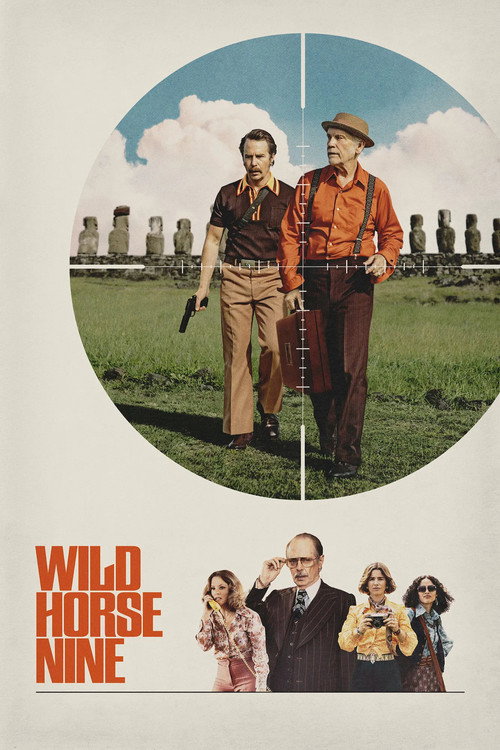
Wild Horse Nine
Narrative tropes
You Can't Trust Anyone
highThe central revelation is that MJ, Chris's trusted bureau chief and the character who dispatched them on the trip, has secretly ordered Chris's assassination. The CIA itself is the conspiracy — hiding plans for a coup, complicit in the Kennedy assassination, eliminating its own agents. Lee discovers he has been used as the instrument of betrayal. Signals: a major ally (MJ) is revealed as ordering the killing; the institution (CIA) is secretly compromised; Lee must navigate the impossible position of questioning everyone around him; the true threat was always the bureau chief operating in plain sight as a colleague.
About this trope: Trusted allies, institutions, or authority figures are secretly working against the protagonist. Paranoia is justified because betrayal is real and pervasive.
Good Intentions, Terrible Results
mediumThe CIA's actions — backing a coup against Allende, assassinating its own operative, suppressing the memoir — are framed as cold institutional pragmatism rather than malice. MJ's order to kill Chris is presented as a calculated security decision, not sadism. The film shows how internally consistent logic (protect the agency, protect ongoing operations) leads to monstrous outcomes. Signals: the antagonist's goals are operationally reasonable (prevent a security breach); the plan requires an atrocity justified as necessary (killing Chris); Lee's central dilemma explicitly stages an ends-justify-the-means debate.
About this trope: A villain — or sometimes a hero — genuinely believes they are doing the right thing, but their well-meaning plan leads to monstrous outcomes. The scariest antagonists think they're saving the world.
Cultural messages
The System Is Rigged
highThe CIA — an institution ostensibly serving national security — is revealed as corrupt at its core: MJ secretly orders the assassination of his own operative to suppress a security liability, the agency is implicated in the Kennedy assassination and a coming coup against a democratically elected government. Lee (the protagonist) is trapped between institutional duty and personal loyalty, and the story frames the CIA's cold bureaucratic machinery as the true antagonist. Signals: MJ is secretly villainous (orders assassination); a cover-up is embedded in an official body (memoir, Kennedy, Chile coup); the protagonist's own organization targets him (Chris is marked for death by his bureau chief); working within the system produces moral horror rather than justice.
About this message: Institutions meant to protect people — governments, corporations, law enforcement, the justice system — are depicted as corrupt, incompetent, or actively harmful. Heroes must work outside official channels.
Movies that share these tropes


Full plot (spoilers)
Set in Santiago, Chile in early 1973, just months before the CIA-backed military coup that will oust democratically elected President Salvador Allende, veteran CIA officer Chris Carlisle (John Malkovich) has received a terminal cancer diagnosis giving him roughly a week to live. His longtime partner and protégé Lee Chesterfield (Sam Rockwell) accompanies him as their bureau chief MJ (Steve Buscemi) dispatches them both from Santiago to Easter Island — ostensibly a last wish for Chris to see the island's famous Moai statues before he dies. Chris is a legendary operative whose career spans decades of CIA political interventions and assassinations throughout the 1950s and 1960s, including an alleged role in the Kennedy assassination, details of which he has committed to a memoir containing classified state secrets. On Easter Island, Chris's deteriorating health makes him forgetful and dangerously indiscreet: he carelessly drops hints about the impending coup and his CIA role to two Chilean college students, Monica (Mariana di Girolamo) and her travel companion Alicia (Ailín Salas), repeatedly and dismissively commenting on Allende's political viability despite Lee's increasingly alarmed warnings. Chris develops a genuine emotional bond with Monica in particular, a connection that cuts against the cold transactional logic of his professional life. Behind the scenes, MJ has secretly ordered Chris's assassination during the trip — not as a mercy killing but to eliminate the security liability he has become, preventing the memoir and his loose talk from exposing the agency's operations. The film's central tension runs between Lee's loyalty to Chris as a friend and surrogate father figure, and his obligation to carry out MJ's order; between Chris finding unexpected warmth and meaning in his final days, and the brutal institutional machinery that has defined his entire adult life. The story plays out against the iconic, enigmatic landscape of Easter Island, with the ancient statues serving as silent witnesses to American imperial ambition and the personal moral reckonings of two men shaped by it.
Sources: Wikipedia, DeepFocusReview, Letterboxd, IMDb (search metadata)