Movie
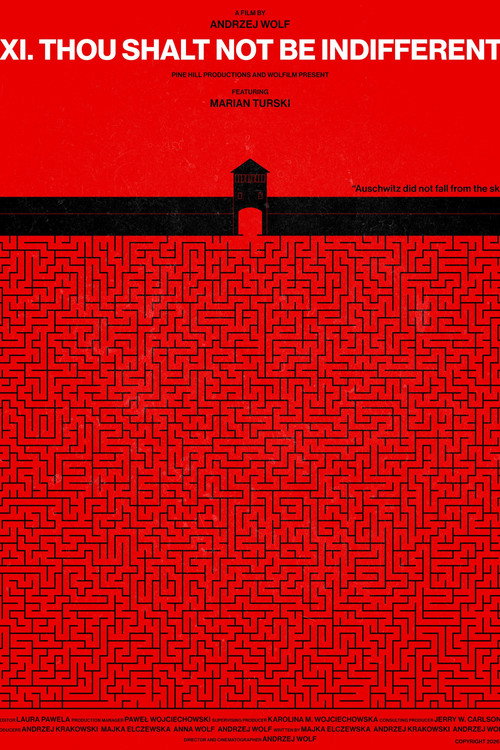
XI: Thou Shalt Not Be Indifferent
Cultural messages
Humanity Must Unite
mediumThe film's entire moral spine is a call for collective solidarity across divides: Turski's 'eleventh commandment' explicitly names nationality, race, religion, immigration status, and sexual orientation as groups that must all be defended together against a shared threat (intolerance, authoritarianism, historical indifference). The contemporary dimension — drawing parallels between Nazi-era persecution and current political figures — frames divisiveness and indifference as the shared enemy no single minority group can resist alone. Three signals are clearly present: a central speech about unity (Turski's recurring invocations), the argument that victory against intolerance requires solidarity across all groups, and the framing of authoritarian resurgence as a threat that dwarfs any internal differences.
About this message: A shared external threat forces divided groups to set aside differences and cooperate. Unity across lines of division is both necessary for survival and morally uplifting.
Movies that share these tropes






Full plot (spoilers)
XI: Thou Shalt Not Be Indifferent is a documentary built around the final moral testament of Marian Turski (1926–2025), a Polish Jewish historian, journalist, and Holocaust survivor who served as president of the International Auschwitz Committee. As narrator and central figure, Turski recounts his personal experiences as a prisoner in the Łódź Ghetto, Auschwitz-Birkenau, Buchenwald, and Theresienstadt, drawing on firsthand knowledge to explain how otherwise educated, cultured societies can descend into mass criminality and genocide. Rather than dwelling on the physical brutality of the camps, the film focuses on contempt and humiliation as the most corrosive instruments of Nazi persecution — illustrated through vivid details such as prisoners pooling bread rations to barter for replacement glasses for a fellow inmate, underscoring both the dehumanization inflicted by perpetrators and the solidarity maintained among victims. The documentary interweaves Turski's testimony with archival footage and, in its contemporary dimension, incorporates political speeches from figures such as Donald Trump, Andrzej Duda, and Jarosław Kaczyński to draw parallels between historical patterns of intolerance and present-day threats to democracy, minority rights, and truth. Turski's recurring invocation of an 'eleventh commandment — do not be indifferent' forms the film's moral spine: a plea to resist indifference when confronted with historical lies, the manipulation of the past for political ends, and the discrimination of any minority on grounds of nationality, race, religion, immigration status, or sexual orientation. He warns that distorted education can help create dictators and argues that vigilance, democratic institutions, and protection of minorities are the bulwark against repeating history. Director Andrzej Wolf, also the cinematographer, frames the film as a loving tribute to Turski, one of the last surviving moral witnesses of the Greatest Generation. Turski lived to see an early cut of the film before his death in 2025. The documentary was financed entirely through private funds, independent of government support, and received its US premiere in New York on May 8, 2026.
Sources: Polish Radio English Section, Nowy Dziennik (dziennik.com), TMDb overview