Narrative trope · Technology & Science Warnings
Big Brother Is Watching
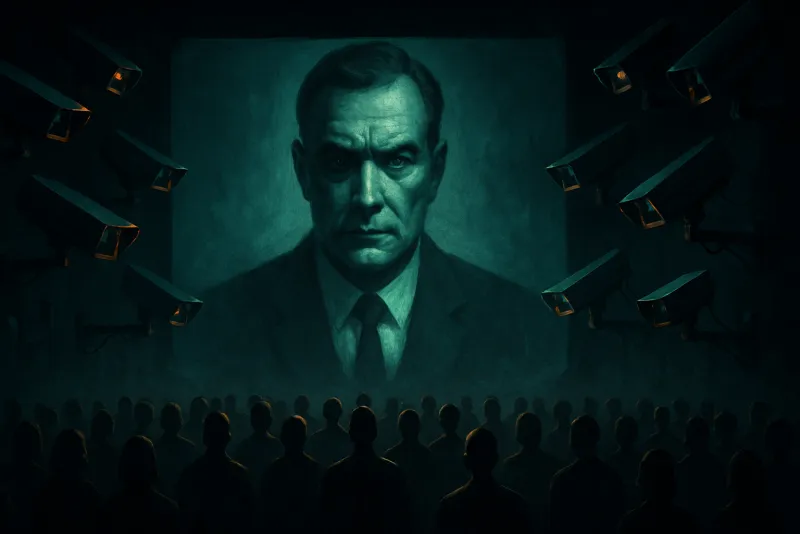
What it is
Surveillance technology is used by those in power to control, manipulate, or oppress people. The story presents a tension between security and freedom, concluding that surveillance is more dangerous than the threats it claims to prevent.
How to spot it
The plot contains ALL of: (1) a surveillance system, monitoring apparatus, or data-collection program, (2) the system is used or could be used for control rather than just protection, (3) characters must evade or confront the surveillance to act freely.
- A government, corporation, or powerful entity monitors people pervasively
- Characters discover they are being watched or tracked
- A security-vs-freedom debate occurs explicitly or implicitly
- The surveillance is presented as more threatening than the external danger
- A protagonist must go off-grid, destroy the system, or expose it
Classic examples
Captain America: The Winter Soldier (Project Insight), The Dark Knight (Batman's surveillance system), 1984, Minority Report, Black Mirror "Nosedive", Enemy of the State # ============================================================================ # CATEGORY B — NATURE & ENVIRONMENT # ============================================================================
Movies featuring this trope (10)

The Hunger Games: Sunrise on the Reaping
The Capitol monitors the entire arena through broadcast infrastructure and uses it as a control mechanism; Haymitch's filmed acts of defiance are surveilled and then erased from the official record, demonstrating the system's power over information; a security-vs-freedom tension is implicit throughout the Games' structure; Haymitch's decisive act is planting explosives to physically disable the arena's computer systems — a direct attempt to destroy the surveillance apparatus.

April X
Omnipresent surveillance drones explicitly stalk characters overhead throughout the city; corporations and criminal networks exploit April's dream-recording ability as a data-extraction/control mechanism; the film is framed as an explicit meditation on hyper-surveillance culture; surveillance is portrayed as psychologically consuming — drones mirror Bax's paranoid, fractured mental state — rather than functioning as neutral security infrastructure.
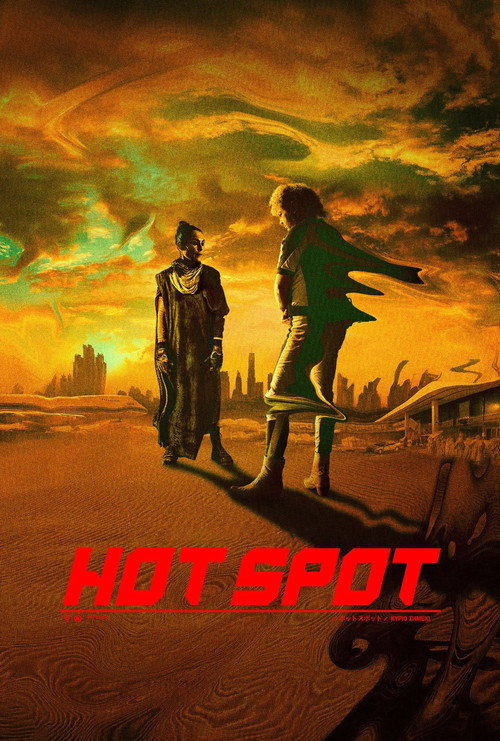
Hot Spot
The Head's forced telepathic connection to all of humanity is a form of total pervasive surveillance and control. The anti-tech religious sect refuses to link — going off-grid — and possesses the rare ability to disrupt The Head's digital reach, representing the freedom side of an implicit security-vs-freedom conflict. Rana's sect is the only group capable of acting outside The Head's monitoring. The surveillance apparatus is itself the central threat, not any external danger.

I Know Who You Are
A state security officer runs a decades-long covert surveillance operation by embedding himself in the suspect's residential compound — a formal monitoring apparatus wielded by those in power. The surveillance controls Feng's entire life for nearly 40 years, psychologically destroying him (guilt, moral crisis, attempted suicide) and hollowing out Xiao's own family — suggesting control as much as protection. Feng demonstrably knows he is being watched ('stoic defiance' of the surveillance) and must manage his behavior accordingly, satisfying the third detect-when criterion. Supporting signals present: (1) a government entity pervasively monitors an individual, (2) the subject discovers/knows he is under watch, (3) an implicit security-vs-freedom tension runs through the entire narrative as the film weighs duty against human cost. Signal 4 is partial — the surveillance operation exacts a toll on both men arguably equal to or exceeding the threat Feng poses. Signal 5 is absent — no one exposes or dismantles the system.
Disclosure Day
WARDEX functions as a pervasive data-collection and monitoring apparatus — its entire purpose since 1973 has been to document, control, and suppress information about alien encounters, keeping the funding untraceable and the truth from the public. Kellner's archive is itself a product of this surveillance regime. Kellner must go on the run to evade WARDEX operatives, a classic 'off-grid' survival arc. The cover-up is framed as more dangerous than the aliens themselves. A security-vs-freedom debate is embedded in the disclosure question. Four of five signals are clearly present; the fifth (surveillance depicted as more threatening than external danger) is strongly implied.
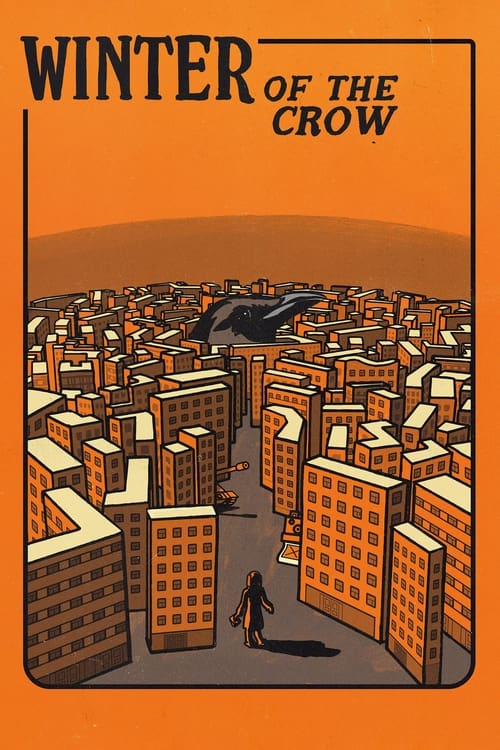
Winter of the Crow
The entire plot is built around the Polish martial law apparatus (the 'Crows' secret police) as a pervasive surveillance and control system. All three core elements are present: (1) the Crows constitute a state monitoring/enforcement apparatus, (2) it is used explicitly for political control — rounding up dissidents, not protecting citizens, (3) Joan must evade them throughout to act freely. All five signals fire: the state monitors pervasively under martial law; Joan becomes a tracked target after photographing violence; security-vs-freedom tension is the film's implicit spine; the surveillance apparatus is itself the primary threat (not any external danger); and Joan's goal is to expose the system by smuggling photographic evidence out of the country.

Eagles of the Republic
The state surveillance apparatus is the primary instrument of control: Mansour reveals Fahmy's home has been bugged, an overseer is installed on set, and Fahmy's every move is monitored. All three core conditions are met — a surveillance system exists (home bugging), it is used for control not protection (to enforce compliance with the propaganda film), and awareness of being watched directly constrains Fahmy's freedom to act or speak. Signals present: pervasive government monitoring, characters discovering they are watched, implicit security-vs-freedom tension, and the surveillance apparatus being more threatening to Fahmy than any external danger.
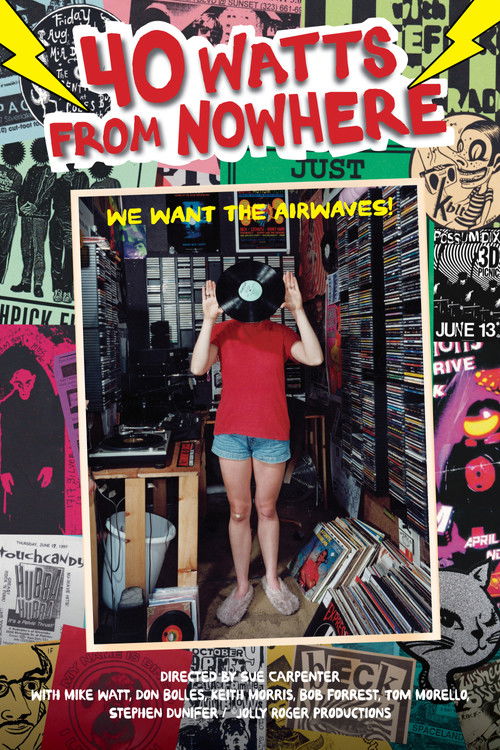
40 Watts from Nowhere
The FCC's spectrum-monitoring apparatus is the surveillance mechanism: Carpenter operated under the assumed name 'Paige Jarrett' specifically to evade detection, framing the entire operation as life under a watchful regulatory eye. Federal agents ultimately tracked KBLT down and forced a shutdown. The film implicitly stages a security-vs-freedom debate — FCC licensing regime vs. the public's right to hear diverse voices — and the protagonist's only path to broadcasting freely was to go off-grid and anonymous. Four of five signals are solidly present.

Furious 7
God's Eye is a mass-surveillance program that can locate any person on Earth via digital footprints — the plot's central MacGuffin. When Jakande seizes it, it is turned against the crew as a tracking weapon, demonstrating its oppressive potential. Ramsey — its creator — ultimately neutralizes it by remotely hacking and disabling it rather than letting it remain in any actor's hands. Mr. Nobody's government interest in the program adds an implicit security-vs-freedom tension.

The Hunger Games
The Hunger Games is explicitly a surveillance-broadcast apparatus used for political control, not security—Snow tells Crane it must inspire fear, not rebellion. Katniss is always aware of Capitol cameras and strategically performs for them (the romance, the flower tribute to Rue). Her berry gambit works precisely because it exploits the live broadcast, turning the surveillance apparatus against its operators. The system monitors all of Panem continuously as an instrument of oppression.