Movie
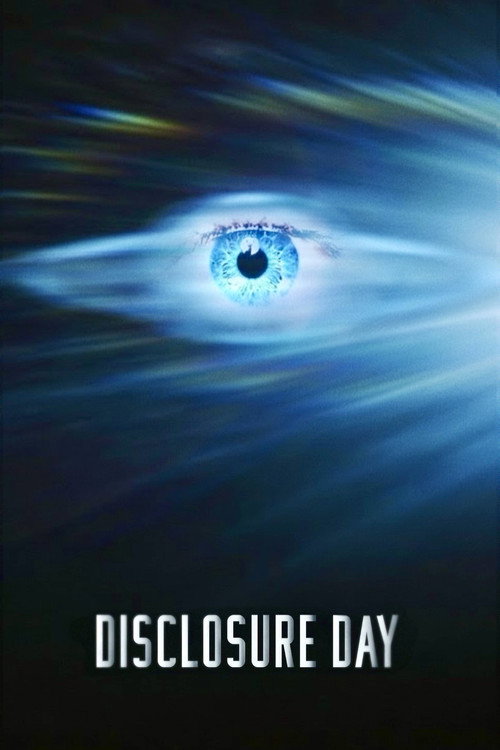
Disclosure Day
Narrative tropes
Rebels vs. The Empire
highKellner and Margaret are two outmatched individuals (plus defector Wakefield) going on the run against WARDEX, a powerful private megacorporation with operatives and the full weight of decades of secret government backing. The rebels are framed sympathetically as whistleblowers seeking public truth. WARDEX is depicted as corrupt and ruthless (holding Jane hostage as leverage). The plot builds toward 'disclosure day' — a climactic moment of resistance that meaningfully challenges WARDEX's control. All five signals present: oppressive megacorporation, small group against overwhelming odds, morally righteous rebels, corrupt dehumanizing regime, and meaningful resistance achieved.
About this trope: A small outmatched group rises up against a massive oppressive regime or institutional power. The rebellion is framed as morally righteous.
Big Brother Is Watching
highWARDEX functions as a pervasive data-collection and monitoring apparatus — its entire purpose since 1973 has been to document, control, and suppress information about alien encounters, keeping the funding untraceable and the truth from the public. Kellner's archive is itself a product of this surveillance regime. Kellner must go on the run to evade WARDEX operatives, a classic 'off-grid' survival arc. The cover-up is framed as more dangerous than the aliens themselves. A security-vs-freedom debate is embedded in the disclosure question. Four of five signals are clearly present; the fifth (surveillance depicted as more threatening than external danger) is strongly implied.
About this trope: Surveillance technology is used by those in power to control, manipulate, or oppress people. The story presents a tension between security and freedom, concluding that surveillance is more dangerous than the threats it claims to prevent.
You Can't Trust Anyone
highKellner works for WARDEX and presumably trusted its legitimacy before Wakefield's defection revealed the depth of its corruption. An institution Kellner operated inside is secretly working against humanity's right to truth. The plot validates paranoia — Scanlon dispatches operatives to silence Kellner, and the protagonist must question who he can trust while on the run. The true enemy (WARDEX leadership) was hiding in plain sight as Kellner's employer. Four signals fire: compromised institution, conspiracy within an ostensibly official body, protagonist hunted by his own organization, and paranoia validated by events.
About this trope: Trusted allies, institutions, or authority figures are secretly working against the protagonist. Paranoia is justified because betrayal is real and pervasive.
Cultural messages
The System Is Rigged
highWARDEX is a private corporation that has secretly controlled U.S. government alien research since 1973, hiding the truth from the public — a textbook corrupt institution that should be trustworthy. The cover-up is the central conspiracy. Kellner is hunted by the very organization he worked for after deciding to expose it (disavowed by his own org). Wakefield confirms that working within the system is impossible, forcing Kellner to become a whistleblower. All five signals fire: villainous authority figures, a multi-decade cover-up inside an official-adjacent body, the hero opposed by his own organization, the system actively making things worse, and justice only achievable outside institutional rules.
About this message: Institutions meant to protect people — governments, corporations, law enforcement, the justice system — are depicted as corrupt, incompetent, or actively harmful. Heroes must work outside official channels.
Science vs. Faith
mediumThe film explicitly weaves in theological debates about whether alien disclosure would shatter humanity's relationship with God — a direct science-vs-faith tension. Jane (a former nun) embodies the faith side and undergoes a crisis of faith, while the WARDEX scientific-military apparatus represents cold rational secrecy. Three signals are clearly present: a spiritual character whose worldview is threatened by scientific revelation, a debate over whether empirical truth destroys religious meaning, and an implied climactic 'leap' (disclosure day as a faith-shattering or faith-affirming event). The third detect-when criterion — the story ultimately validating faith over rationality — is unconfirmed because the third act was withheld from marketing.
About this message: Characters face a choice between rational/scientific thinking and spiritual/intuitive belief. The story typically validates faith or emotion over cold logic — the scientist is wrong, the believer is vindicated.
Movies that share these tropes



Full plot (spoilers)
Cybersecurity expert Daniel Kellner works for WARDEX, a powerful private corporation that has since 1973 secretly overseen and documented the U.S. government's top-secret alien research program, keeping the funding untraceable and the truth hidden from the public. When former WARDEX executive Hugo Wakefield defects and approaches Kellner, he convinces him to become a whistleblower — Kellner possesses what amounts to a complete archive of America's documented alien encounters stretching back to the Roswell incident of 1947. The film opens with Kellner in the middle of a dangerous handoff, his girlfriend Jane (a former nun) held hostage as leverage. Meanwhile, in Kansas City, TV meteorologist Margaret Fairchild undergoes a mysterious transformation after a strange encounter: she suddenly acquires the ability to speak and understand any language, develops apparent telepathic or psychic powers, and begins emitting cryptic clicking sounds on live broadcasts that only Kellner can interpret. As WARDEX CEO Noah Scanlon dispatches operatives to silence Kellner, Daniel and Margaret are drawn together — they share a connection rooted in a trauma Margaret experienced as a child in the 1990s. The two go on the run across multiple locations, pursued by WARDEX in a breakneck conspiracy thriller featuring a car-through-house chase and a standout train sequence. Central to their quest is a mysterious piece of alien technology referred to as 'the device.' The film weaves in theological debates about whether public alien disclosure would shatter humanity's relationship with God — a tension embodied by Jane's crisis of faith. Spielberg has stated the full third act was withheld from marketing, so details of the resolution and the nature of 'disclosure day' itself are not publicly documented. Coverage confirms the film builds toward a climactic moment of alien revelation but specific ending details are not yet available in reviewed sources.
Sources: Wikipedia, IMDb, Variety, SlashFilm, Hollywood Life, TMDb