Movie
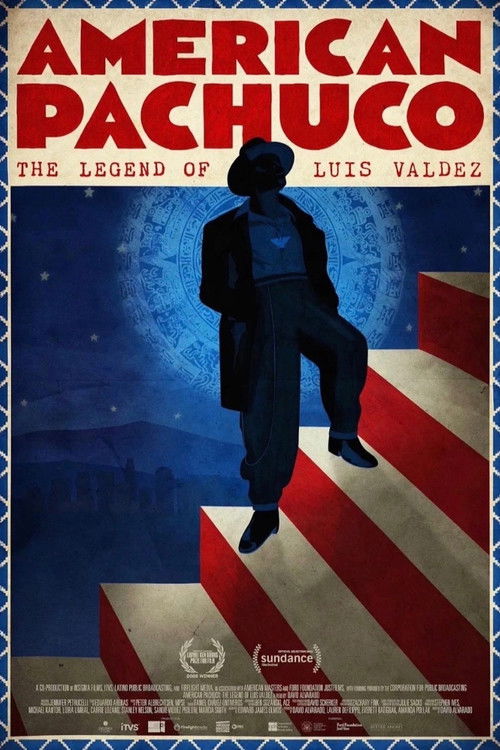
American Pachuco: The Legend of Luis Valdez
Narrative tropes
Rebels vs. The Empire
highEl Teatro Campesino is an archetypal small-band resistance against vast institutional power: Valdez and a handful of farmworker performers organizing in the fields against systemic racism, the agricultural industry, and Hollywood skepticism. All three core conditions are met — stark power imbalance, sympathetic framing of the resistance, and meaningful victory (first Chicano Broadway director, La Bamba's mainstream breakthrough). All five signals fire: oppressive institutions (racism, industry gatekeepers) dehumanize the community; a small troupe organizes against overwhelming odds; the rebels are portrayed as brave and morally righteous; the antagonistic establishment is shown as wrong; and victory is achieved despite the gap.
About this trope: A small outmatched group rises up against a massive oppressive regime or institutional power. The rebellion is framed as morally righteous.
Movies that share these tropes





Full plot (spoilers)
American Pachuco: The Legend of Luis Valdez is a 92-minute biographical documentary directed by David Alvarado that traces the life and legacy of Luis Valdez, widely regarded as the father of Chicano theater. Born into a family of Mexican migrant farmworkers, Valdez initially pursued engineering before switching to English literature and beginning to write scathing satirical plays about the Mexican American experience — racism, prejudice, and the struggle for dignity. His work earned him the label 'pachuco,' a reference to the 1930s Mexican American youth counterculture that defied mainstream assimilation. In 1965, amid the height of the United Farm Workers movement, Valdez joined Cesar Chavez in Delano, California, and founded El Teatro Campesino, a grassroots theater company that performed for striking farmworkers in the fields, using actos (short satirical sketches) to galvanize the labor movement. The film charts how Valdez transformed that raw, politically charged theatrical tradition into a broader artistic and cultural force, pushing Chicano storytelling far beyond the fields. Against significant political resistance and deep industry skepticism, he brought his play Zoot Suit to Broadway in 1979 — becoming the first Chicano director to stage a play on Broadway — and later adapted it for the screen. In 1987, he wrote and directed La Bamba, the mainstream Hollywood biopic about rock-and-roll pioneer Ritchie Valens, which became a major commercial and cultural breakthrough for Chicano representation in American film. The documentary draws on remarkable archival footage rescued from decay, extensive interviews with Valdez himself, and testimonials from prominent figures including Dolores Huerta, Rose Portillo, and Cheech Marin. Edward James Olmos, who starred in the original Zoot Suit stage production and film, serves as narrator in the persona of a pachuco figure who interjects candid, pointed commentary on Valdez's journey. Director Alvarado employs vibrant stylistic choices including split-screen visuals to evoke the theatrical energy of Valdez's work. The film frames Valdez's career as a decades-long act of cultural resistance — crafting stories that challenge, celebrate, and expand America's self-understanding.
Sources: Wikipedia, PBS American Masters, ITVS, Full Frame Documentary Film Festival, IMDb (attempted, no plot text returned), Web search aggregated results