Movie
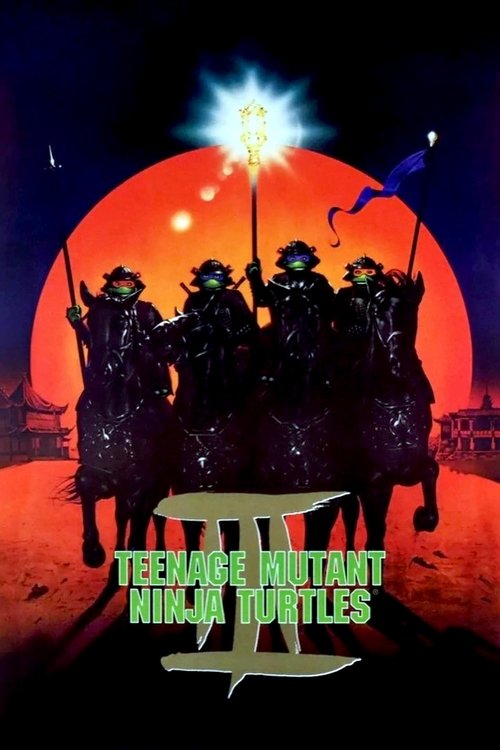
Teenage Mutant Ninja Turtles III
Narrative tropes
Rebels vs. The Empire
highMitsu's village rebels against Lord Norinaga's feudal rule — a small, outmatched resistance framed as heroic and morally righteous. Norinaga is depicted as cruel and corrupt (berating his pacifist son, dealing with an arms merchant). The Turtles join the rebellion, storm the palace in a climactic battle, and Norinaga ultimately surrenders to Mitsu — the regime is defeated despite the overwhelming power gap.
About this trope: A small outmatched group rises up against a massive oppressive regime or institutional power. The rebellion is framed as morally righteous.
Violence Gets Results
highThe central conflict (Norinaga's tyranny amplified by Walker's weapons deal) is resolved entirely through physical combat. The Turtles' primary capability is fighting; Leonardo defeats Norinaga in single combat; Walker is killed by catapult. Kenshin's pacifism is framed as a failure that dishonors his family, while the Turtles' martial intervention succeeds. The story never questions whether violence was the right approach.
About this trope: The central conflict is ultimately resolved through physical force rather than negotiation, diplomacy, or systemic change. Talking fails; fighting works.
Cultural messages
Family Is Everything
highThe Turtles' found family (with Splinter as father figure) is the emotional anchor throughout. The 60-hour deadline frames the entire plot as a race to return home. Despite genuinely valuing their respected status in feudal Japan, the Turtles choose to return to their family. The emotional resolution is Splinter consoling a grieving Michelangelo with an Elvis impression and a dance — a clear 'no place like home' payoff.
About this message: Family bonds — biological or found — are ultimately what saves the day, provides meaning, and matters most. Characters who stray from family suffer; those who return are rewarded.
The Outsider Knows Best
mediumThe Turtles are outsiders from another time who enter feudal Japan and become the rebels' most effective defenders. The village had been unable to resist Norinaga before the Turtles' arrival, and Mitsu's grandfather admits he manipulated the situation specifically to enlist their help. The Turtles' story takes narrative priority over the rebels', and they defeat Walker — himself a foreign outsider — on the community's behalf.
About this message: A privileged outsider enters a community, masters its ways, and becomes its greatest champion or leader. The community apparently couldn't save itself without the outsider's help.
Movies that share these tropes





Full plot (spoilers)
In 1603 feudal Japan, samurai pursue a young, pacifist prince named Kenshin through the woods while a mysterious woman watches from hiding. In present-day New York, approximately a year after the Turtles defeated Shredder, April O'Neil shops at a flea market and brings gifts to the Turtles and Splinter, including an ancient Japanese scepter — called the 'Sacred Sands of Time' — for Splinter. The scepter bears the inscription 'Open wide the gates of time.' Meanwhile in feudal Japan, Lord Norinaga berates his son Kenshin for his pacifism and dishonoring their family. English arms merchant Walker arrives offering weapons. Kenshin retreats to a temple, finds the identical scepter, and reads its inscription aloud — triggering a time-swap that exchanges April (sent to 1603 Japan) and Kenshin (sent to 1993 New York). April is imprisoned in feudal Japan, deemed a non-threat. The bewildered Kenshin mistakes the Turtles for mythical demons. The Turtles determine they have 60 hours before the scepter's magic fades and the swap becomes permanent. Casey Jones stays behind in New York to watch over Kenshin and the lair while the four Turtles use the scepter to travel back to 1603. The Turtles arrive in feudal Japan disguised as honor guards. Michelangelo encounters Mitsu, a fiery rebellion leader against Norinaga's rule. Mitsu seizes the scepter, complicating the Turtles' return plan. The Turtles gradually earn the trust of Mitsu's village by performing heroic acts, including rescuing her young brother Yoshi from a burning building. Walker, meanwhile, continues negotiating a weapons deal with Norinaga and proves himself a ruthless, greedy villain. Donatello attempts to build a replica scepter to ensure their escape, but it is destroyed during a heated argument. The original scepter is hidden away with Yoshi. Mitsu's grandfather later confesses that their need for the Turtles' fighting skills was intentional — they manipulated the situation to enlist the Turtles' help against Norinaga and Walker. Walker's prisoner Whit initially betrays the group by stealing the scepter, but later has a change of heart. In the film's climax, the Turtles storm Norinaga's palace, April is rescued, and an extended battle ensues. Leonardo defeats Lord Norinaga in single combat. Walker flees toward the docks but is killed when the reformed Whit launches a catapult boulder at him. With the deadline approaching, the Turtles reluctantly say their goodbyes — they had come to value their respected status in feudal Japan. They use the scepter to swap back to the present. Michelangelo nearly misses the swap but an honor guard takes his place at the last moment. Back in present-day New York, Norinaga surrenders peacefully to Mitsu, and Kenshin and Mitsu are reunited. Michelangelo struggles with the sadness of leaving behind his new friends and a sense of purpose, but Splinter cheers him up with an Elvis impression and a celebratory dance.
Sources: Wikipedia, TMNTPedia (Fandom)