Movie
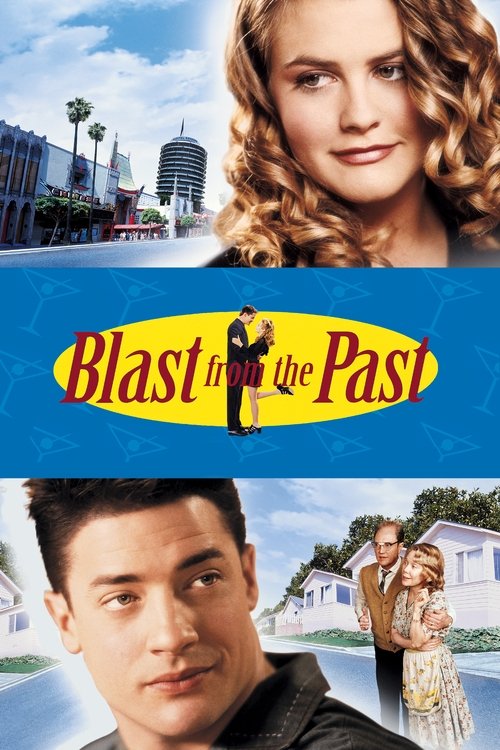
Blast from the Past
Narrative tropes
Good Intentions, Terrible Results
mediumCalvin's motivations are entirely sympathetic — fearing nuclear war during the Cuban Missile Crisis was rational in 1962 — and his shelter plan technically worked (the family survived). But the horrific cost is 35 years of imprisonment and Adam growing up with no real world to return to. The story also shows how dangerous certainty is: when Calvin briefly surfaces, he interprets urban decay and a drag queen as post-apocalyptic mutation, and his internally consistent paranoid logic drives him back underground. The comedic coda — Calvin immediately sketching plans for another shelter after learning the truth — confirms his certainty is unshakeable and ongoing, not corrected by outcome.
About this trope: A villain — or sometimes a hero — genuinely believes they are doing the right thing, but their well-meaning plan leads to monstrous outcomes. The scariest antagonists think they're saving the world.
Cultural messages
Family Is Everything
highFamily is the engine of the entire plot: Calvin builds the shelter to protect his family; Helen dispatches Adam to find a wife (explicitly to extend the family line); the emotional climax is Eve meeting Calvin and Helen, who are 'overjoyed'; the resolution is the whole family selling stocks, building Calvin and Helen a new countryside home, and Adam and Eve's engagement — reconstituting and expanding the family unit. Found-family (Eve joining) functions identically to biological family, and the coda of Calvin immediately sketching a new shelter underscores that protecting family is his permanent north star.
About this message: Family bonds — biological or found — are ultimately what saves the day, provides meaning, and matters most. Characters who stray from family suffer; those who return are rewarded.
Movies that share these tropes





Full plot (spoilers)
In October 1962, during the Cuban Missile Crisis, paranoid physicist Calvin Webber (Christopher Walken) builds an elaborate, self-sustaining underground bomb shelter beneath his Pasadena home. When a USAF fighter jet suffers a malfunction and crashes into their house, Calvin mistakes the explosion for a nuclear strike and seals the shelter's time-locked door for 35 years. His wife Helen (Sissy Spacek) is pregnant at the time and gives birth to a son, Adam, entirely underground. Adam (Brendan Fraser) grows up inside the shelter, educated by his father in science, languages, and etiquette, and immersed in the culture, music, and values of the early 1960s. Calvin programs the lock to open in 1997. When Calvin surfaces briefly to assess the outside world, he finds their former neighborhood has deteriorated into a rough, transient area of Los Angeles. Mistaking the decay and unfamiliar people (including a drag queen) for signs of post-apocalyptic mutation and societal collapse, he retreats back underground in horror. With supplies running low and Calvin too frightened to venture out, the now-adult Adam is sent to the surface to gather food, medicine, and baseball cards — and, per his mother's instructions, to find a 'non-mutant' wife. Adam emerges into 1990s Los Angeles, overwhelmed but charming in his anachronistic politeness and optimism. He encounters Eve Rustikov (Alicia Silverstone), a cynical young woman working at a collectibles shop, and hires her as a guide to help him navigate the modern city. Eve, aided by her gay friend Troy (Dave Foley), initially humors Adam, assuming he is mentally ill or a con artist. Adam's sincerity and old-fashioned gentlemanliness gradually win her over, and the two begin spending more time together, attending nightclubs and exploring the city. Adam falls in love with Eve, but when he finally tells her the truth about growing up in a bomb shelter, she dismisses the story as delusion and ends their friendship. Later, while sorting through items Adam left behind, Eve discovers valuable 1960s stock certificates — proof that his story is real. She seeks him out and apologizes. They reconcile and Eve accompanies Adam back to meet his parents in the shelter. Calvin and Helen are overjoyed; Calvin, still believing the outside world is a wasteland, is astonished. The family sells the stocks (now worth a fortune), purchases land, and builds Calvin and Helen a new home in the countryside. Adam also acquires a restored 1960 Cadillac. At last, Adam gently tells Calvin the truth: there was no nuclear war — only a plane crash — and the Cold War has long since ended. Calvin absorbs this with quiet acceptance. The film ends with Adam and Eve engaged; in a comedic coda, Calvin, undeterred, begins sketching plans for yet another fallout shelter.
Sources: Wikipedia