Movie
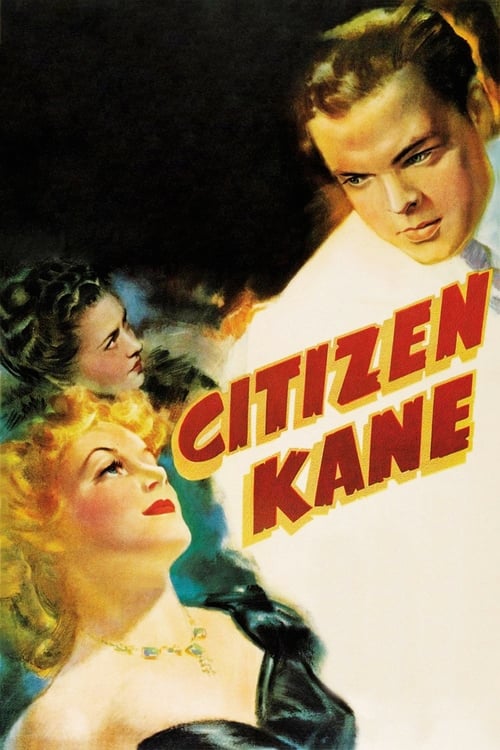
Citizen Kane
Narrative tropes
Good Intentions, Terrible Results
mediumKane genuinely believes he is championing the common man and later advancing Susan's career. His logic is internally consistent — he always frames control as benevolence — but the outcomes are monstrous: a manufactured war, a singer publicly humiliated into a career she despised, and loved ones driven away. Leland directly debates ends-vs.-means with Kane, and Kane's certainty of being right is repeatedly shown as the source of harm rather than its cure.
About this trope: A villain — or sometimes a hero — genuinely believes they are doing the right thing, but their well-meaning plan leads to monstrous outcomes. The scariest antagonists think they're saving the world.
A Parent's Shadow
highThe entire film is structured around tracing Kane's character back to the moment his parents gave him up. The inherited wealth that separated him from his family is the root cause of every subsequent event. Kane spends his life trying to forge an identity through power, politics, and possessions, yet the final revelation — 'Rosebud' is the childhood sled — confirms he never escaped his parents' shadow. His inherited fortune shapes how every character in the film relates to him, and the resolution shows he could never define himself beyond that original loss.
About this trope: A character must grapple with the legacy of their parents or predecessors — living up to high standards, running from expectations, atoning for inherited sins, or forging their own path.
Cultural messages
Power Always Corrupts
highKane begins with idealistic journalism principles (his Declaration of Principles) but is progressively corrupted by wealth and power into a yellow-journalism propagandist who manufactures wars, fires loyal friends for honest criticism, and imposes his will on Susan's career. Leland explicitly observes and names the transformation. Kane consistently rationalizes escalating abuses as knowing what's best, and the film frames his final isolation as the hollow consequence of that corruption.
About this message: Gaining power — political, magical, technological, or financial — inevitably warps even the noblest people. Power is an inherently corrupting force.
Movies that share these tropes





Full plot (spoilers)
The film opens at the sprawling Florida estate of Xanadu, where the elderly Charles Foster Kane dies alone, whispering a single word—'Rosebud'—while clutching a snow globe. A newsreel obituary surveys his life as one of America's most powerful newspaper magnates, and a reporter named Jerry Thompson is assigned to uncover the meaning of that final word by interviewing people who knew Kane. The story is told in non-linear flashbacks through five different narrators. From the memoirs of banker Walter Parks Thatcher, Thompson learns that Kane's mother came into wealth when a gold deed on her Colorado boarding-house property made her rich. She arranged for Thatcher to become young Charles's legal guardian, forcibly separating the boy from his parents while he played in the snow outside with a sled. By the time he reached adulthood, Kane had inherited a vast fortune and used it to seize control of the New York Inquirer, where he embraced yellow journalism and deliberately inflamed public opinion to boost circulation, including manufacturing a pretext for the Spanish-American War. Business manager Bernstein recalls how Kane assembled a talented newsroom staff and built his media empire. Kane's first marriage, to Emily Norton—niece of the U.S. President—eventually collapsed despite producing a son, the relationship undone by Kane's self-absorption and political ambitions. His close friend and drama critic Jedediah Leland describes Kane's affair with Susan Alexander, an untrained amateur singer, discovered by political rival Jim W. Gettys during Kane's gubernatorial campaign. Gettys exposes the affair publicly, ending Kane's run for governor and destroying his political future. Kane divorces Emily and marries Susan, then constructs an entire Chicago opera house solely to launch her singing career, imposing the public humiliation of a career she never wanted. When Leland pans Susan's catastrophic debut, Kane fires him but finishes writing the scathing review himself. Susan recounts her miserable years at Xanadu—an isolating, grand but joyless estate—including a suicide attempt, and ultimately she abandons Kane after a violent confrontation. Butler Raymond then tells Thompson that after Susan left, Kane ransacked her room in a rage, smashing everything, until he found a snow globe and uttered 'Rosebud' with tears in his eyes. Thompson concludes he has failed to crack the mystery—'Rosebud' is just a piece of a puzzle, he says, not an answer to Kane's life. As workers at Xanadu sort and discard Kane's vast possessions, one worker tosses an old childhood sled into a furnace; the camera reveals the sled's painted name: 'Rosebud.' The film ends on the smoke rising from the chimney and the estate's 'No Trespassing' sign—the meaning revealed to the audience but forever unknown to the characters.
Sources: Wikipedia, TMDb overview