Cultural message · Power, Politics & Society
Power Always Corrupts
What it is
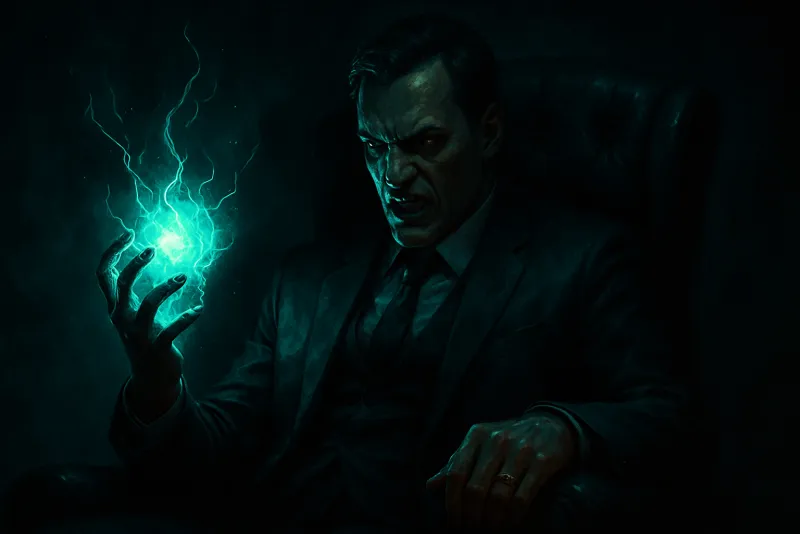
Gaining power — political, magical, technological, or financial — inevitably warps even the noblest people. Power is an inherently corrupting force.
Why this message sticks
Power Always Corrupts is the rare cultural message that resonates across the political spectrum — the right reads it as a warning about big government, the left reads it as a warning about concentrated capital, and the apolitical reader takes it as Lord-Acton common sense. That bipartisan grip is exactly why it shows up in everything from Star Wars to Breaking Bad to House of Cards to The Lord of the Rings. The films that wear it best treat it as a structural claim about institutions, not a character-flaw story; the ones that wear it worst use it as a shortcut to make a villain corrupt without doing the work to show how. Watch for whether the corruption arrives through the system or through the man — that distinction tells you what the film actually believes.
How to spot it
The plot contains ALL of: (1) a character who acquires or holds significant power, (2) the power changes them for the worse, (3) a visible progression from idealist or good person to morally compromised or tyrannical.
- A character begins with good intentions but is gradually corrupted
- An object or position of power tempts and transforms its holder
- Other characters notice and warn about the change
- The corrupted character rationalizes increasingly extreme actions
- Loss of power or its destruction is framed as liberation
Classic examples
The One Ring in Lord of the Rings, the Iron Throne in Game of Thrones, Anakin's turn in Star Wars, Walter White in Breaking Bad, Gollum
Movies pushing this message (11)

Flywheel: Ignition of the Soul
Noah's financial ambition and drive for business success gradually transforms him into someone willing to deceive customers and cut ethical corners—a visible arc from provider/businessman to morally compromised operator. Ana notices and confronts the change; Noah rationalizes his conduct as necessary. His position as dealership owner (financial power) is the corrupting force, and his spiritual reckoning involves surrendering control of outcomes to faith rather than manipulation.
Animals
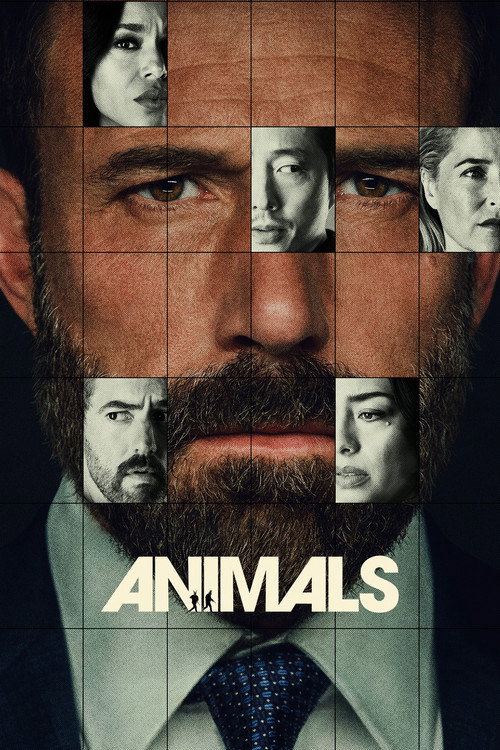
Mark's mayoral candidacy is the corrupting object: the pursuit of political power drives his progressive moral deterioration from candidate to someone who orders hired killings, seizes Dayle's recording device to suppress evidence, falsely implicates his wife to deflect blame, and rewrites murders as a heroic rescue narrative. He rationalizes each escalating step as political necessity. His rising poll numbers at the end confirm the corruption is complete and rewarded — not reversed.
Primetime
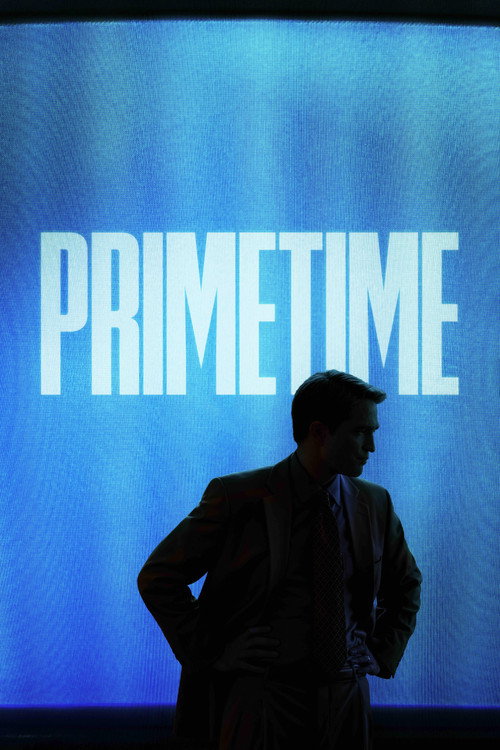
Hansen is explicitly described as 'a serious journalist who has gradually become a celebrity personality' — a clear idealist-to-compromised arc. All three core elements are present: he acquires significant public/institutional power through the show's fame; that power changes him for the worse as 'the lure of ratings' reshapes a criminal investigation into entertainment; and the progression is visible and causal. Signals hit: (1) good intentions corrupted gradually; (2) rationalizes increasingly extreme actions — chasing ever-higher-profile targets and mounting the largest sting yet; (3) the celebrity platform itself is the corrupting object, tempting and transforming its holder.

Freefall: A Reckoning for Boeing
Boeing is depicted as having once had a principled, engineering-driven identity that was gradually corrupted by financial power and shareholder pressure. Whistleblowers — the 'other characters' — noticed the change and warned about it for years. Management rationalized safety compromises as production necessities. The corporation's original mission was visibly warped by the corrupting pull of profit.
Animal Farm
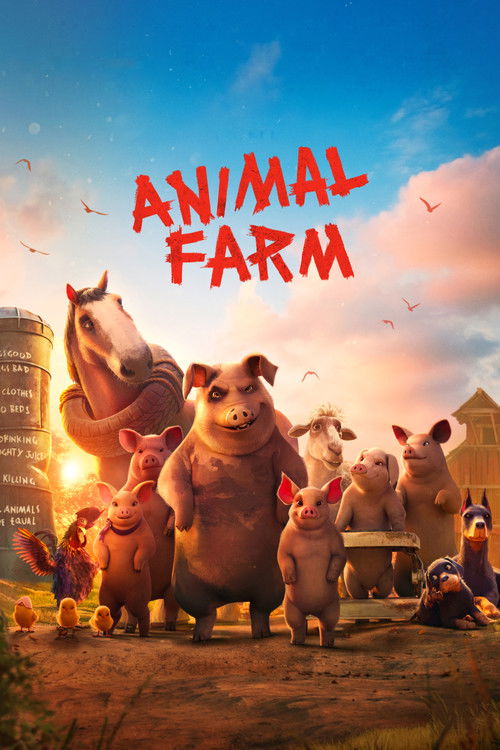
Napoleon begins as a revolutionary liberator but steadily consolidates power and becomes tyrannical — a textbook corruption arc. Squealer actively rationalizes each new abuse (rewriting commandments, erasing history), satisfying the 'rationalizes increasingly extreme actions' signal. Lucky witnesses the change firsthand. The founding ideal ('all animals are equal') is an object of power that Napoleon's regime corrupts and ultimately inverts. Lucky's final embrace of collective solidarity over hierarchy frames the destruction of that power structure as liberation.

California Schemin'
Gavin begins as an aspiring musician with legitimate creative ambitions but is gradually consumed by his manufactured persona, spiraling into alcohol and drug excess as fame grows — the classic good-intentions-to-corruption arc. Billy and Mary serve as foils who notice and resist the change (signal: others warn about the transformation). The manufactured identity functions as the 'object of power' that tempts and transforms its holder. The scheme's collapse is framed as a reckoning, not a liberation, reinforcing that power (here: sudden stardom built on deception) warped both men and destroyed their friendship.
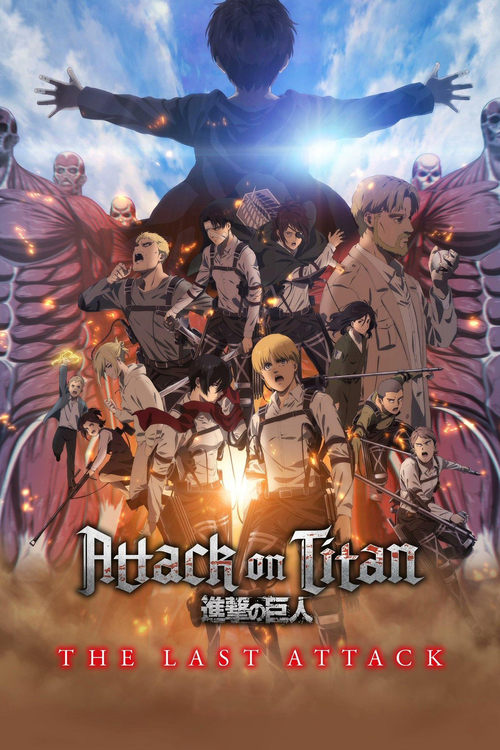
Attack on Titan: THE LAST ATTACK
Eren's arc is the canonical Power Always Corrupts arc: he began as an idealist wanting freedom for his people, acquired the Founding Titan (an object of near-unlimited power), and used it to plan genocide. His former comrades — every ally he ever had — now oppose him. He rationalizes mass murder as protecting Paradis. The resolution (Founding Titan's power destroyed, curse lifted) frames the removal of that power as liberation for everyone, including Eren himself.
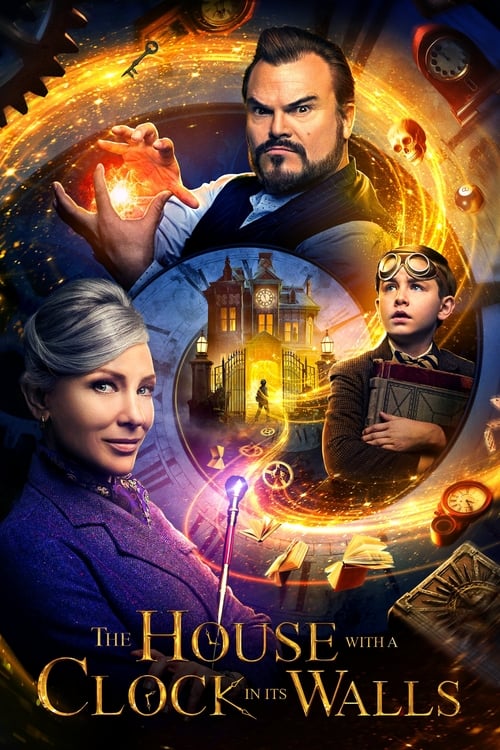
The House with a Clock in Its Walls
Isaac and Selena Izard are explicitly described as having 'become corrupted by black magic' — the classic power-corrupts arc. Black magic functions as the tempting/transforming force (signal: object of power transforms its holder). Their corruption escalated to plotting global annihilation (signal: corrupted character rationalizes increasingly extreme actions). The world is only saved when the Izards are defeated and their power nullified (signal: destruction of the power is framed as liberation). Their corruption is the entire engine of the plot, not incidental backstory.

The Hunger Games: Mockingjay - Part 2
President Coin begins as the rebellion's legitimate leader but is revealed to have ordered the child-bombing strike that killed Prim, and then proposes a retributive Capitol Hunger Games. Boggs explicitly warns Katniss not to trust her. Coin rationalizes mass civilian murder as a necessary psychological blow, and her death is the story's true political resolution.

The Nutty Professor
Sherman acquires power through the serum — physical confidence, attractiveness, social dominance — and it progressively corrupts him into Buddy Love, who is arrogant, promiscuous, and willing to steal credit for Sherman's work. Buddy rationalizes increasingly extreme actions, culminating in a plan to eliminate Sherman entirely. The resolution explicitly frames destroying the serum as liberation, and Sherman's rehiring comes only after he relinquishes that power.
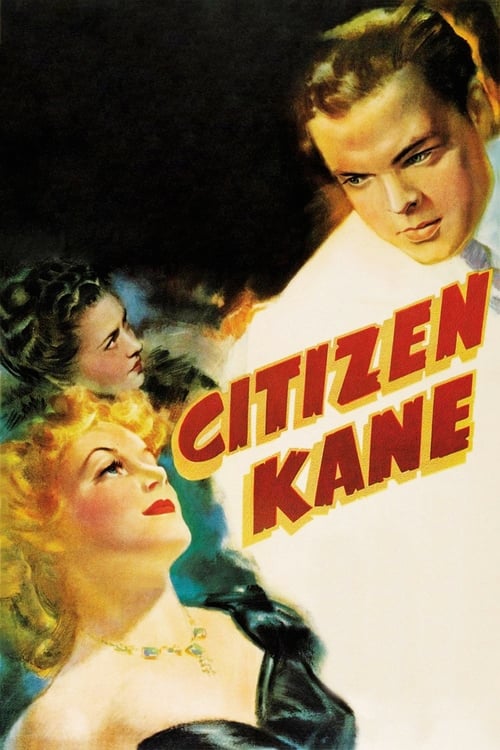
Citizen Kane
Kane begins with idealistic journalism principles (his Declaration of Principles) but is progressively corrupted by wealth and power into a yellow-journalism propagandist who manufactures wars, fires loyal friends for honest criticism, and imposes his will on Susan's career. Leland explicitly observes and names the transformation. Kane consistently rationalizes escalating abuses as knowing what's best, and the film frames his final isolation as the hollow consequence of that corruption.