Movie
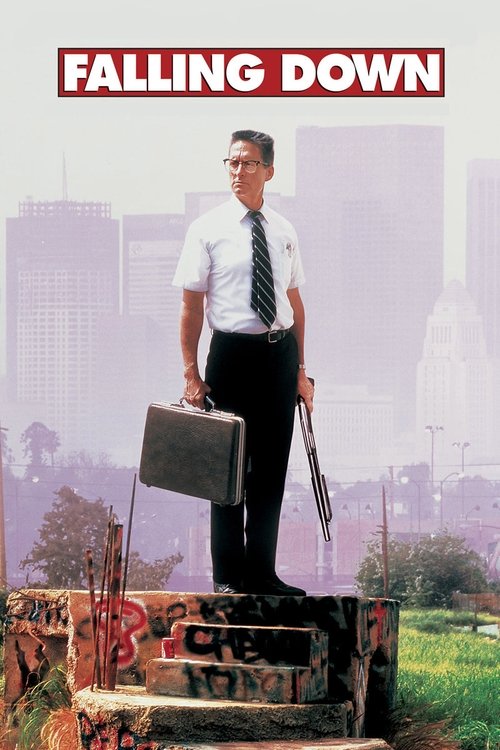
Falling Down
Narrative tropes
Good Intentions, Terrible Results
highFoster's entire rampage is framed through his own logic as justified self-assertion: inflated prices, gang threats, bureaucratic waste, fast-food false advertising are each treated as provocations he has a right to meet with force. His goals — reaching his daughter's birthday party — are sympathetic. Every violent act is rationalized as proportionate retaliation. Prendergast explicitly acknowledges Foster's grievances as real while refusing to excuse his methods, staging the story's core debate about ends and means. The villain's internal consistency is horrifying precisely because it is coherent: his final 'I'm the bad guy?' confirms he never stopped believing he was the wronged party. Four signals fire: understandable goals, atrocities self-justified as necessary responses, an explicit acknowledgment-vs.-condemnation debate, and a villain whose logic is internally consistent but morally catastrophic.
About this trope: A villain — or sometimes a hero — genuinely believes they are doing the right thing, but their well-meaning plan leads to monstrous outcomes. The scariest antagonists think they're saving the world.
Movies that share these tropes




Full plot (spoilers)
On a sweltering Los Angeles morning, William Foster — a divorced, unemployed defense engineer whose vanity plate reads 'D-FENS' — abandons his car in gridlocked traffic and begins walking across the city toward his ex-wife Beth's home in Venice, intending to attend his daughter Adele's birthday party despite a restraining order barring him from the family. His journey quickly becomes a violent odyssey triggered by every petty frustration and social grievance he encounters. At a Korean-owned convenience store he snaps over inflated prices and takes a baseball bat, destroying merchandise before leaving money for a soda. Resting on a hillside, two gang members threaten him with a knife and demand his briefcase; he beats them with the bat and keeps the knife. The gang retaliates with a drive-by shooting that misses Foster but kills four bystanders; their car crashes, and Foster takes their bag of firearms and shoots a surviving attacker in the leg. He next enters a fast-food restaurant, is told breakfast service has ended, fires his gun into the ceiling during the ensuing argument, then methodically orders lunch — only to be further frustrated when the food looks nothing like the advertisement. After calling Beth from a payphone to announce he is on his way, she reports the call to police, recognizing the danger. Meanwhile, Sergeant Martin Prendergast — on his last day before a retirement his anxious wife has been pressuring him toward — pieces together witness accounts and the 'D-FENS' license plate, linking Foster to every incident and deducing he is heading toward his former home. Prendergast and his partner Detective Torres visit Foster's mother, who is stunned to learn her son lost his job months earlier. As Foster passes a bank, he exchanges a silent moment of recognition with a Black man being removed by police after protesting a denied loan. Foster stops at a military surplus store to buy boots; the bigoted Neo-Nazi owner initially bonds with him over the restaurant shooting, then offers a rocket launcher and begins to boast about his white-supremacist ideology. When Foster recoils with evident disgust, the owner attempts to detain him and call police; Foster stabs and shoots him dead, takes the rocket launcher, and changes into military-surplus tactical gear. At a road construction site Foster accuses the crew of performing unnecessary work to justify their budget and fires the rocket launcher — with coaching from a curious child — destroying the worksite. He arrives at Beth's house to find it empty; she has fled with Adele. Deducing they may have gone to Venice Pier, he heads there. Prendergast and Torres arrive first; Foster shoots Torres (non-fatally) and chases Prendergast to the pier. There Foster confronts Beth and Adele; Adele is delighted to see her father, but Beth is terrified. Prendergast disarms Foster when Beth throws his gun into the ocean, then draws his own weapon and tells Foster to surrender, acknowledging his grievances but refusing to excuse his rampage. With nothing left — no job, no family, no future — Foster produces a small water pistol, forcing Prendergast to shoot him. As Foster falls into the water, he asks Prendergast: 'I'm the bad guy?' Having finally stood up for himself rather than passively enduring life's frustrations, Prendergast chooses to withdraw his retirement papers.
Sources: Wikipedia