Movie
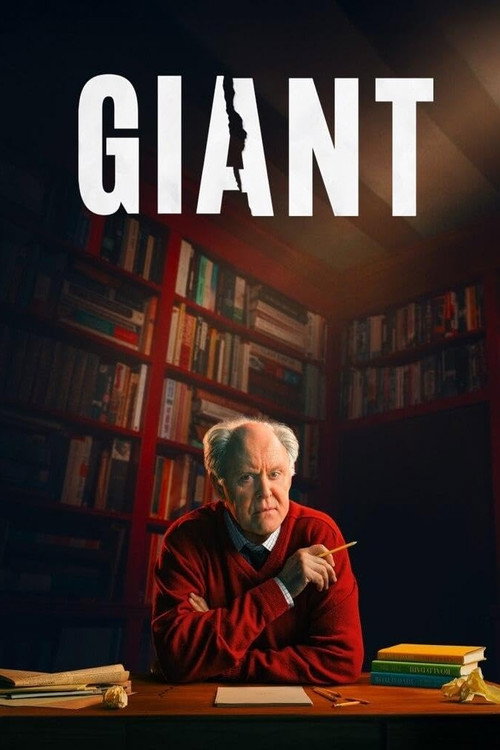
Giant
Narrative tropes
Good Intentions, Terrible Results
mediumDahl holds genuinely sympathetic motivations — defending Palestinian civilians from military invasion — and argues coherently that criticizing a state's actions is not hatred of its people. His plan (public denunciation, standing firm) is internally consistent but its execution is morally catastrophic: he dictates an overtly antisemitic letter, undermining his own stated principle. Stone and Dahl argue explicitly about whether political speech can be separated from ethnic hatred, enacting the 'ends justify the means' debate. The play's central thesis is that Dahl's certainty of being right — the same stubbornness that makes him a great author — is itself the danger, satisfying all three core-pattern criteria.
About this trope: A villain — or sometimes a hero — genuinely believes they are doing the right thing, but their well-meaning plan leads to monstrous outcomes. The scariest antagonists think they're saving the world.
Movies that share these tropes





Full plot (spoilers)
Set over a single summer afternoon in 1983 at Roald Dahl's country home in Great Missenden, England, Giant dramatises the fallout from Dahl's published review of God Cried, a picture book documenting the siege of West Beirut during the 1982 Lebanon War. In the review, Dahl publicly denounced Israel's invasion and defended the Palestinians, drawing widespread accusations of antisemitism. The timing is acutely precarious: The Witches is days away from release, and his American publisher Farrar Straus dispatches Jessie Stone, a Jewish sales executive and devoted admirer of Dahl's work, to his home to persuade him to issue a public apology before the scandal engulfs the book. Stone arrives to find Dahl's fiancée Felicity Crosland ('Liccy') and the household already braced for confrontation. Dahl is unrepentant. He quickly provokes arguments over Israeli military conduct, recounting civilian casualties with bristling defiance, and dictates a sarcastic, antisemitic letter for Stone to carry back to her employer. Tom Maschler, Dahl's British publisher and a Holocaust survivor, also arrives — but, to Stone's dismay, sides with Dahl rather than with her, viewing Stone as an interfering outsider threatening a commercially vital relationship. The central dramatic engine is the collision between Stone's articulate, morally urgent appeal and Dahl's immovable certainty that his criticism of a state's actions is not hatred of a people. Despite the ideological warfare, the play opens an unexpected emotional vein: Dahl and Stone discover that both have suffered devastating losses involving their children, creating a moment of fragile human connection amid the hostility. The play ends without resolution or apology. Dahl does not retract, the PR crisis is not contained, and the confrontation simply subsides rather than concludes — underlining that Dahl's defiance was never a miscalculation he regretted but a position he chose.
Sources: Wikipedia, New York Theatre Guide, Book and Film Globe, Broadway World, TheaterMania