Movie
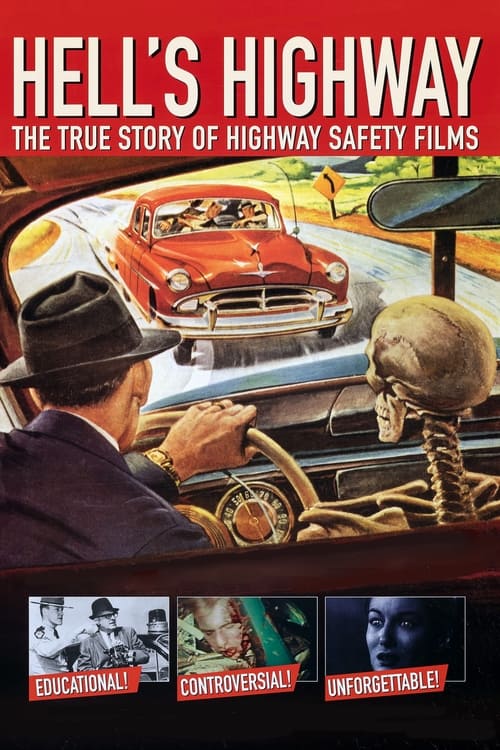
Hell's Highway: The True Story of Highway Safety Films
Narrative tropes
Good Intentions, Terrible Results
highThe Highway Safety Foundation's mission is explicitly framed as a collision between genuine public-health idealism and lurid exploitation. Wayman's motivations are sympathetic and logical — reducing traffic fatalities — and the shock-imagery approach has internal coherence as a deterrent strategy. The documentary treats the mass showing of real corpses and severed limbs to teenagers as a horrific moral cost justified as a necessary sacrifice. The central question the film leaves open — whether the films reduced deaths or merely traumatized a generation — is precisely the 'ends justify the means' debate the trope requires. The Foundation's escalating graphic content, criminal controversies (Hoffa, pornography charges), and ultimate collapse further illustrate how certainty of righteous purpose became dangerous. Four signals confirmed: understandable/reasonable goals; atrocities framed as necessary sacrifices; explicit debate over whether the ends justify the means; internally consistent logic (fear → compliance) that is morally horrifying in execution.
About this trope: A villain — or sometimes a hero — genuinely believes they are doing the right thing, but their well-meaning plan leads to monstrous outcomes. The scariest antagonists think they're saving the world.
Movies that share these tropes




Full plot (spoilers)
Hell's Highway: The True Story of Highway Safety Films is a 2003 documentary directed by Atlanta-based filmmaker Bret Wood that traces the history of graphic driver-education scare films produced in postwar America. The film begins with early, animated classroom safety films such as 1936's We Drivers, then charts the genre's evolution into raw, shocking documentary footage of real traffic fatalities. Central to the narrative is Richard Wayman, founder of the Highway Safety Foundation in Mansfield, Ohio, who began his career photographing accident scenes in the late 1950s and went on to produce increasingly sensational safety films, most notably Signal 30 (1959) and Highways of Agony (1969). These films were shown to high school students across North America, confronting teenagers with color footage of mangled wreckage, severed limbs, and fresh corpses in the explicit hope that the visceral horror would discourage reckless driving. The documentary examines how insurance companies were the original financial sponsors of such productions, providing a commercial rationale behind what appeared to be a purely public-health mission. As the genre escalated in graphic content through the 1960s, Wayman's Foundation expanded, but it also accumulated controversies: alleged connections to Jimmy Hoffa, pornography charges, and a murder mystery linked to one of the Foundation's photographers. The Foundation's fortunes collapsed after a financially disastrous 1972 telethon featuring Sammy Davis Jr. and President Nixon. By the mid-1970s the films were pulled from classrooms and faded into a kind of mythic, forbidden memory in American teenage culture. The documentary interviews several eyewitnesses and historians—including educational film archivist Rick Prelinger, journalist and private investigator Martin Yant, former Mansfield police chief John P. Butler (a defender of Wayman), exploitation film distributor Mike Vraney, and former Foundation associates Earle J. Deems and John R. Domer—to reconstruct this chapter of Americana. The film ultimately leaves open the central question of whether these films actually reduced traffic fatalities or merely traumatized a generation of young viewers, framing the entire enterprise as a collision between genuine public-health idealism and lurid exploitation.
Sources: IMDb (search metadata), PopMatters review, WebSearch aggregated sources (Kino Lorber description, Amazon listing)