Movie
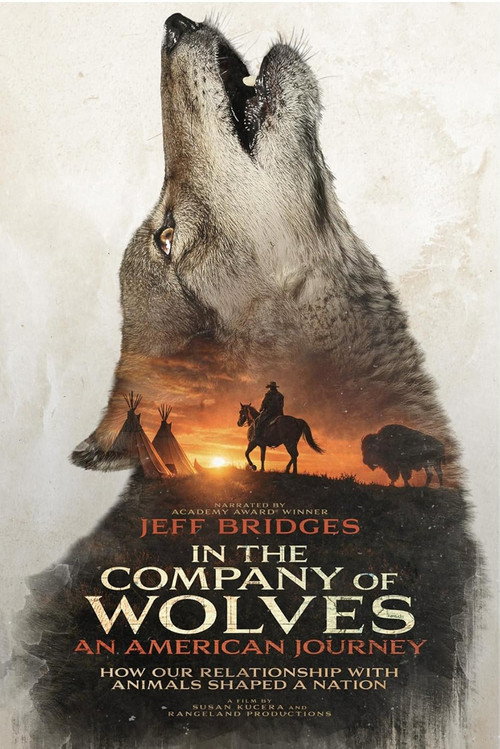
In the Company of Wolves: An American Journey
Cultural messages
Nature Knows Best
highThe film explicitly frames wolves and interspecies ecological relationships as a source of foundational wisdom that colonial and industrial expansion disrupted. Eastern Shoshone Tribe and Crow Nation members are presented as authoritative voices on this wisdom, fulfilling the 'indigenous characters portrayed as wiser' signal. The natural world is tonally idealized throughout — wolves as 'co-travelers,' not adversaries. The colonial/westward expansion arc implicitly contrasts modern civilization as spiritually and ecologically impoverished by comparison. The closing narration ('the deeper story of who we are as a nation and who we might yet become') frames reconnection with nature as truth-seeking, and the film's environmental stewardship call positions nature-connection as the corrective to civilizational error.
About this message: The natural world, indigenous peoples, or pre-industrial life is portrayed as inherently wise, pure, morally superior, or spiritually richer than modern civilization. Nature is a source of truth that technology has replaced.
Movies that share these tropes





Full plot (spoilers)
A feature-length environmental documentary narrated by Academy Award-winner Jeff Bridges and directed by Susan Kucera. The film traces wolves and other animals as co-travelers through American history, beginning on the shores of England and following the arc of colonization through the founding of the Republic and the westward expansion of the American West. The central argument is that humanity's fraught relationship with wolves — and the domesticated animals traveling in their wake — shaped American ideas, folklore, and national identity as profoundly as any human action. Drawing on perspectives from members of the Eastern Shoshone Tribe and Crow Nation, historian and author Michelle Paver (whose 'Wolf Brothers' series sold over three million copies), science writer David Quammen, Notre Dame University's Jon Coleman (author of 'Vicious: Wolves and Men in America'), Native American ecologist Cristina Eisenberg, Eastern Shoshone conservationist Jason Baldes, and fourth-generation sheep rancher Cameron Krebs, the film positions animal-human ecological relationships as foundational to understanding American national character. The documentary ultimately functions as a call for environmental stewardship, suggesting — in Bridges' narration — that the wild and domesticated together reflect 'the deeper story of who we are as a nation and who we might yet become.' Director Kucera frames the film as a reframing of the American mythos, moving beyond human ambition to the deeper interspecies relationships that shaped the land. Note: This film had its world premiere at Cannes on May 15, 2026, but has not yet had its wide release (July 17, 2026); this summary is based entirely on official promotional materials and press coverage, not a completed viewing.
Sources: PR Newswire press release, Variety, Web search aggregation