Movie
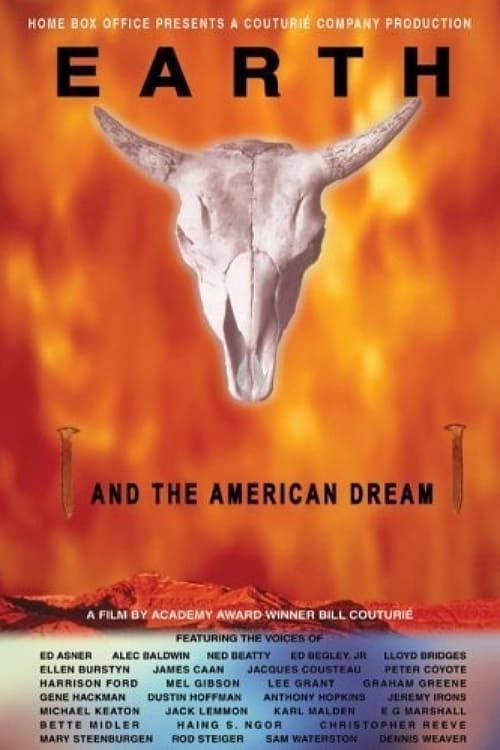
Earth and the American Dream
Narrative tropes
New Tech Leads to Disaster
highThe Industrial Revolution is the film's central turning point: historical figures (quoted directly) celebrated it as progress and enterprise; society-wide adoption followed; warning signs were dismissed by actors who 'saw themselves as villains never'; the direct consequences — deforestation, bison near-extinction, poisoned waterways, air and soil pollution — constitute the escalating catastrophe that dominates the film's second half.
About this trope: A new technology or discovery is introduced and initially celebrated, then reveals hidden dangers that escalate to catastrophe. The arc is: marvel > adoption > warning signs ignored > disaster.
Good Intentions, Terrible Results
highThe film's central argument is that the agents of ecological destruction — settlers, industrialists, politicians — 'understood their actions as progress, enterprise, and the fulfillment of the American Dream' and saw themselves as righteous. Manifest Destiny framed domination of nature and Indigenous peoples as divine right. The horror is precisely that the logic was internally consistent: the scariest antagonists were certain they were building a civilization, not destroying one.
About this trope: A villain — or sometimes a hero — genuinely believes they are doing the right thing, but their well-meaning plan leads to monstrous outcomes. The scariest antagonists think they're saving the world.
Cultural messages
Nature Knows Best
highThe entire film is narrated from nature's moral vantage point. Indigenous peoples are explicitly presented as holding a 'fundamentally different relationship to the land' — implicitly wiser than European settlers. The pre-Columbian continent is idealized as vast untouched wilderness. Modern/industrial civilization is depicted as spiritually hollow and destructive, with the American Dream framed as a consuming ideology that stripped the continent of its ecological integrity.
About this message: The natural world, indigenous peoples, or pre-industrial life is portrayed as inherently wise, pure, morally superior, or spiritually richer than modern civilization. Nature is a source of truth that technology has replaced.
The Old Ways Were Better
highPre-industrial life — both Indigenous stewardship and 18th-century agrarian communities — is presented as a more balanced relationship with the land. Every stage of modernization (Manifest Destiny, industrialization, corporate capitalism) is framed as loss and degradation rather than improvement. The film's elegiac tone consistently validates older ways of living in contrast to the 'progress' that consumed the continent's natural resources.
About this message: Traditional, ancestral, rural, or pre-modern life is portrayed as inherently better than modern alternatives. Progress is corruption, not improvement. The past is idealized as a golden age.
Movies that share these tropes




Full plot (spoilers)
Earth and the American Dream (1992) is a 78-minute HBO documentary directed by Bill Couturié that recounts North American history entirely from the environment's perspective. Drawing on over 5,000 hours of archival visual material, the film weaves together period imagery, wildlife footage, and landscapes to trace the continent's ecological transformation across five centuries. Celebrity actors narrate by reading real quotes from historical figures — Native Americans, European settlers, industrialists, politicians, and others — letting the participants in history speak in their own words rather than through conventional voiceover commentary.
The film begins with Columbus's 1492 arrival in Hispaniola, depicting a continent of vast, largely untouched wilderness. It then moves through the 16th and 17th centuries, when small-scale European settlement co-existed with Indigenous peoples who held a fundamentally different relationship to the land. The 18th century agrarian era is presented as a brief middle phase: farming communities that altered the landscape but had not yet achieved industrial scale.
The Industrial Revolution marks the film's central turning point. The documentary examines how ideologies like Manifest Destiny provided moral and religious justification for the aggressive exploitation of natural resources, framing domination over both nature and Indigenous peoples as a divine right and national destiny. The film argues that almost none of the historical actors it identifies as agents of destruction saw themselves as villains — they understood their actions as progress, enterprise, and the fulfillment of the American Dream.
The 19th and 20th century sequences document the accelerating consequences: mass deforestation, the near-extinction of the bison, widespread soil depletion from industrial agriculture, the poisoning of waterways, and pervasive air and water pollution. The film connects the corporate pursuit of profit to systematic environmental degradation, presenting capitalism's drive to exploit the natural world as the engine behind the continent's ecological unraveling. By the film's end, set in the late 20th century, the documentary offers a pessimistic assessment: the drive that has powered the American Dream has consumed most of the planet's accessible natural resources, leaving a landscape radically diminished from what Columbus first encountered. The film does not propose solutions; its tone is one of elegy and warning.
Sources: TMDb overview, Sacred Land (sacredland.org), Letterboxd, IMDb (main page metadata)