Movie
Time and Water
Cultural messages
Nature Knows Best
mediumThe glacial landscape and Iceland's traditional cultural heritage (myths, songs, folklore) are treated as spiritually and morally precious throughout. Magnason's grandparents — the nature-connected predecessors who first traversed the glaciers — are implicitly portrayed as wiser and more attuned than modern civilization. Their deep generational bond with the natural world is the film's moral compass. Modern industrial civilization is the implicit antagonist, its climate destruction contrasted against the purity and irreplaceable value of the glacier world. Magnason finds meaning, healing, and truth specifically by returning to this natural connection, constructing the time capsule as a cinematic act of communion with nature. Signals: nature-connected characters (grandparents) portrayed as wiser; wilderness settings tonally idealized throughout; modern/industrial life implicitly shallow and destructive by contrast.
About this message: The natural world, indigenous peoples, or pre-industrial life is portrayed as inherently wise, pure, morally superior, or spiritually richer than modern civilization. Nature is a source of truth that technology has replaced.
The Old Ways Were Better
mediumThe film explicitly idealizes the ancestral, pre-climate-crisis relationship with Iceland's glaciers — the grandparents' era of exploration is a golden age the film mourns and tries to preserve. The project of creating a time capsule of cultural heritage (myths, songs, folklore) validates preserving older ways over modern ones. Climate change — a product of industrial modernity — is the corrupting force. The whole film frames modernization and progress as irreversible loss rather than gain. Signals: traditional/ancestral settings depicted as warm and authentic; modernization depicted throughout as loss rather than gain.
About this message: Traditional, ancestral, rural, or pre-modern life is portrayed as inherently better than modern alternatives. Progress is corruption, not improvement. The past is idealized as a golden age.
Movies that share these tropes
Full plot (spoilers)
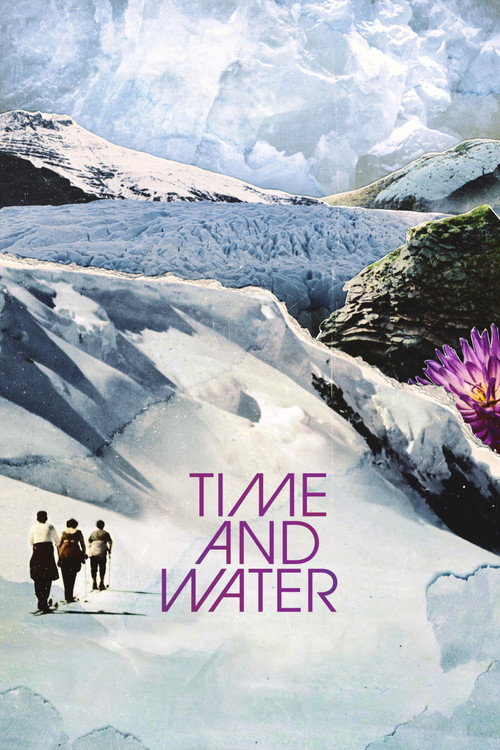
Time and Water is a poetic documentary directed by Sara Dosa, inspired by Icelandic writer Andri Snær Magnason's 2019 non-fiction book of the same name. The film centers on Magnason himself, born in 1973, whose family has a deep generational bond with Iceland's glaciers: his grandparents were among the first explorers to traverse the country's glacial landscape, and he has become one of the first to witness their death. Commissioned to write the eulogy for Okjökull — a 700-year-old glacier that in 2014 became the first in Iceland officially declared dead due to climate change — Magnason confronts an unsettling duality: the loss of his beloved grandparents and the loss of the icy world they helped map. Drawing on his personal archives of photographs, home movies, myths, songs, and folklore, Magnason constructs a time capsule to preserve what is irreversibly slipping away: family memory, cultural heritage, time, and water. The film weaves his intimate family history alongside the geological timescale of glaciers, drawing a sustained parallel between human mortality and ecological collapse. A recurring emotional refrain — 'I thought I had more time' — resonates across both registers. Rather than adopting a political or activist posture, the documentary approaches climate catastrophe as lived, felt experience, using art and personal narrative to make the unthinkable palpable. The score by Dan Deacon, combined with traditional Icelandic hymns, underscores the film's elegiac tone. Ultimately the film asks: 'How do you say goodbye to what you never thought you could lose?' — and answers with a cinematic act of mourning and preservation.
Sources: Sundance.org blog, The Film Stage (Sundance review), ICS Film (Sundance review), Andri Magnason official website, IMDb (metadata only), Web search aggregation