Movie
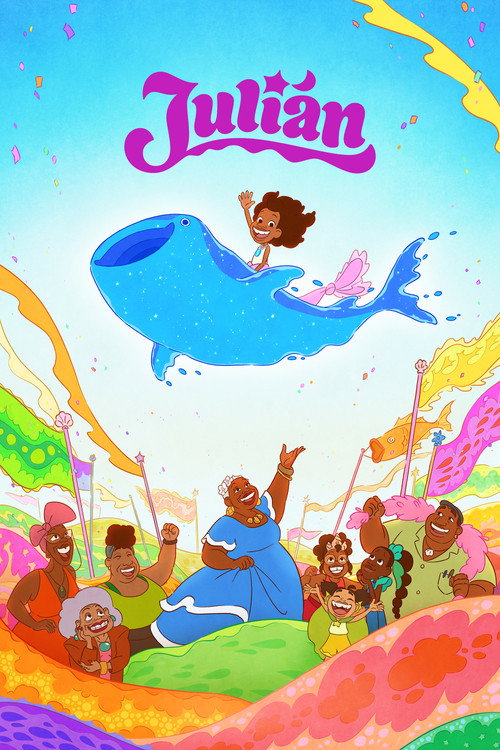
Julián
Narrative tropes
Kids See the Truth
highJulián's childlike imagination and intuitive self-understanding are the moral engine of the film. Luna — a magical companion visible only to him — signals children's access to truths adults cannot perceive. Abuela is explicitly 'bound by tradition and carries a fear of swimming,' framing her as limited where Julián is clear-sighted. His openness unlocks 'a freer, more joyful side of her she had long suppressed,' a child's simple clarity resolving an adult's long-held constraint. Innocence is treated as wisdom, not naivety.
About this trope: Children possess intuitive wisdom, moral clarity, or a connection to truth that cynical adults have lost. Kids see through lies, sense danger, and understand what really matters.
Cultural messages
Be Yourself
highJulián's mermaid identity is the film's central conceit — he carries it as a true inner self amid Abuela's tradition-bound expectations, which create implicit pressure to conform. The Mermaid Parade is the explicit turning-point reveal where his identity is 'affirmed rather than questioned.' All five signals fire: he hides/explores a suppressed nature; conformity with Abuela's worldview is shown as stifling; the parade functions as the transformation/reveal scene; community acceptance follows self-acceptance; and the narrative frames joy and cultural rootedness as flowing directly from his authentic self-expression.
About this message: A character hides or suppresses their true identity to conform, then finds strength and happiness by embracing who they really are. Authenticity is the real superpower.
Movies that share these tropes




Full plot (spoilers)
Julián is a 7-year-old Dominican-American boy who goes to spend the summer in Brooklyn with his Abuela — a grandmother he barely knows. Arriving at her apartment, he is immediately captivated by her treasure trove of belongings, which open a window into his Caribbean heritage and the vibrant community surrounding him. The neighborhood is buzzing with preparations for the upcoming Mermaid Parade, an event that captures Julián's imagination entirely: he is drawn to its spectacle, creative freedom, and the idea that he could be seen and celebrated there. He befriends a trio of neighborhood girls who are preparing their own parade costumes, and he becomes convinced that he is, in his heart, a mermaid — giving the story its central magical-realist conceit. A sprite-like figure named Luna, visible only to Julián, accompanies him through the film as a companion and guide. The narrative pivots on the growing relationship between Julián and his Abuela. She is bound by tradition and carries a fear of swimming rooted in her own past, while Julián is boundlessly imaginative and hungry for self-expression. Their generational and cultural gap creates initial tension, but as Julián learns more about his Dominican heritage through his grandmother, he unlocks a freer, more joyful side of her she had long suppressed. The film weaves realistic Brooklyn street scenes with lush 2D animated fantasy sequences — underwater worlds populated with colorful fish and mermaid imagery — blurring the boundary between Julián's inner life and the world around him. By summer's end, both characters have grown: Julián gains a rooted sense of his cultural identity while embracing his own distinct self-expression, and his Abuela rediscovers the freedom of imagination she had set aside. The Mermaid Parade serves as the film's emotional climax, a communal celebration where Julián's identity is affirmed rather than questioned. The film is adapted from Jessica Love's picture book Julián Is a Mermaid and directed by Louise Bagnall (Cartoon Saloon). Coverage is drawn from reviews and promotional materials as detailed Wikipedia/IMDb plot text was not available at time of research.
Sources: Discussing Film review, Animation Xpress interview, New Europe Film Sales synopsis, French Wikipedia synopsis, Web search aggregated results (Letterboxd, Primetimer, WeHo Times headlines)