Movie
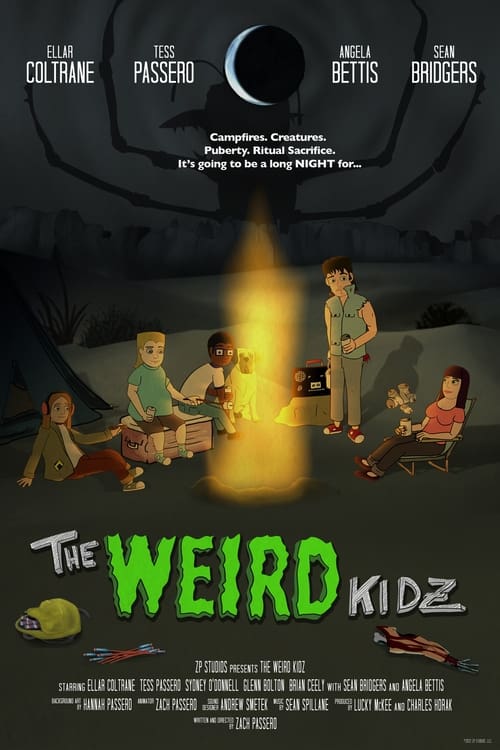
The Weird Kidz
Narrative tropes
Humans Never Give Up
mediumThe five characters face objectively hopeless odds: a cultic ceremony, hallucinogenic venom, poisoned brew, and waves of crazed townspeople, with no adults coming to rescue them and no cavalry on the way. They 'rise up repeatedly against waves of violence and hopelessness,' making continued resistance the emotional spine of the film. Survival against impossible odds is the central plot, and hope persists explicitly despite rational grounds for surrender.
About this trope: Facing impossible odds, humans endure, adapt, and find reasons to keep going. Resilience and refusal to surrender is humanity's defining and most admirable trait.
Kids See the Truth
mediumDug's instinct to approach the Night Child with empathy — perceiving it as a creature tending to its young rather than pure evil — proves narratively correct when adults around him are compromised by alcohol, hallucinogens, or small-town Reaganite paranoia. He connects with the supernatural creature in a way the adults cannot, and his childlike openness (innocence as wisdom) produces the film's empathetic ending. The broader adult world is depicted as either absent, intoxicated, or consumed by irrational hysteria.
About this trope: Children possess intuitive wisdom, moral clarity, or a connection to truth that cynical adults have lost. Kids see through lies, sense danger, and understand what really matters.
Cultural messages
Be Yourself
mediumDug suppresses his inner weirdness and feminine side throughout the story, denied under implicit small-town 1980s conformity pressure. His encounters with the Night Child serve as the transformation moment of self-acceptance. The film frames coming-of-age growth — earned specifically through embracing his authentic self — as the payoff, with strength flowing directly from authenticity rather than conventional adolescent milestones.
About this message: A character hides or suppresses their true identity to conform, then finds strength and happiness by embracing who they really are. Authenticity is the real superpower.
Science vs. Faith
mediumDuana's folk warning about the Night Child is explicitly dismissed by the group as local legend and folklore — a rational rejection of supernatural belief. Events vindicate her account entirely: the creature is real, the quarter-century ceremony is real, and the spiritual/folk explanation triumphs over the characters' skepticism. The group's rational dismissal is proven wrong by the plot, and Dug's intuitive empathy toward the creature succeeds where fearful rationalism would not.
About this message: Characters face a choice between rational/scientific thinking and spiritual/intuitive belief. The story typically validates faith or emotion over cold logic — the scientist is wrong, the believer is vindicated.
Movies that share these tropes

Full plot (spoilers)
Set in the 1980s, The Weird Kidz follows three 12-year-old boys from the small town of Black Bird: Dug, an arcade-obsessed kid who stylized his name after the high score format of the game Dig Dug; Fatt, a passive observer who likes watching things unfold; and Mel, an aspiring comic-book illustrator. The trio tags along with Dug's older brother Wyatt and Wyatt's girlfriend Mary for a casual overnight camping trip to Jerusalem National Park in the desert — the plan is to drink some beers, light fireworks, and hang out. On the way, they stop at a gas station where the proprietor, Duana, gravely warns them about a local legend called the Night Child, a creature she insists took her younger brother twenty-five years ago. The group dismisses her account as folklore and pushes on. Once they set up camp, however, the legend proves horrifyingly real. The Night Child — an ant-like creature whose bite delivers hallucinogenic venom — begins menacing the group. The kids and their older companions soon discover they have stumbled into a cultic sacrificial ceremony that convenes once every quarter-century. A night of escalating chaos follows, involving alcohol, hallucinogenic bug juice, poisoned brew, and the violent hysteria of crazed local townspeople caught up in small-town Reaganite paranoia. With no adults coming to their rescue and no cavalry on the way, the five must rely solely on each other, rising up repeatedly against waves of violence and hopelessness. Throughout the ordeal Dug gradually embraces his inner weirdness and what the film frames as his feminine side, partly through his unsettling encounters with the Night Child itself — portrayed less as pure evil than as a creature following its instincts while tending to its young. The film ends on an unexpectedly empathetic note toward the monster, with coming-of-age growth earned through surviving folk-horror terror rather than conventional adolescent milestones.
Sources: Brain Dead Studios official site, AVClub, Rotten Tomatoes, Projected Figures review, Elements of Madness review, Web search aggregation of IMDb/Letterboxd descriptions