Movie
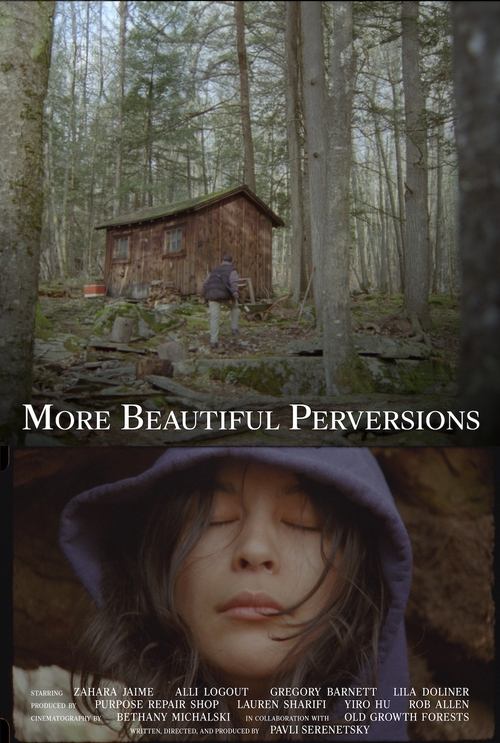
More Beautiful Perversions
Cultural messages
Nature Knows Best
highAiko is a 'disillusioned city teenager' whose encounter with nature-connected Deedi in the woods leads to self-discovery, queerness, and 'a deeper connection to the environment.' The film is explicitly an eco-parable contrasting shallow urban life with idealized wilderness. Deedi, the naturalist, is portrayed as magnetic and wise. Nature sequences are given special visual treatment (black-and-white). Modern city life is coded as spiritually empty by comparison.
About this message: The natural world, indigenous peoples, or pre-industrial life is portrayed as inherently wise, pure, morally superior, or spiritually richer than modern civilization. Nature is a source of truth that technology has replaced.
Be Yourself
mediumAiko suppresses or is unaware of her queerness at the start; through her encounter with Deedi she discovers 'her own queerness' and a deeper sense of self. Her prior city life is marked by disillusionment (conformity as stifling). The narrative arc culminates in self-acceptance and authentic connection to both identity and environment, framing authenticity as transformative growth.
About this message: A character hides or suppresses their true identity to conform, then finds strength and happiness by embracing who they really are. Authenticity is the real superpower.
Movies that share these tropes



Full plot (spoilers)
High schooler Aiko, a disillusioned city teenager, ventures into the woods near New York City where she encounters Deedi, a free-spirited naturalist with distinctive orange hair. Aiko becomes drawn to Deedi's magnetic, unconventional relationship with nature, sexuality, and queerness. When Deedi suddenly disappears, Aiko retraces her steps searching for her. The story is told in fragmented recollection rather than linear action: Aiko recounts the events to her best friend Mel in their apartment, while flashbacks interweave with black-and-white nature sequences. Through her brief but intense encounter with Deedi, Aiko discovers the mundane secrets of the forest, her own queerness, and a deeper connection to the environment. The film functions as an eco-parable and coming-of-age fable, exploring how some of the most impactful relationships exist only to help us grow. The narrative deliberately blurs reality and memory, leaving the true nature of the encounter ambiguous.
Sources: IMDb, Elements of Madness (ATLFF review), MUBI, TMDb, San Francisco IndieFest