Movie
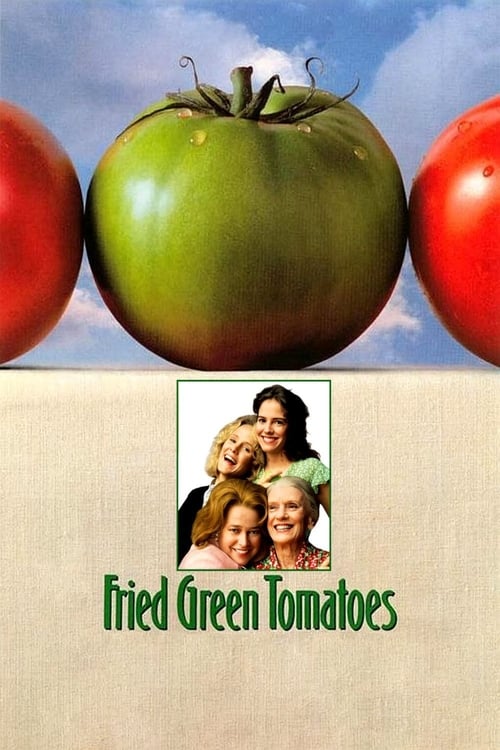
Fried Green Tomatoes
Narrative tropes
Love Conquers All
mediumIdgie and Ruth's love drives every major plot event: Ruth's steadying love rescues Idgie from wild, untethered grief after Buddy's death; Idgie's love for Ruth motivates rescuing her from Frank's abuse. The film's final image—a jar of honey left at Ruth's grave decades after her death—frames love as literally transcending death and time, the story's most powerful force.
About this trope: Love — romantic, familial, or platonic — is presented as the ultimate force that overcomes any obstacle including death, physics, evil, or cosmic forces. Love is a literal power.
Cultural messages
Be Yourself
highEvelyn has spent years suppressing her true self as a passive, meek housewife under a dismissive husband. Ninny's stories act as the catalyst: Evelyn sheds her conformity, stands up to Ed, and reinvents herself with new purpose and self-worth. Conformity is explicitly shown as stifling, the transformation scene is the emotional climax of the modern storyline, and happiness flows directly from her newly authentic self.
About this message: A character hides or suppresses their true identity to conform, then finds strength and happiness by embracing who they really are. Authenticity is the real superpower.
Family Is Everything
mediumIdgie, Ruth, and Stump form a found family that is the heart of the historical storyline; Frank's attempt to kidnap Stump is the central crisis that must be resolved. Idgie dedicates her life to building and defending this family. The parallel modern arc mirrors the pattern: Evelyn invites the newly alone Ninny into her own home, and found family is treated as fully equivalent to biological bonds throughout.
About this message: Family bonds — biological or found — are ultimately what saves the day, provides meaning, and matters most. Characters who stray from family suffer; those who return are rewarded.
The Old Ways Were Better
mediumWhistle Stop in the 1920s–30s is portrayed as warm, vibrant, and community-rich against the hollow backdrop of Evelyn's modern Birmingham existence. The railroad bypassing the town is explicitly framed as a loss that erased a better, more connected way of life. Evelyn's entire transformation is catalyzed by absorbing that idealized past, and the film offers nothing in modern life as a counterweight.
About this message: Traditional, ancestral, rural, or pre-modern life is portrayed as inherently better than modern alternatives. Progress is corruption, not improvement. The past is idealized as a golden age.
Movies that share these tropes



Full plot (spoilers)
Fried Green Tomatoes interweaves two storylines separated by roughly sixty years. In 1980s Birmingham, Alabama, Evelyn Couch is a dowdy, passive housewife who accompanies her husband Ed to visit his aunt at a nursing home. There she strikes up an unlikely friendship with the spirited, talkative elderly resident Ninny Threadgoode. Over a series of visits, Ninny regales Evelyn with memories of the long-abandoned town of Whistle Stop, Alabama, in the 1920s and 1930s. The heart of Ninny's tales concerns two young women: the free-spirited, tomboyish Idgie Threadgoode and the gentle Ruth Jamison. The two first bond as teenagers after Idgie's beloved older brother Buddy is killed in a tragic train accident, a loss that leaves Idgie wild and untethered. Ruth's steadying presence becomes essential to her. Years later, Ruth moves away to Georgia and marries Frank Bennett, a brutal, controlling man who abuses her. Idgie refuses to abandon Ruth and, with the help of friends, rescues her from the marriage. The two women return to Whistle Stop and open the Whistle Stop Café, which thrives largely on the strength of Big George's celebrated barbecue. The café becomes a community anchor, and Idgie and Ruth raise Ruth's son Stump together. Frank eventually tracks Ruth down and attempts to kidnap the boy; an unseen assailant intervenes and Frank disappears. His apparent murder becomes the subject of a trial, but the judge ultimately rules his death accidental and Idgie is cleared. Ruth later falls gravely ill with cancer and dies, leaving Idgie bereft. The café eventually closes after the railroad bypasses Whistle Stop and the town fades away. Back in the present, Evelyn is profoundly transformed by Ninny's stories: she sheds her meekness, stands up to her dismissive husband, reinvents herself, and finds a new sense of purpose and self-worth. When Ninny's own companion at the nursing home dies, Evelyn invites Ninny to come live with her and Ed. In the film's final scene, the two women visit Ruth's grave in the now-overgrown Whistle Stop cemetery, where they discover a jar of fresh honey left with a card signed 'the Bee Charmer'—Idgie's nickname—revealing that Idgie is still alive, decades later, and still honoring Ruth's memory.
Sources: Wikipedia