Movie
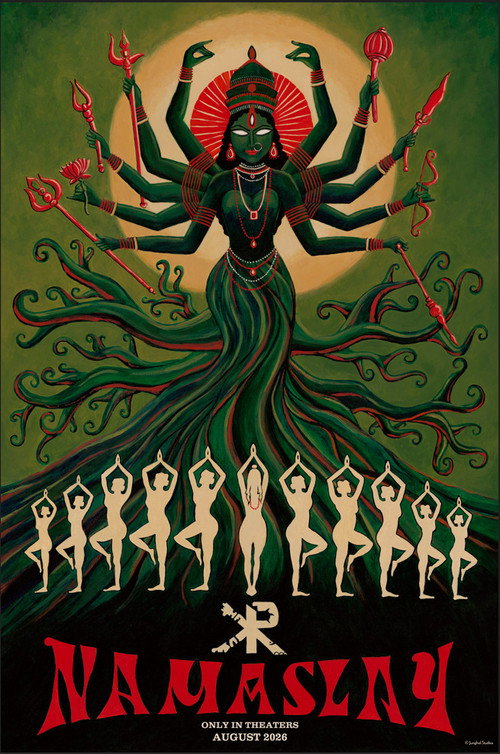
Namaslay
Narrative tropes
You Can't Trust Anyone
highReyna presents the studio as a legitimate elite training program but recruits Gayatri under false pretenses for a sinister supernatural agenda. Multiple unsettling details (former partner's overdose, disappearing practitioners) were hiding in plain sight. Gayatri discovers she has been systematically manipulated — Reyna, her trusted mentor, is the true threat. All three detect-when conditions are met: major betrayal by a trusted figure, conspiracy within an ostensibly legitimate institution, and protagonist discovering she has been deceived.
About this trope: Trusted allies, institutions, or authority figures are secretly working against the protagonist. Paranoia is justified because betrayal is real and pervasive.
Cultural messages
The Old Ways Were Better
highThe film's central satirical axis is the contrast between the grandmother's traditional yoga — rooted in spirituality, philosophy, and discipline — and the elite LA studio's commercialized wellness-trend version. The old ways are positioned as authentic and superior: Reyna herself favors Gayatri's traditional fundamentals over Judy's wellness-first style, and the horror is tied to the exploitative commercialized institution, not the ancestral practice. Western commercialization is explicitly framed as corrupt and hollow, validating the traditional form as the genuine article.
About this message: Traditional, ancestral, rural, or pre-modern life is portrayed as inherently better than modern alternatives. Progress is corruption, not improvement. The past is idealized as a golden age.
Movies that share these tropes






Full plot (spoilers)
Namaslay follows Gayatri, a Tamil American woman grieving her grandmother's recent death. Her grandmother had taught her yoga in its traditional form—rooted in spirituality, philosophy, and physical discipline rather than the wellness-trend version popularised in the West. Gayatri's white friend Judy persuades her to attend an elite, expensive yoga studio in Los Angeles. The studio's owner and instructor, Reyna, takes an immediate interest in Gayatri and offers both women spots in her exclusive instructor training program, being candid that she needs 'faces that aren't white' to lend diversity and authenticity to her brand. Gayatri accepts, seeing an opportunity to reconnect with the authentic practice she inherited from her grandmother. As the two friends advance through the program, tension grows between them: Reyna favours Gayatri's grounding in traditional yoga fundamentals while Judy's style privileges wellness over spirituality. Unsettling details accumulate in the background—Reyna's former partner died of an overdose after authoring an authoritative instructors' text, and certain practitioners disappear without explanation. When Gayatri is eventually invited to a prestigious, ultra-exclusive instructors' retreat in Malibu, she discovers that she was not recruited to teach: she was brought as part of a far darker, sinister agenda tied to a supernatural force lurking beneath the studio's polished exterior. The film escalates into blood-soaked horror territory while sustaining its satirical commentary on Western commercialisation and cultural appropriation of South Asian spiritual tradition. Specific third-act and ending details are not yet available in pre-release coverage; reviewers describe the finale as containing 'a wealth of surprises' with sharp genre pivots in the masala cinema tradition.
Sources: FlickeringMyth review, HeavenOfHorror review, Fangoria trailer article, HorrorFuel article, Web search aggregation (FirstShowing, HollywoodUnlocked, Nerdbot, Bloody Disgusting, Blex Media)