Movie
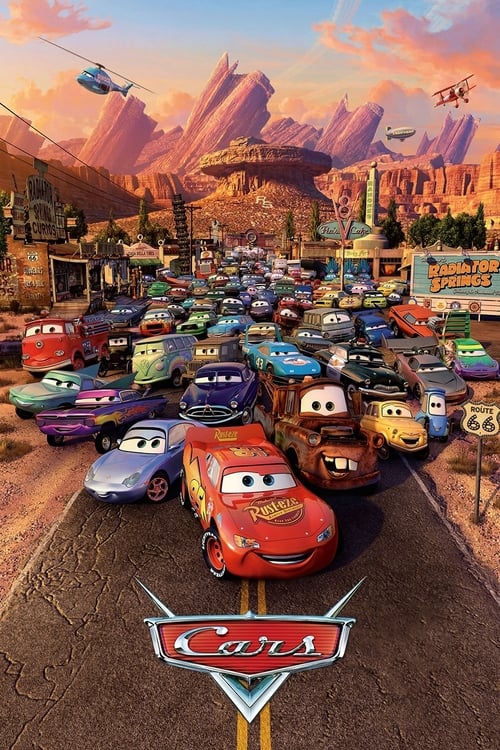
Cars
Cultural messages
The Old Ways Were Better
mediumRadiator Springs on Route 66 is depicted as warm, authentic, and communal, explicitly contrasted with the cold commercialism of the modern racing world. The interstate highway bypass is framed as a tragedy — progress that destroyed a thriving community. McQueen's arc concludes with him choosing to set up his racing headquarters in Radiator Springs, validating the old way of life over the glamour of Los Angeles. The story treats the town's pre-bypass golden age as something lost and worth recovering.
About this message: Traditional, ancestral, rural, or pre-modern life is portrayed as inherently better than modern alternatives. Progress is corruption, not improvement. The past is idealized as a golden age.
Family Is Everything
highThe Radiator Springs residents function as McQueen's found family throughout: he chooses loyalty to Rust-eze (his original 'family') over the prestigious Dinoco deal, his Radiator Springs friends arrive as his surprise pit crew at the climax, and the resolution is McQueen returning to make Radiator Springs his home. The story's emotional payoff is explicitly a 'there's no place like home' beat — ambition is sacrificed for belonging, and found family bonds are treated as equivalent to biological ones.
About this message: Family bonds — biological or found — are ultimately what saves the day, provides meaning, and matters most. Characters who stray from family suffer; those who return are rewarded.
Movies that share these tropes
Full plot (spoilers)
In a world of sentient vehicles, the Piston Cup racing season ends in a three-way tie among retiring champion Strip 'The King' Weathers, veteran rival Chick Hicks, and hotshot rookie Lightning McQueen. McQueen, desperate to ditch his modest Rust-eze sponsorship for the prestigious Dinoco deal, blows a tire on the final lap due to his overconfidence in refusing a pit stop, forcing a tiebreaker race to be held one week later at the Los Angeles International Speedway. While being transported cross-country overnight, McQueen accidentally falls out of his trailer and ends up lost, eventually tearing up the main road of the tiny, forgotten Route 66 town of Radiator Springs, Arizona. The town's cantankerous judge and local doctor, Doc Hudson, sentences him to repair the road before he can leave. McQueen initially does a sloppy job, prompting Doc to challenge him to a dirt-road race, which McQueen loses humiliatingly. Stuck in town and forced to do the job properly, McQueen gradually gets to know Radiator Springs' quirky residents — including the earnest, good-natured tow truck Mater and the sophisticated Porsche Sally Carrera, with whom he develops a romantic connection. He learns the town once thrived as a stop on Route 66 before an interstate highway bypassed it and drained away all traffic and commerce. He also uncovers Doc Hudson's secret identity as the 'Fabulous Hudson Hornet,' a legendary three-time Piston Cup champion who was forced out of racing after a career-ending crash and was subsequently forgotten by the sport he loved. After McQueen repaves the road properly and has grown genuinely fond of the town and its people, Doc tips off the media to his location, and a media circus descends on Radiator Springs, forcing McQueen to leave for the tiebreaker race. At the Los Angeles race, McQueen's Radiator Springs friends arrive as his surprise pit crew, and he mounts a strong comeback from the back of the field. In the closing laps, Chick Hicks deliberately wrecks The King to claim victory. Seeing the crash, McQueen brakes just short of the finish line, drives back to The King, and pushes the badly damaged legend across the finish line so he can finish his final race with dignity — costing McQueen the championship. Despite losing, McQueen earns the crowd's respect and is offered the coveted Dinoco sponsorship, which he declines out of loyalty to Rust-eze. He returns to Radiator Springs, reunites with Sally, and sets up his racing headquarters there, effectively revitalizing the long-neglected town.
Sources: Wikipedia