Movie
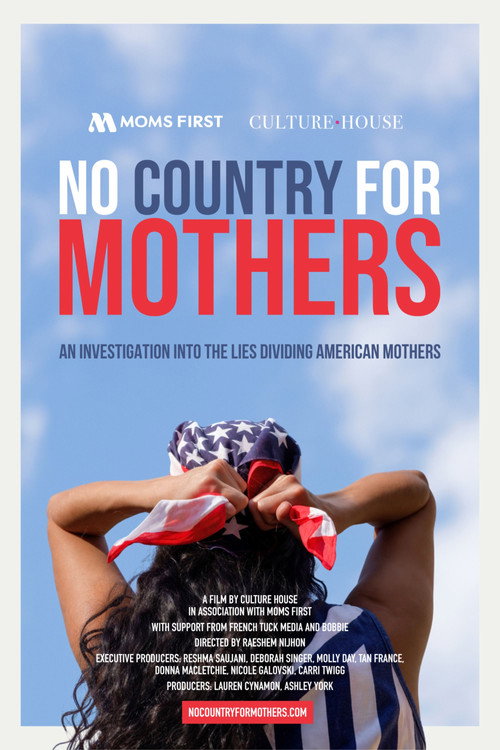
No Country for Mothers
Narrative tropes
Rebels vs. The Empire
mediumMoms First and the 2,500+ mother-advocates are framed as a small, outmatched group organizing against an entrenched political and corporate establishment. Mothers are portrayed as morally righteous; the establishment (politicians dodging policy questions, corporations rescinding leave) is shown as negligent and self-serving. The film's resolution — 1,000 community screenings across all 50 states, a Guinness-record production credit — is presented as meaningful resistance achieved despite the power imbalance.
About this trope: A small outmatched group rises up against a massive oppressive regime or institutional power. The rebellion is framed as morally righteous.
Cultural messages
Humanity Must Unite
highThe film's entire argument is built on uniting divided groups against a shared threat. The 'girl boss' vs. 'trad wife' split is the rival-faction divide; the shared threat is the near-total absence of family-support infrastructure. Saujani explicitly calls mothers to set aside culture-war differences and organize around common material demands. The culture-war framing is portrayed as a distraction obscuring the real (larger) threat. The resolution is enacted through over 2,500 mothers from across socioeconomic and ideological lines credited as associate producers — former 'opponents' acting in concert.
About this message: A shared external threat forces divided groups to set aside differences and cooperate. Unity across lines of division is both necessary for survival and morally uplifting.
The System Is Rigged
highPoliticians across the spectrum are shown unable or unwilling to answer basic childcare questions (Trump at the 2024 Economic Club sequence). Decades of bipartisan policy erosion and corporate rollbacks (Deloitte, Zoom reversing pandemic-era gains) are framed as institutional failure, not partisan accident. The film itself bypasses the traditional (institutional) distribution system in favor of 1,000+ grassroots community screenings — explicitly operating outside normal channels because working within the system has repeatedly failed.
About this message: Institutions meant to protect people — governments, corporations, law enforcement, the justice system — are depicted as corrupt, incompetent, or actively harmful. Heroes must work outside official channels.
Movies that share these tropes





Full plot (spoilers)
No Country for Mothers is a 2026 advocacy documentary directed by Raeshem Nijhon and executive produced by activist and Moms First CEO Reshma Saujani, alongside Tan France and others. The film opens by framing its central argument: the manufactured cultural divide between the "girl boss" and the "trad wife" has been weaponized by politicians, influencers, and media to pit American mothers against each other, obscuring the real and shared crisis — the near-total absence of structural support for families in the United States.
Saujani serves as the documentary's guide, tracing the history of how motherhood became a political battleground. The film charts how bipartisan support for policies like the Equal Rights Amendment eroded through the late 1970s and into the 1980s, when the Republican platform formally adopted pro-life and "family values" rhetoric, hardening cultural divisions along ideological lines. What followed, the film argues, was decades of deliberate distraction: culture-war framing that positioned mothers as either career-obsessed or domestically devoted, leaving systemic policy failures unaddressed and unchallenged.
The documentary grounds these historical patterns in contemporary data and human testimony. Interviews with mothers from across the socioeconomic spectrum illustrate the daily impossibility of American parenthood: soaring childcare costs, no guaranteed paid family leave, and an economy that once counted women as 51% of the workforce before the COVID-19 pandemic drove approximately 500,000 women out of it due to childcare collapse. The film documents how pandemic-era progress — including temporary paid leave provisions and expanded childcare access — was subsequently rolled back by major employers including Deloitte and Zoom as emergency policies expired.
Politicians across the political spectrum appear throughout, confronted with questions about childcare and family policy. A notable sequence captures former President Donald Trump addressing childcare questions at the 2024 Economic Club of New York, illustrating the gap between political rhetoric and actionable policy. The film positions these moments as evidence of systemic neglect rather than partisan failure alone.
In the film's latter movement, Saujani pivots from diagnosis to mobilization. She presents the founding and growth of Moms First, her national nonprofit, and argues that the same mothers who have been divided by culture-war narratives hold the potential for transformative collective power if reunited around shared material demands: universal affordable childcare and paid family leave. The film frames this not as a feminist cause or a partisan agenda but as a basic infrastructure question, comparable to building roads or funding schools.
The documentary breaks the fourth wall of its own distribution strategy, deliberately bypassing traditional streaming in favor of over 1,000 community screenings across all 50 states — a grassroots rollout designed to turn passive viewing into local organizing. More than 2,500 mothers and advocates are credited as associate producers, a number that broke the Guinness World Record for most producers on a single film.
Sources: Moms First official site, The Story Exchange, PBS NewsHour, Web search aggregation (Reshma Saujani Substack, Moms First press releases)