Movie
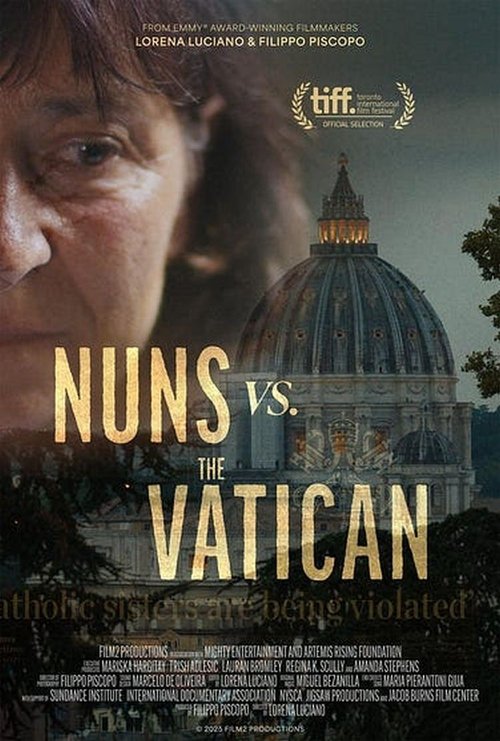
Nuns vs. The Vatican
Narrative tropes
Rebels vs. The Empire
highA small group of former nuns — initially just Gloria and Mirjam — rises against one of the world's most powerful institutions. The power imbalance is stark and explicit. The resisters are framed as brave truth-tellers; the Vatican is depicted as cruel and corrupt (forcing abortions, suppressing testimony). The campaign succeeds in forcing the Pope to consider overturning the statute of limitations, constituting meaningful challenge to the regime despite the odds. All five signals present.
About this trope: A small outmatched group rises up against a massive oppressive regime or institutional power. The rebellion is framed as morally righteous.
Cultural messages
The System Is Rigged
highThe Vatican — an institution meant to protect members of religious life — is exposed as corrupt and complicit: it dismisses Gloria's letter on statute-of-limitations grounds, suppresses Scaraffia's journalism from within, and weaponizes nuns' vows of obedience against them. Survivors must bypass official channels entirely (going to the press) to achieve any result. All five signals fire: authority figures are willfully negligent, a systemic cover-up inside an official body is exposed, the nuns are opposed by their own institution, working within the system fails, and justice only advances through outside pressure.
About this message: Institutions meant to protect people — governments, corporations, law enforcement, the justice system — are depicted as corrupt, incompetent, or actively harmful. Heroes must work outside official channels.
Movies that share these tropes






Full plot (spoilers)
Nuns vs. The Vatican (2025) is a documentary directed by Lorena Luciano that centers on Gloria Branciani, a former nun who breaks three decades of silence to publicly name her abuser: Marko Rupnik, a celebrated Jesuit priest and artist with close ties to popes and cardinals, widely regarded as the 'Michelangelo' of the modern Catholic Church. When Gloria sends a letter to the Vatican, it is dismissed on statute-of-limitations grounds. Refusing to be silenced, she reconnects with fellow former nun Mirjam, and together they take their testimony to the press. Their disclosure triggers an avalanche: nearly 30 more former nuns come forward, and media coverage spreads internationally. The film broadens its scope to document a systemic pattern of clerical abuse of women in religious life — including cases of priests forcing nuns to have abortions — and the institutional machinery designed to suppress it. Key figures in the investigation include Lucetta Scaraffia, a journalist who left a Vatican publication after the Church resisted her reporting on nun abuse, and Federica Tourn, who compiled survivor testimonies. U.S. survivor-rights activist Barbara Dorris tracks the American dimension of the scandal. The documentary argues that abuse of nuns has been systematically overlooked in comparison to the better-publicized abuse of altar boys and parishioners, in part because nuns' vows of obedience are weaponized against them by their abusers. The film concludes by noting that pressure from the survivors' campaign prompts Pope Francis to consider overturning the statute of limitations and opening a formal Vatican trial against Rupnik.
Sources: Wikipedia, AWFJ review (Leslie Combemale, TIFF 2025), IMDb (web search metadata)