Movie
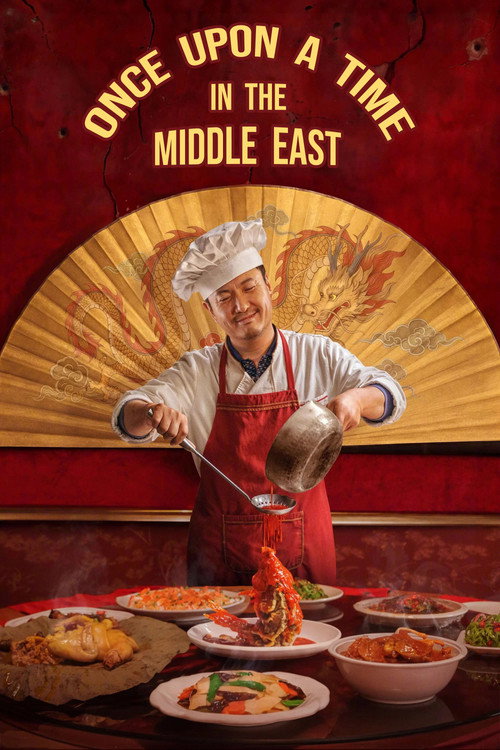
Once Upon a Time in the Middle East
Narrative tropes
Humans Never Give Up
highXu faces a cascade of objectively hopeless circumstances — wartime abandonment, multiple imprisonments, captivity at a militant child-soldier compound, and finally being shot through the mouth — yet refuses to surrender at each juncture. The escape march with 23 children on foot across a border exemplifies resilience over rational self-preservation. Xu surviving the shooting and returning decades later to find the children rescued frames his stubbornness as the defining human quality the story celebrates. Ma's self-sacrificial confession to protect the others reinforces the same theme.
About this trope: Facing impossible odds, humans endure, adapt, and find reasons to keep going. Resilience and refusal to surrender is humanity's defining and most admirable trait.
Cultural messages
Family Is Everything
highXu's found family with the orphans — especially Seif — is the central emotional engine of the plot. He repeatedly chooses to stay in danger rather than leave the children; the escape with 23 children is the climactic action sequence; and the film's emotional resolution is Xu returning to Bahata and discovering Seif alive, working as head chef, with Xu's rice stew honored on the menu. Found family (Xu as surrogate father, Seif as apprentice-son) functions identically to biological family throughout.
About this message: Family bonds — biological or found — are ultimately what saves the day, provides meaning, and matters most. Characters who stray from family suffer; those who return are rewarded.
Movies that share these tropes





Full plot (spoilers)
The film opens with an elderly Xu Fu undergoing immigration questioning as he attempts to return to a Middle Eastern country he once lived in. His interrogation triggers memories of events from over two decades earlier. After a workplace accident in China, Xu Fu travels to the fictional Middle Eastern city of Bahata to earn money, support his family, and repay debts. He takes a position as head chef at the Loong Restaurant, owned by Zaid, a local government official, and works alongside floor manager Ma Junsheng, who is engaged to Lina, an orphanage educator. Among the orphans who frequent the restaurant is a boy named Seif; though initially reluctant, Xu grows attached to the children. In 2003 war erupts when American forces invade. The Chinese government evacuates its citizens, but Zaid persuades Xu to remain by offering him an ownership stake in the restaurant. Xu continues operating the Loong Restaurant as the city deteriorates around it. When militants destroy the local orphanage, the displaced children take refuge there. Seif becomes Xu's apprentice, learning both cooking and Mandarin. Xu subsequently meets Tony Wang, a Chinese-American U.S. soldier, and begins smuggling alcohol through the restaurant, turning it into a lucrative hub for American soldiers. The profits further delay Xu's return to China. Zaid's situation grows precarious when he refuses escalating extortion demands for medicine; anti-Ba'athist forces attack his home, kill his family, and he disappears. Eighteen months later, the now-radicalized Zaid orchestrates a car bombing that kills Tony Wang. Without Tony's testimony, Xu, Ma, and Seif are arrested on suspicion of involvement and imprisoned at Alifah Prison. Inside, the three work kitchen duty and befriend prison authorities. They encounter Ali, a militant leader who is indoctrinating orphans into child soldier ranks. When American lieutenant Morgan tortures Ali by suspension and forced consumption of chili water, Xu sympathizes and secretly replaces the chili water with a harmless substitute; he also passes Ali a child's drawing of a Christmas tree. Seif, however, begins absorbing Ali's extremist ideology and befriends another indoctrinated boy, Jamal. After six months their charges are dropped and release is scheduled, but authorities ask them to stay briefly to prepare a Christmas feast. On Christmas Eve, militants disguised as American soldiers storm the prison to free Ali. In the ensuing combat a grenade explosion costs Seif his left eye. Zaid's forces then seize Xu, Ma, and Seif and transfer them to Ali's child soldier training compound. Months later Xu arranges an escape using his remaining savings. Seif, marginalized by his injury, is tempted to join Ali's organization. When Ali solicits volunteers for suicide bombing missions, Seif steps forward but Xu maneuvers to prevent his selection, allowing another boy, Jamal, to go instead. Seif later discovers the truth by hiding in a militant vehicle and witnessing Jamal die in a suicide attack. Ma devises a plan to stall operations by secretly making the children ill with sprouted potatoes; when the scheme is detected, Ma confesses to protect the others and is executed. Xu and Seif escape with twenty-three willing children, traveling on foot and by vehicle for an entire day before crossing the border and finding refuge in a mosque, where Xu prepares a final meal from their remaining food. Before they can find safety, Zaid's forces recapture them on the far side of the border. Zaid shares a final meal with Xu and then shoots him through the mouth. Though critically wounded, Xu survives; Zaid assumes he is dead and kidnaps the remaining children for Ali's compound. In the present day, immigration officials allow Xu's return. On a bus tour of the city he recognizes the Loong Restaurant, now fully restored. Inside, he finds his last rice dish honored on the menu as 'Xu Fu Rice Stew,' named to commemorate a deceased chef who cooked it for child refugees. Staff tell him government forces eventually defeated the militant organization and that Zaid was killed by border patrol; the abducted children were rescued. Xu then finds Seif—now wearing an eyepatch—working as head chef in the kitchen.
Sources: Wikipedia, Cinema Escapist review, Web search aggregation (Filmaffinity, MyDramaList, Box Office Mojo)