Movie
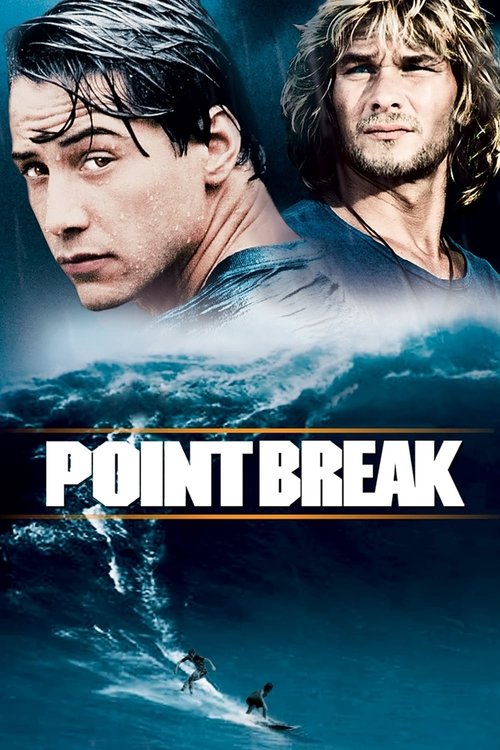
Point Break
Narrative tropes
You Can't Trust Anyone
mediumBodhi reveals he identified Utah as an FBI agent from the start and orchestrated the entire friendship as manipulation, turning every bonded experience retroactively into a con. The Ex-Presidents gang operated in plain sight within the beach community Utah was embedded in — the true enemy hiding among apparent allies. Utah's paranoid suspicion about the mooning gesture, initially just a hunch, is fully validated. The protagonist discovers he was managed and deceived throughout by the person he trusted most.
About this trope: Trusted allies, institutions, or authority figures are secretly working against the protagonist. Paranoia is justified because betrayal is real and pervasive.
Cultural messages
Nature Knows Best
highThe film consistently frames the ocean, surfing, and nomadic beach lifestyle as spiritually richer and more authentic than Utah's institutional FBI world. Bodhi's philosophy explicitly valorizes living in harmony with natural forces and seeking peak experiences within them. Nature-connected characters (Bodhi especially) are portrayed as philosophically deeper than the bureaucratic agents. Utah is genuinely transformed by immersion in this world. The climax — Bodhi paddling into the unsurvivable 50-year storm as his ultimate fulfillment, Utah throwing his FBI badge into the ocean — frames nature as the supreme authority and institutional life as hollow by comparison.
About this message: The natural world, indigenous peoples, or pre-industrial life is portrayed as inherently wise, pure, morally superior, or spiritually richer than modern civilization. Nature is a source of truth that technology has replaced.
Forgiveness Sets You Free
mediumUtah, coerced into robbery and having lost his partner Pappas to Bodhi's violence, reaches a climactic choice at Bells Beach: lawful arrest versus releasing Bodhi to ride unsurvivable waves. He chooses mercy, knowing Bodhi will die in the surf. The act of throwing his FBI badge into the ocean immediately after is the story's closing image, explicitly framing letting go — of Bodhi, of the badge, of his institutional identity — as liberation rather than defeat. Both the mercy moment and the badge-throw signal that holding on was the lesser path.
About this message: Forgiving — even the unforgivable — is presented as the path to peace and healing. Holding grudges is self-imprisonment; releasing them is liberation.
Movies that share these tropes






Full plot (spoilers)
Johnny Utah, a former Ohio State quarterback turned rookie FBI agent, is partnered with veteran agent Angelo Pappas to investigate a string of Southern California bank robberies carried out by a gang wearing rubber masks of former U.S. presidents — Reagan, Carter, Nixon, and LBJ — who call themselves the Ex-Presidents. The gang is disciplined: they hit only teller cash drawers and are out in under ninety seconds, leaving almost no evidence. Pappas theorizes the robbers are surfers, based on traces of sun-bleached hair and wax found at scenes. Utah goes undercover at the beach. After nearly drowning, he is rescued by Tyler, an orphaned surfer and waitress; he fabricates a family tragedy to persuade her to teach him to surf. Through Tyler, Utah meets Bodhi, a magnetic, philosophy-spouting surf gang leader, along with his crew: Roach, Grommet, and Nathaniel. The group eventually accepts Utah after learning his college football career was ended by a knee injury. As Utah immerses himself in their world, he becomes drawn to their high-adrenaline lifestyle, Bodhi's spiritual outlook, and Tyler herself. An FBI raid on a rival surfer gang — targeted after toxin analysis of a robber's hair sample — inadvertently blows a DEA undercover operation and proves that group is not the Ex-Presidents, leaving Utah back at square one. Utah grows suspicious of Bodhi's crew after noticing a telltale mooning gesture one of the masked robbers makes during a heist, a habit he recognizes from the group. During a stake-out of the next likely robbery, Utah spots Bodhi in a Reagan mask and gives chase on foot, but his damaged knee fails and Bodhi escapes. That night, Tyler discovers Utah's FBI badge and ends their relationship. Bodhi, revealing he has known Utah's identity all along, coerces him into skydiving with the gang and then makes explicit that he is holding Tyler as leverage, forcing Utah to participate in one final bank robbery or risk her life. During the heist, an off-duty cop and a security guard intervene; in the ensuing violence, the youngest gang member Grommet is shot and killed. The surviving robbers abandon Utah at the scene, where he is arrested by other agents. Pappas, furious and grief-stricken, vows to catch Bodhi on his own terms. A subsequent confrontation at Los Angeles International Airport ends in a shootout that kills Pappas and Nathaniel; Roach is mortally wounded. Bodhi forces Utah at gunpoint onto a waiting plane. Once over the drop zone, Bodhi and the dying Roach parachute out, leaving Utah aboard. Utah grabs Bodhi's gun and leaps after him, intercepting Bodhi in free fall and jamming the gun against him — but his knee buckles on landing, allowing Bodhi to disappear. Nine months later, Utah tracks Bodhi to Bells Beach in Victoria, Australia, where a historic swell is generating what surfers call the '50-year storm' — massive, unsurvivable waves that Bodhi had long dreamed of riding. Utah arrests him on the beach, but Bodhi begs to be released to ride the wave, the culmination of everything he has lived for. Knowing Bodhi will not survive, Utah lets him go and watches as Bodhi paddles out into the enormous surf. Utah then throws his FBI badge into the ocean and walks away.
Sources: Wikipedia