Movie
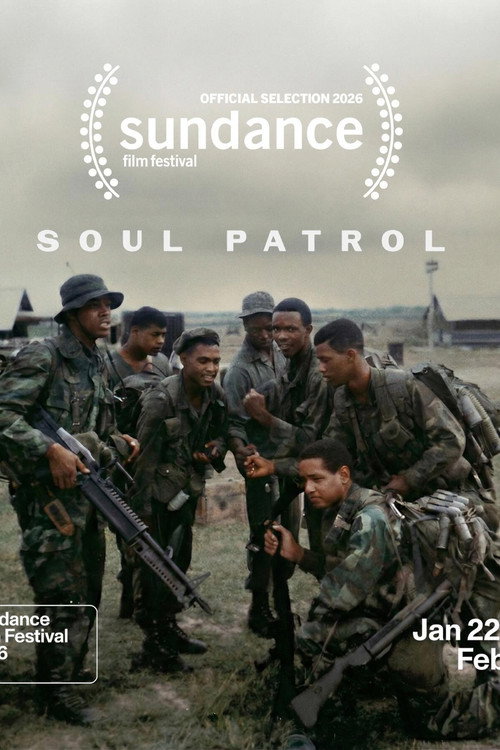
Soul Patrol
Cultural messages
The System Is Rigged
highThe U.S. government and military are depicted as an institution that failed these Black soldiers: demanding their service while denying equality at home, saddling Black troops with disproportionate casualties, and leaving their story untold for decades. Signals: (1) willful institutional negligence — the country denied Black citizens equality while sending them to die; (2) implicit cover-up — the film centers on the pain of their story going unrecognized; (3) working within the system failed them — difficult homecomings, long-term trauma, and decades of silence; (4) the documentary itself is the act of working outside official channels to reclaim their history, which Harper explicitly frames as recovery of 'overlooked military history.'
About this message: Institutions meant to protect people — governments, corporations, law enforcement, the justice system — are depicted as corrupt, incompetent, or actively harmful. Heroes must work outside official channels.
Movies that share these tropes






Full plot (spoilers)
Soul Patrol is a documentary directed by J.M. Harper, based on Ed Emanuel's memoir of the same name. It chronicles Company F, 51st Infantry LRRP (Long Range Reconnaissance Patrol) — the first all-Black special operations unit deployed by the U.S. Army in Vietnam. In spring 1968, six young Black men — Ed Emanuel, Thad Givens, Lawton Mackey Jr., Willie Brown, John Willis, and Norman Reid — entered service amid extreme national turmoil, shaped by the assassinations of Martin Luther King Jr. and Robert F. Kennedy. Despite the civil rights upheaval at home, they were assembled into an elite long-range reconnaissance team and deployed to Vietnam, conducting dangerous deep-penetration missions behind enemy lines in the area around Saigon, operating in isolation with no support beyond one another. The documentary draws on Super 8 footage the men shot themselves during their deployment, archival photographs, sparse reenactments, and present-day interviews. Harper structures the film across multiple timelines: the soldiers' pre-war lives, their wartime missions, and a present-day reunion — framed as potentially the last time the surviving members will gather together. The reunion culminates in individual interviews and a final roundtable discussion in which the veterans confront memories they largely kept buried for decades. The film addresses the contradiction at the heart of their service: Black soldiers fighting abroad for a country that denied them equality at home, with Black troops accounting for a disproportionate share of Army casualties. The veterans speak to long-term psychological trauma, difficult homecomings in a war-divided nation, and the pain of their story going untold. Harper frames the film less as a conventional war chronicle and more as an act of collective mourning and healing — a eulogy for lost comrades and a reclamation of overlooked military history. Coverage is based on Sundance festival reviews and press materials; the film had not yet received a wide release as of this summary.
Sources: military.com, laughingplace.com (Sundance review), WebSearch aggregated results (Hollywood Reporter, The Film Stage, Broadway World, firstshowing.net, thehollywoodnews.com)