Movie
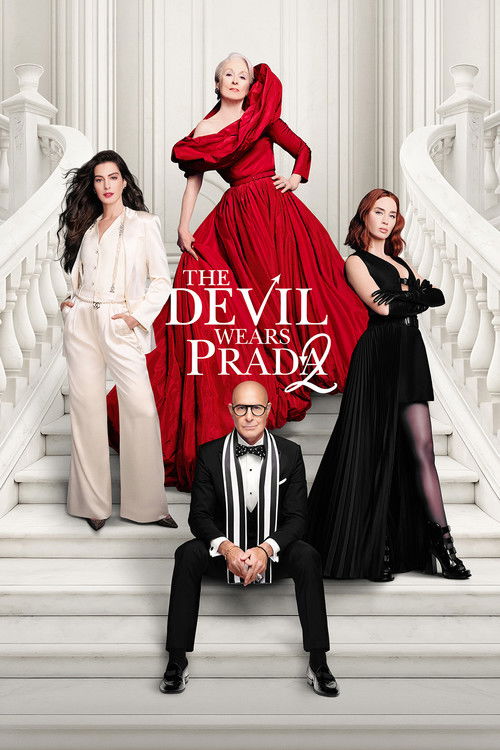
The Devil Wears Prada 2
Cultural messages
Humanity Must Unite
highThree previously divided women — Miranda (who dominated both Andy and Emily), Emily (now a rival executive), and Andy (who has damaging leverage over Miranda) — must set aside their fraught power dynamics to broker an alliance against a shared external threat: Runway's financial collapse and an oligarch's bid to acquire it outright. Each controls a resource the others need (Emily holds the advertising funding, Miranda the institutional legacy, Andy the choice between exposé and cooperation), making cooperation the only viable path to victory. The film's central question is explicitly whether they can reach this alliance without any surrendering her power — a classic divided-factions-against-shared-threat structure resolved through unity.
About this message: A shared external threat forces divided groups to set aside differences and cooperate. Unity across lines of division is both necessary for survival and morally uplifting.
Movies that share these tropes



Full plot (spoilers)
Twenty years after Andy Sachs quit her job as Miranda Priestly's personal assistant at Runway magazine, she returns as a features editor while Miranda faces an existential crisis: the decline of print media has gutted advertising revenue, threatening Runway's survival. Emily Charlton, their shared former colleague from the first film, has since risen to become the head of a powerful luxury brand — and her company holds the advertising funding that could rescue the magazine from financial ruin. The central tension plays out as a three-way power struggle: Miranda, nearing retirement and desperate to preserve her legacy, must navigate a dynamic in which the women she once dominated now hold leverage over her. Emily, now a rival executive, competes with Miranda for control over the deal that will determine Runway's fate. A satirical subplot involves Emily's oligarch partner, who eyes an outright acquisition of the magazine, functioning as commentary on wealth, media consolidation, and the upheaval of the fashion industry. A notable complication is that Miranda does not appear to remember Andy — a pointed detail attributed to the fact that Miranda has cycled through roughly fifty assistants over two decades, leaving individuals she once commanded feeling invisible. Andy must decide whether to help Miranda through a mounting professional scandal or leverage it for a career-defining exposé. The film's conflict resolves around whether the three women can broker an alliance that saves Runway without any one of them surrendering her power. Andy's arc emphasizes personal growth: she is shown treating her own staff with the consideration she once desperately wanted for herself. The film deliberately diverges from Lauren Weisberger's novel sequel, which centered on Andy's wedding and a bridal magazine, opting instead for a story about institutional survival, shifting power, and reinvention in modern media.
Sources: Wikipedia, IMDb, 20th Century Studios, The Hollywood Reporter, W Magazine, Variety